Every Saturday morning, astronauts on the International Space Station (ISS) dedicate several hours to meticulous cleaning. This essential task prevents bacterial and fungal growth in the unique microgravity environment. But what does a cleaning day in orbit entail?
Weekends aboard the ISS are relatively calm, allowing crew members some downtime. Live camera broadcasts are paused, and mission control communications are minimal, giving astronauts time to unwind. However, rest isn't entirely uninterrupted.
In practice, the crew spends three to four hours each Saturday morning sanitizing their living quarters to curb fungi, molds, and bacteria proliferation.
Controlling microorganisms is critical on the ISS. Research shows some thrive better in microgravity than on Earth, so every precaution is taken to minimize risks.
“We must disinfect all surfaces we touch every week,” explained French astronaut Thomas Pesquet during his second mission, which began on April 24. He noted that some protocols mirror those in hospitals or airports to halt bacterial spread.
Handrails, microphones, computers—astronauts wipe down frequently touched surfaces using disinfectant wipes. The Station Commander typically assigns cleaning zones to each crew member.
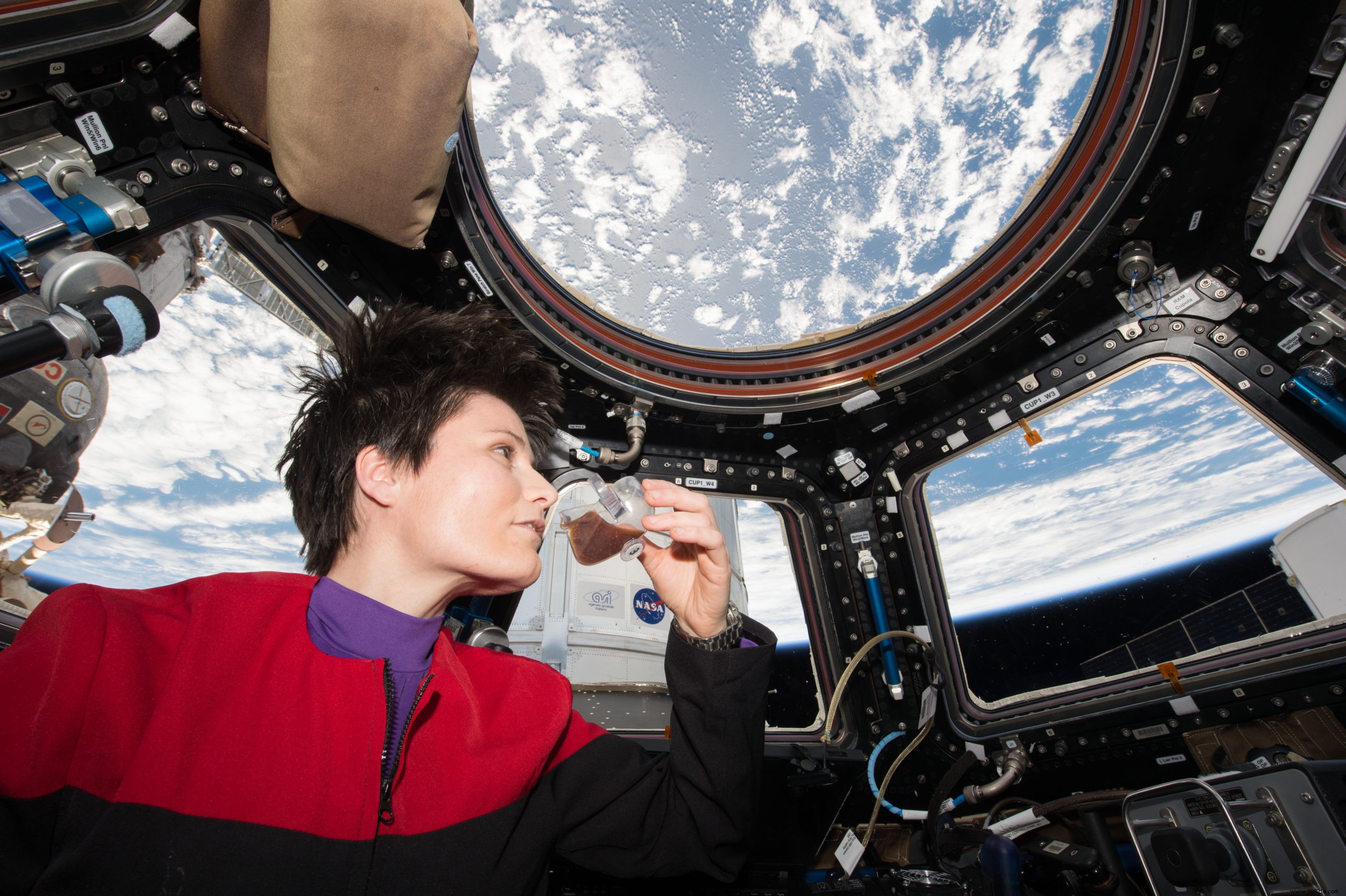
"The most difficult modules to clean are definitely Node 3, where we have the toilets and exercise equipment, and Node 1, at the inside of which we eat," Italian astronaut Samantha Cristoforetti shared in a blog post. Crew members rotate duties for the dirtiest areas.
Astronauts also vacuum ventilation grilles, where floating debris accumulates. This is vital—a clogged grille could disrupt CO2 scrubbing systems, compromising breathable air quality.
In the confined ISS environment, unchecked microbial growth poses real health threats, prompting ongoing experiments into antibacterial and antiviral solutions.
Boeing is testing a novel anti-microbial surface coating to inhibit microorganism spread. Potential Earth applications include high-traffic areas like airports. Astronauts handle test objects—such as airplane seat buckles, seat belt fabric, and meal trays—some coated, others untreated. Returned samples will be analyzed for efficacy.
The European Space Agency (ESA) conducted similar research with the Matiss experiment (Microbial Aerosol Tethering on Innovative Surfaces in the International Space Station), which spent over 12 months in orbit before returning to Earth earlier this year.
