NASA has developed and patented a groundbreaking trajectory that enables faster, more cost-effective access to the Moon. Private companies and agencies seeking to use it must license the technology.
Major lunar missions, such as the Apollo program or upcoming Artemis flights, typically follow a direct path, arriving in days. However, this requires massive rockets with enormous fuel loads to escape Earth's gravity, making them extremely expensive.
Smaller probes often use alternative routes, leveraging gravitational slingshots around Earth to conserve fuel for scientific instruments. The trade-off: journeys lasting several months.
For years, NASA researchers have pursued a solution for rapid access by these smaller missions. Through extensive calculations, they've succeeded.
The approach piggybacks on launches of heavier spacecraft to place small probes into geosynchronous orbit at about 36,000 km altitude. Targeted acceleration and deceleration maneuvers then allow the probe to "surf" the combined gravity of Earth and Moon, entering lunar orbit.
This cuts travel time to just 2.5 months—versus six months previously—while drastically reducing fuel needs.
The Dapper Mission (Polarimeter Pathfinder Dark Ages) will be the first to benefit, capturing low-frequency radio waves from the Universe's early epochs on the Moon's far side, free from Earth interference.
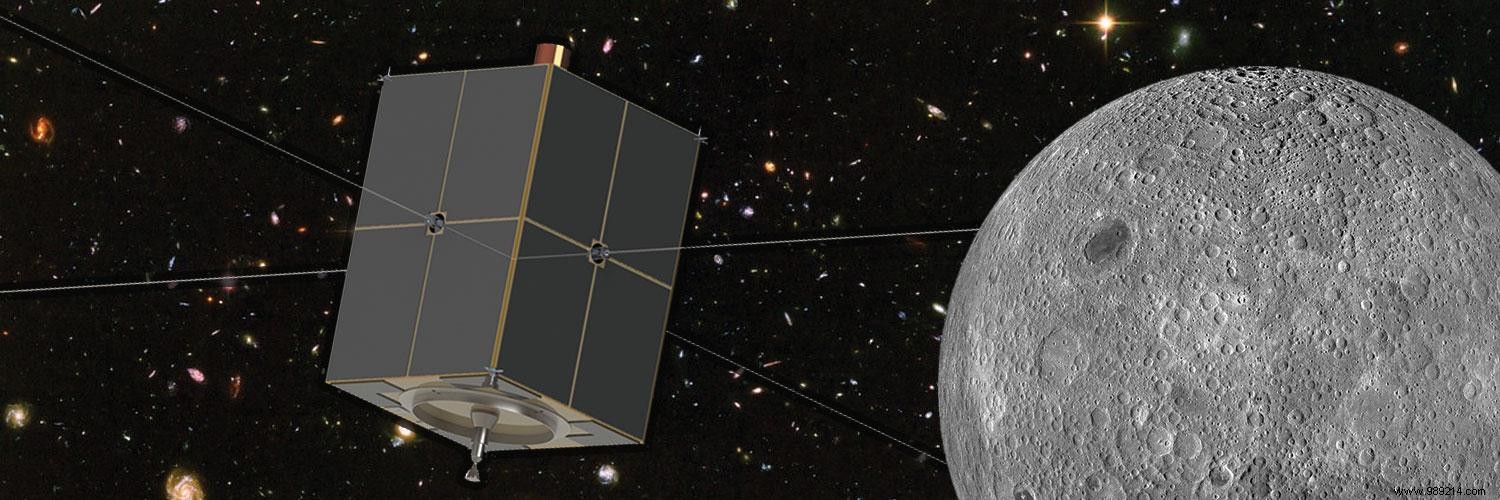
NASA has patented these precise orbital maneuvers. As Dapper program lead Jack Burns explains, this trajectory qualifies as intellectual property.
Licensing fees are modest—typically under $10,000—not for profit, but to acknowledge the research investment.
Unofficially, it also blocks private firms from patenting the same techniques and charging exorbitant rates, preserving open research access, per Business Insider.
