Astronomers have tracked the enormous comet 2014 UN271 for years, a space object now hurtling toward the Sun. It will reach perihelion—its closest solar approach—in 2031.
Discovered in Dark Energy Survey data from 2014 to 2018, 2014 UN271 measures an estimated 100 to 370 km across, making it one of the largest comets known. Originating from the Solar System's outer edges, this find captivates scientists worldwide.
Comets fall into two main categories. Short-period comets, with orbits of 3 to 15 years, reside in the Kuiper Belt beyond Neptune's orbit, 30 to 55 astronomical units (AU) from the Sun—30 AU roughly equaling Earth's distance to the Sun, or 150 million km.
Long-period comets, however, appear to emerge from nowhere, sweeping through the inner Solar System before vanishing into deep space. Dutch astronomer Jan Oort proposed a vast icy reservoir, the Oort Cloud, lying 5,000 to 100,000 AU from the Sun. 2014 UN271 hails from this mysterious realm.
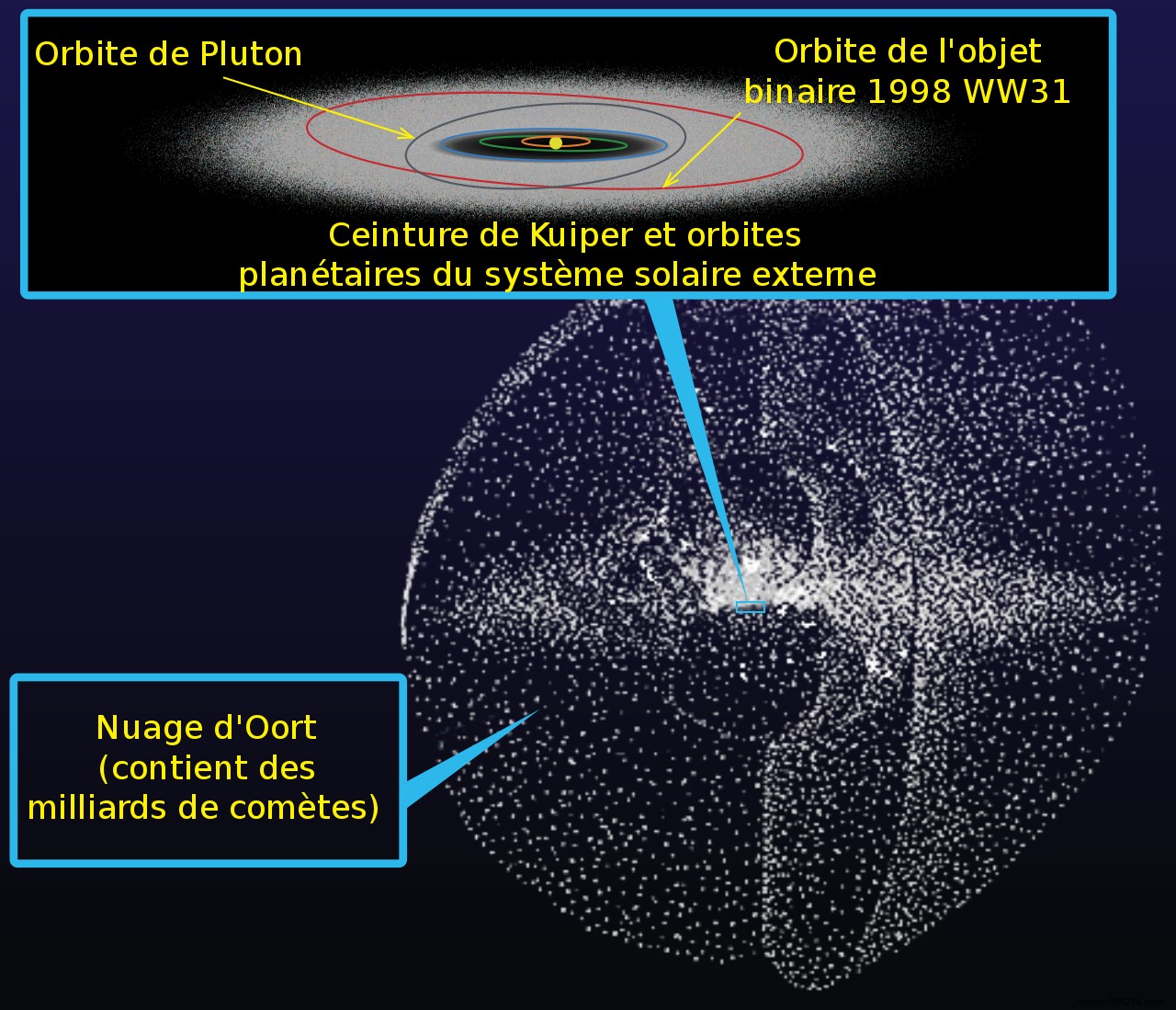
Objects in the distant Oort Cloud take hundreds of thousands to millions of years for a full solar orbit. 2014 UN271's orbital period is an astonishing 612,190 years. Fortunately, we'll observe its closest Earth passage during this epic cycle.
Currently at under 22 AU from the Sun—closer than Neptune at 29.7 AU—it will hit perihelion in 2031 at less than 10.9 AU, nearing Saturn's orbit.

As it nears the Sun's heat, expect 2014 UN271 to sprout a coma and tail, offering astronomers a rare view of an Oort Cloud native. Post-perihelion, it heads back to the cloud, unlikely to return in our lifetimes.
