Researchers using the ESA-Roscosmos ExoMars Trace Gas Orbiter have identified elevated hydrogen levels in the heart of Valles Marineris, Mars' immense canyon system near the equator. Confirmation is pending, but this points to substantial water ice deposits lurking just centimeters below the surface.
The FREND instrument, an epithermal neutron detector aboard the ExoMars Trace Gas Orbiter, excels at mapping subsurface hydrogen. Cosmic rays bombard Mars, releasing neutrons from the soil—drier areas emit more neutrons, allowing precise hydrogen quantification through neutron measurements.
Water ice abounds at Mars' poles, but equatorial regions are typically too warm for surface ice. Subsurface reserves, however, remain plausible—as highlighted in this new study published in Icarus.
During a targeted observation campaign, FREND revealed an unusually high hydrogen concentration in Candor Chaos, within Valles Marineris—the Solar System's largest canyon network, stretching 3,770 km and up to 600 km wide.
Prior missions detected subsurface ice at higher latitudes, but this equatorial find is groundbreaking.
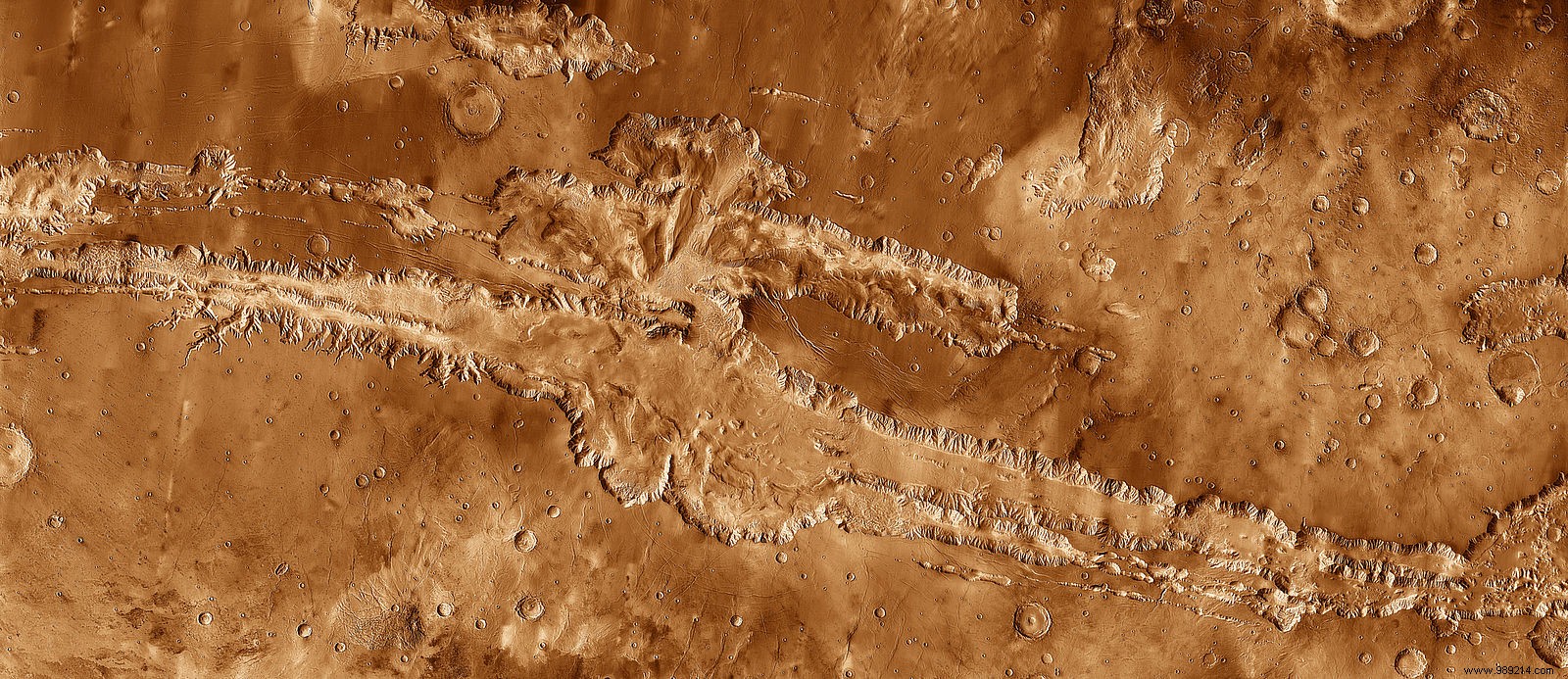
Data indicate that soil up to one meter deep in this Netherlands-sized area could hold significant water content. Local minerals are typically dry, leading experts to conclude it's likely water ice.
Measurements suggest up to 40% of near-surface material may be water, akin to Earth's permafrost where ice endures beneath arid soils due to persistent cold.
How this ice persists amid equatorial pressures and temperatures remains a puzzle. Further studies are essential, but the implications are profound: this permafrost could harbor ancient microbial fossils, much like on Earth, and bolster prospects for human Mars missions.
