In Roland Emmerich's 'Moonfall' (released February 4, 2022), a mysterious force hurls the Moon from its orbit toward a catastrophic collision with Earth. But could a real natural event or object achieve this? Let's examine the science.
Director Roland Emmerich is renowned for disaster epics like Independence Day, Godzilla, The Day After Tomorrow, and 2012. After a quieter decade, 'Moonfall' delivers his signature spectacle: the Moon plummeting to Earth. As planetary scientists, we can assess if such a scenario holds up to scrutiny.
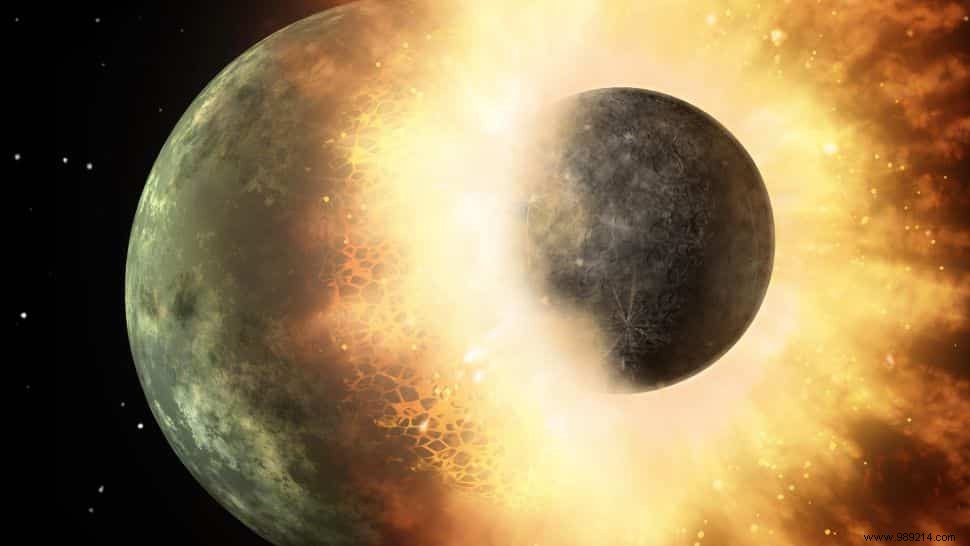
The Moon, a rocky body with a tenuous exosphere, formed about 4.5 billion years ago from a colossal collision between proto-Earth and the Mars-sized body Theia. It orbits Earth at an average 385,000 km, with a mass of 73.52 trillion tons—roughly 1/81 of Earth's.
Its cratered surface records ancient bombardments from the solar system's debris-filled youth. Today, impacts have sharply declined as that debris has cleared. Lunar strikes are far less frequent than on Earth, which is larger and gravitationally dominant, drawing more objects.
NASA's Jet Propulsion Laboratory Center for Near-Earth Object Studies (CNEOS) monitors ~28,000 near-Earth objects approaching within 1.3 AU (194.5 million km). Potentially hazardous ones exceed 140 meters in diameter.
Disrupting the Moon's orbit would require an impactor at least Moon-sized itself. No known Solar System body qualifies—the largest asteroid, in the main belt between Mars and Jupiter (~180 million km away), is about 70 times less massive than the Moon.
Rest easy: the Moon is stably orbiting for the foreseeable future, backed by rigorous observations from NASA and global astronomers.
