NASA confirmed less than a year ago that the Sun has entered its 25th activity cycle, bringing up to 11 years of powerful solar flares. These events pose risks to our tech-dependent world, with impacts that are hard to fully predict.
While global warming and other crises dominate headlines, a quieter threat brews: solar flares. In September 2020, NASA announced the start of Solar Cycle 25, marking 11 years of escalating solar eruptions, with peak activity expected around mid-2025, per agency researchers.
Solar flares drive magnetic storms through fluctuations in solar activity, causing abrupt shifts in Earth's magnetic field. As Bloomberg reported on May 22, 2021, such storms have struck recently.
The most intense on record, the 1859 Carrington Event, depleted significant stratospheric ozone and overloaded North American telegraph networks, sparking fires and even electrocutions. In March 1989, a massive flare ejected material 36 times Earth's size at 1.6 million km/h, blacking out power for 6 million Quebec residents for nine hours.
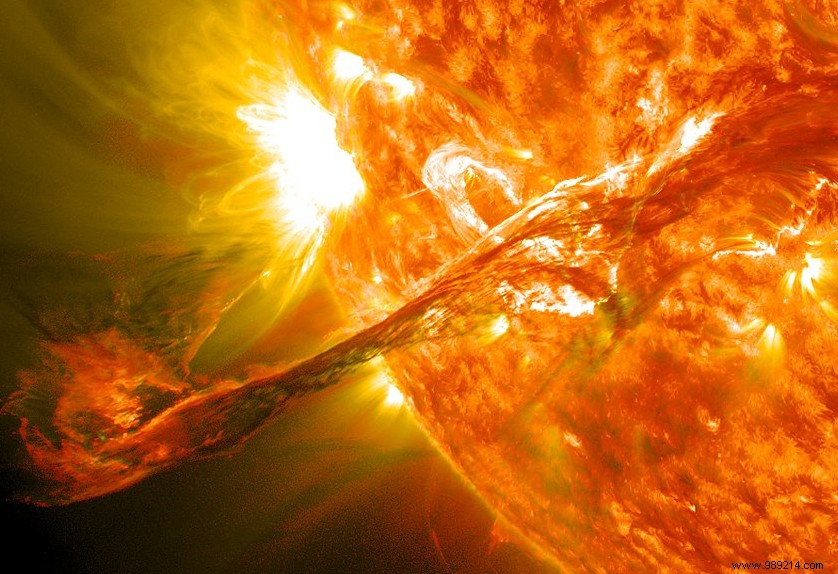
Our hyper-connected world relies on satellites and tech that manage daily human life. Texas's 2021 energy crisis underscores vulnerabilities. GPS satellites, power grids, radio communications, and even aircraft are at risk. Pilots face heightened cataract risks from radiation exposure.
Major flares strike Earth roughly every 150 years. A 2017 American Geophysical Union (AGU) study warned that 66% of the U.S. population could be affected, with daily economic losses topping $40 billion.
Experts monitor flares via satellites positioned about a million km from Earth, but detection leaves just 1-1.5 hours' warning before impact, limiting preparation time.
