A groundbreaking study in Nature Astronomy analyzes methane detected by NASA's Cassini mission in Enceladus' plumes, proposing a potential biological origin—though non-biological geochemical processes remain possible.
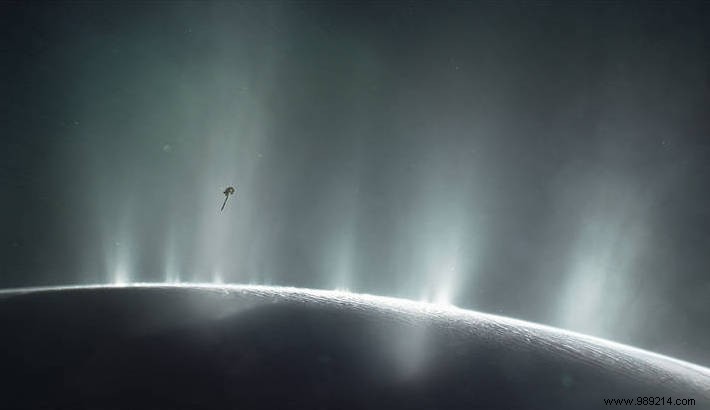
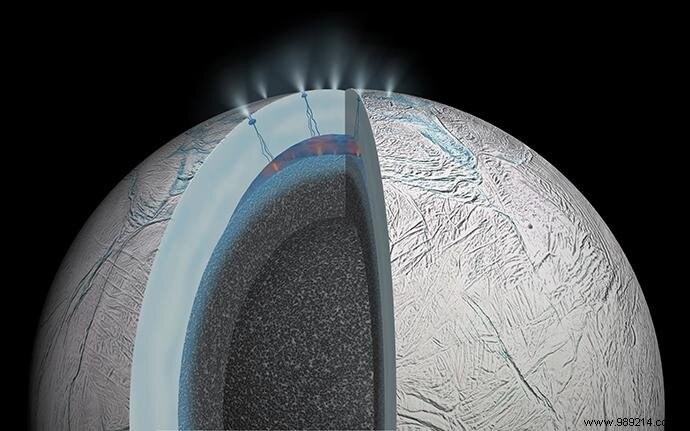
Enceladus, a 500-kilometer-wide icy moon of Saturn, captivates exobiologists. Cassini revealed water vapor jets erupting from its south pole, hinting at a subsurface global ocean trapped between a rocky core and thick ice shell.
Sampling these plumes, Cassini identified molecules akin to those at Earth's hydrothermal vents: dihydrogen, methane, and carbon dioxide. The high methane levels stood out as particularly surprising.
On Earth, hydrothermal vents form when seawater infiltrates the ocean floor, heats near magma, and emerges enriched with chemicals. Methanogenic archaea microbes thrive here, converting dihydrogen and carbon dioxide into methane through biological methanogenesis.
In their study, University of Arizona researcher Régis Ferrière and colleagues modeled whether Earth-like methanogens could account for Enceladus' methane abundance using Cassini observations.
Direct testing is impossible today, so the team turned to advanced mathematical models to assess probabilities. They first estimated hydrothermal dihydrogen production matching Cassini's data.
Next, they evaluated if this could sustain Earth-like methanogens under plausible conditions like dihydrogen concentrations and temperatures.
Finally, they simulated how such microbes might influence plume chemistry, especially methane output.
The models show that even maximum abiotic methane production, based on known Earth chemistry, falls short of Cassini's measurements. Incorporating biological methanogenesis, however, aligns perfectly with observed levels.
"We do not conclude that life exists in Enceladus' ocean," cautions Régis Ferrière. "Our goal was to test habitability for Earth-like microbes using Cassini data. The models indicate it's plausible."
Alternatively, unknown geochemical reactions—or primordial organics from comet-rich formation decomposing into methane—could explain the findings without biology.
