Jupiter's moon Europa harbors a vast subsurface ocean ripe for life—but not on the surface. A new study reveals that micrometeorite impacts and Jupiter's intense radiation destroy potential microbes unless they're buried at least 30 cm deep.
Europa ranks among top targets in astrobiology, alongside Mars and Enceladus. Observations indicate a salty global ocean lies beneath 16 to 24 km of ice, potentially interacting with the rocky core. This interface could spark the chemical reactions needed for life to emerge and thrive.
Europa's geological activity periodically vents water vapor to the surface. If microbial life exists in the ocean, it might reach the ice cap—but surviving there poses challenges. How deep must we probe to detect it?
Like the Moon, Europa endures relentless bombardment from micrometeorites and high-energy charged particles trapped in Jupiter's magnetic field. Prior research suggested 20 cm of ice might shield biomolecules. However, a study in Nature Astronomy paints a starker picture.
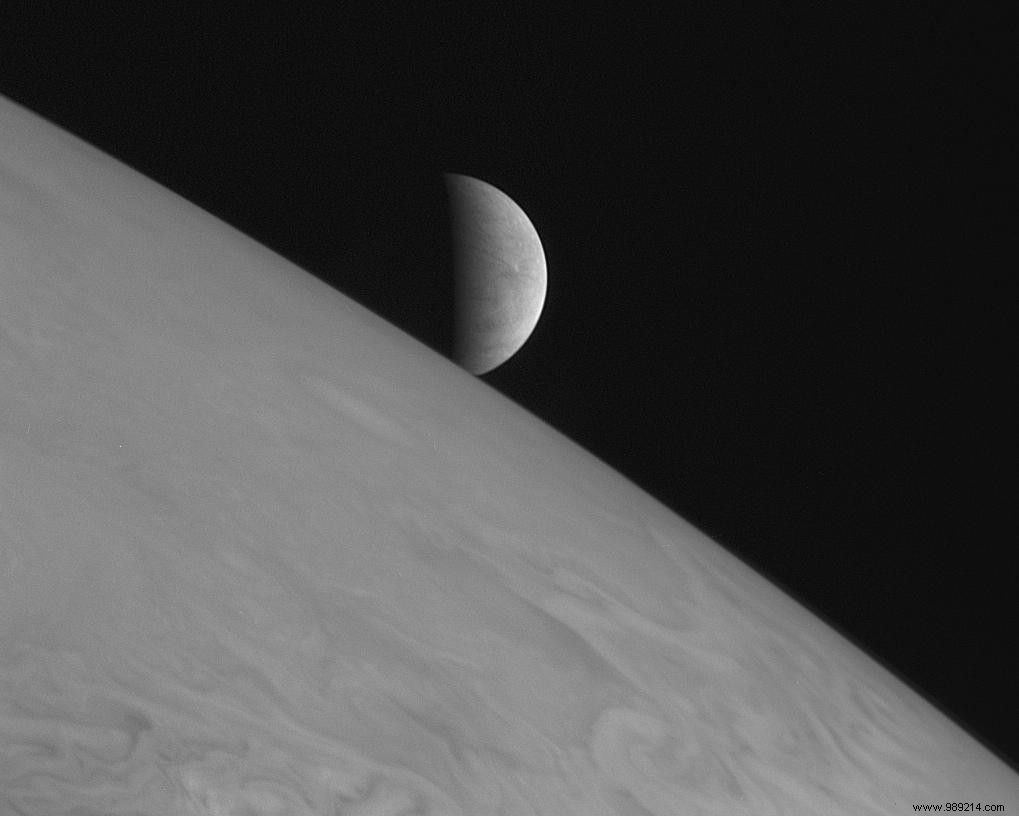
Emily Costello and colleagues at the University of Hawai'i at Mānoa modeled surface disruption from these cosmic assaults. Their findings show constant impacts mix the top 30 cm of ice significantly. Material in this layer gets churned to the surface, exposing it to lethal radiation.
"Chemical biosignatures shallower than this zone may have been exposed to destructive radiation," notes Costello. "To find pristine chemical biosignatures, we must look below the gardened impact area."
These insights are timely for NASA, which greenlit the Europa Clipper mission two years ago. The spacecraft will orbit Jupiter for four years, conducting dozens of close flybys to map Europa's icy surface in detail and identify prime landing sites for future missions.
Europa Clipper launches in 2024 on a commercial rocket, arriving between 2029 and 2020 after a 5.5-year journey.
