In 2020, astronomers identified a potential second Earth Trojan asteroid. A new study confirms 2020 XL5 orbits the Earth-Sun L4 Lagrange point and will accompany our planet for about 4,000 years.
Trojan asteroids are small bodies sharing a planet's orbit, typically preceding or following Jupiter. Previously, only 2010 TK7 was confirmed as an Earth Trojan. Now, research published in Nature verifies 2020 XL5, discovered that same year, as Earth's second Trojan—a tiny, temporary "extra moon."
Spotted in December 2020 by Hawaii's Pan-STARRS 1 telescope, 2020 XL5 orbits L4, the fourth Earth-Sun Lagrange point. Like 2010 TK7, it resides here. Lagrange points are stable gravitational balances where objects can "park" and co-orbit with the two bodies.
L4 lies 60 degrees ahead of Earth in its orbit around the Sun, as illustrated below.
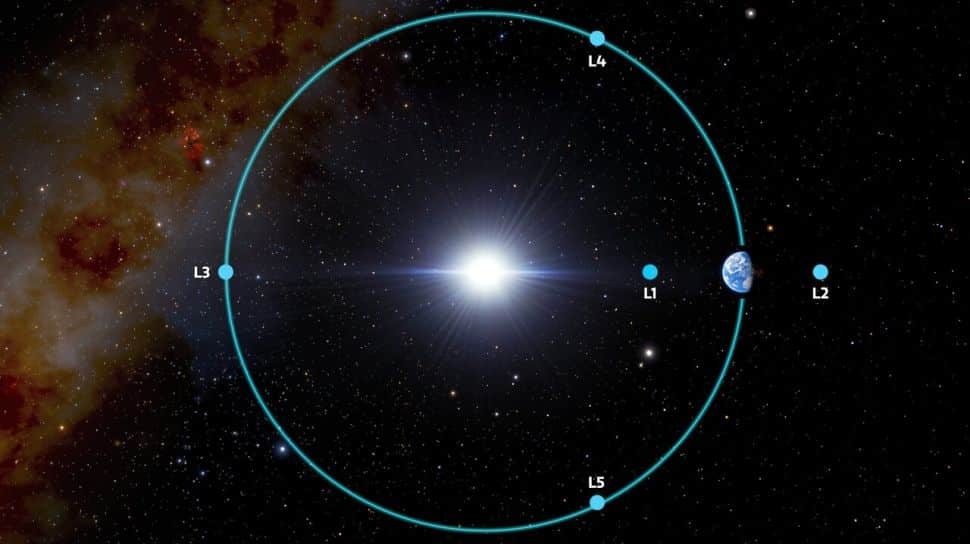
Astronomers used the SOAR telescope in Chile, Lowell Discovery Telescope in Arizona, and ESA's Optical Ground Station in Tenerife to confirm 2020 XL5's L4 position. Tracking these points from Earth is challenging, as objects are visible only briefly near twilight at low altitudes.
Photometric analysis suggests 2020 XL5 is a carbon-rich, dark C-type asteroid—the Solar System's most common. At roughly 1.2 km in diameter, it's larger than 2010 TK7's 0.4 km.
However, it's not permanent: orbital models predict it will remain Earth's Trojan for about 4,000 years before gravitational perturbations eject it.
