Astronomers have detected an enigmatic radio source originating from the Milky Way's galactic center. This signal repeats at irregular intervals and defies association with any known celestial objects, hinting at a potentially groundbreaking astronomical phenomenon.
First identified in archival data from April 2019 by the Australian Square Kilometre Array Pathfinder (ASKAP) Variables and Slow Transients (VAST) survey, this telescope routinely scans for radio emissions from pulsars, magnetars, supernovae, and gamma-ray bursts. Yet, this signal matched none of them.
Dubbed ASKAP J173608.2-321635, the source, located toward the galactic center, pulsed 17 times over less than two years at unpredictable intervals. Highly polarized, its brightness fluctuates dramatically—fading in a single day or persisting for weeks.
Recent follow-up observations from South Africa's MeerKAT telescope confirmed it on February 7, 2021, and again in April using the Australian Telescope Compact Array (ATCA). Archival data from these facilities revealed no prior instances before April 2019, and no corresponding signals in near-infrared or X-ray wavelengths, which typically accompany known radio emitters.
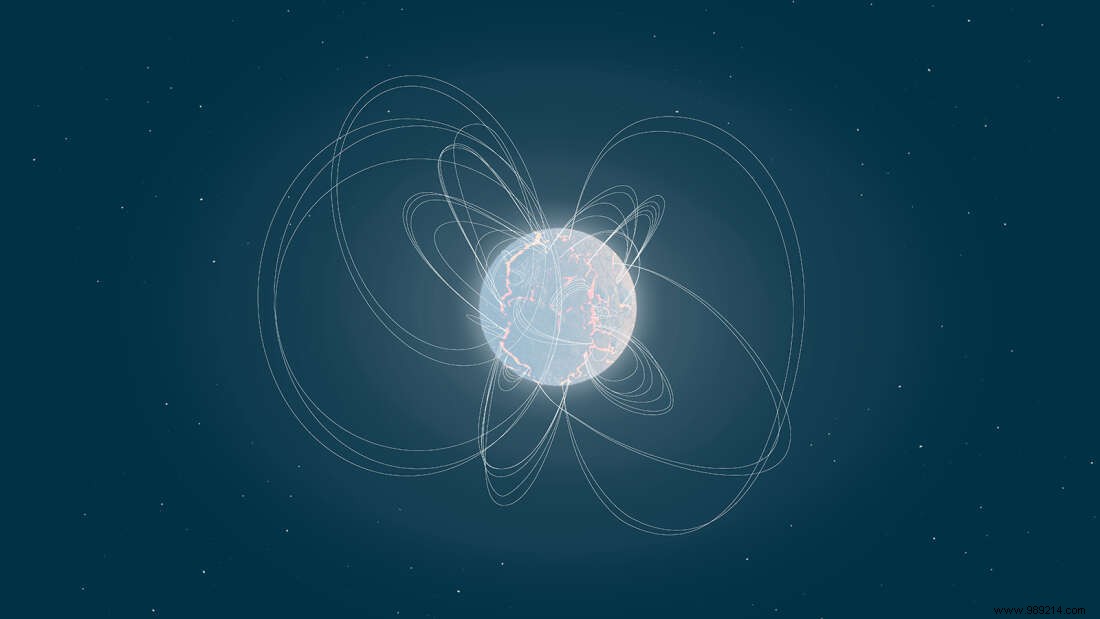
The signal's characteristics don't align with any established patterns. Researchers first considered a pulsar—dense remnants of collapsed massive stars that spin rapidly, beaming electromagnetic signals. Pulsars could account for the intermittency, polarization, and variability, but they pulse in seconds or milliseconds. This source remains active for weeks, possibly indicating an ultra-long-period pulsar—a first if confirmed.
Magnetars, pulsars with intense magnetic fields, were also dismissed; they emit X-rays during activity, which wasn't observed here.
The signal shares traits with Galactic Center Radio Transients (GCRTs)—elusive, short-lived radio bursts near the Milky Way's core. Three were identified in the 2000s, with more candidates pending. "GCRTs remain enigmatic," notes lead researcher Ziteng Wang. "They flicker erratically, show high polarization, and evade detection in X-ray or optical bands. Given its proximity to the galactic center, ASKAP J173608.2-321635 might be a new GCRT. However, its burst timescale differs, it's observed at higher frequencies, and GCRTs' origins are unclear."
For now, the team proposes this could represent an entirely new class of object. Further observations, including surveys beyond the galactic center, are planned to pinpoint its nature and location's significance.
