Before unlocking views of the universe's first stars and galaxies, the James Webb Space Telescope (JWST) must endure a high-stakes launch and intricate deep-space deployment to reach its vantage point at the L2 orbit.
Conceived in the 1990s with a budget under $1 billion and a target launch in the 2000s, the JWST has taken nearly 30 years and over $10 billion to come to fruition. A landmark collaboration between NASA, the European Space Agency, and the Canadian Space Agency, this observatory is set for liftoff on December 25.
Once operational, the JWST will become humanity's most powerful space telescope, capable of peering through the cosmic fog to reveal the universe's earliest epochs. With so much riding on its success, the astronomy community is buzzing with anticipation—and apprehension.
'You work for years and everything goes up in a cloud of smoke,' Marcia Rieke of the University of Arizona told The Times. A key designer of the JWST's ultra-sensitive infrared camera for detecting the faintest celestial objects, Dr. Rieke admits she'll be on pins and needles on December 24.
Cosmologist Michael Turner of the Kavli Foundation echoes this mix of excitement and dread: 'The next decade of astronomy and astrophysics hinges on the James Webb Space Telescope's success.' He adds that U.S. leadership in space science is also in the balance. 'It's a heavy burden,' he says, 'but we know how to achieve great things.'
Martin Rees of the University of Cambridge agrees: 'Any JWST failure would be disastrous for NASA,' he wrote in The Times.
Astrophysicist Priyamvada Natarajan of Yale, who plans to use the telescope to explore black hole origins, likens it to enduring human marvels like the temples of Mahabalipuram, Giza pyramids, Great Wall, or Sistine Chapel. 'I see this observatory as one of those monuments of our time.'
If it succeeds, the JWST could transform astronomy. Its advanced instruments will hunt for light from post-Big Bang objects, detail galaxy structures, scrutinize protoplanetary disks, and analyze exoplanet atmospheres.
'With such vast scientific potential, we're all deeply invested intellectually and emotionally,' summarizes Natarajan.
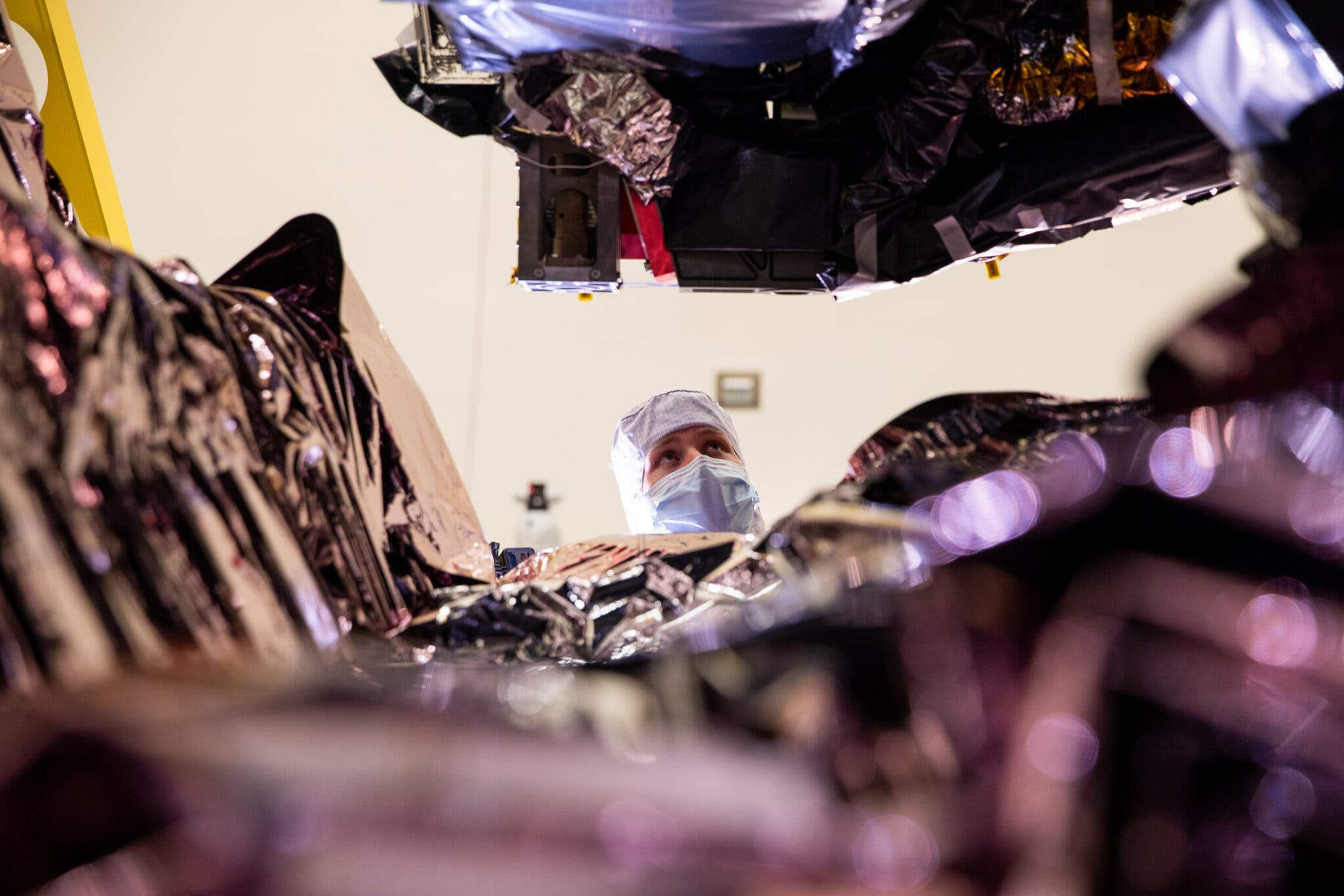
Anxiety is warranted. While Ariane 5 has a stellar track record, spaceflight carries inherent risks. Even post-launch, the JWST faces months of challenges.
Over ensuing weeks, it must perform hundreds of millimeter-precise maneuvers to unfurl its massive sunshield and gilded primary mirror. For six months, every system must function flawlessly—no repairs possible in deep space.
Engineers and astronomers alike will remain on high alert until it's fully operational.
