NASA's James Webb Space Telescope (JWST) is set to launch on December 24. As the most powerful observatory ever sent into space, it will enable astronomers to explore the universe in unprecedented detail—including one of astrophysics' greatest enigmas: dark matter.
The orbital speed of a star is determined by the gravitational pull toward its galaxy's center, which depends on the galaxy's total mass. In the 1970s, astronomer Vera Rubin measured velocities of stars in the Milky Way and found that the visible matter alone couldn't account for their stable orbits.
This led to the hypothesis of an invisible form of matter—dark matter—that provides the missing gravity. Estimates suggest dark matter comprises about 26.8% of the universe, compared to just 4.9% for normal (baryonic) matter. Though never directly detected, JWST could reveal its influence on visible matter.
JWST will capture ultra-sharp images to detect subtle distortions from gravitational lensing, helping pinpoint dark matter distributions.
Consider a distant ancient galaxy aligned behind a massive galaxy cluster (the lens) from our perspective on Earth. The cluster's gravity bends the galaxy's light, creating observable arcs, distortions, magnification, multiple images, or brighter appearances.
These effects allow astronomers to calculate the total mass—including dark matter—beyond what's visible.
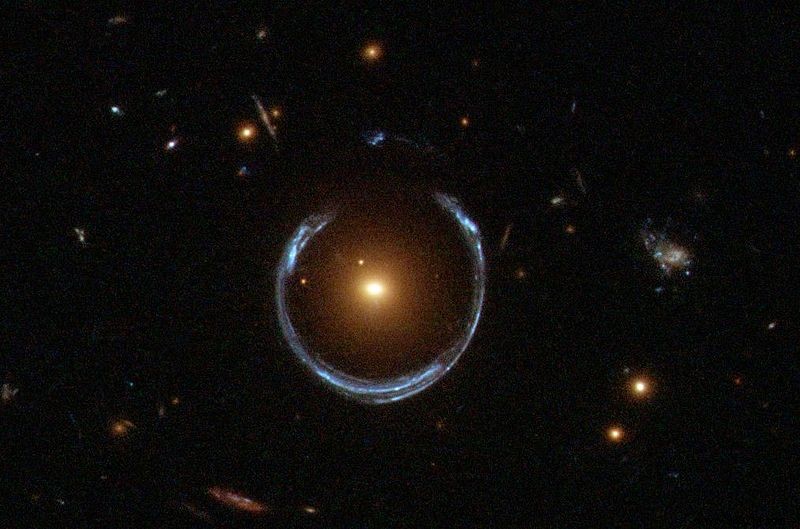
“The James Webb Space Telescope is ideally suited for these measurements. Its exquisite resolution reveals very small disturbances, and its ability to peer deeper into space provides access to far more background galaxies for analyzing gravitational lensing effects,” notes a NASA fact sheet.
JWST's capacity to observe farther into space—and thus deeper into cosmic history—will also illuminate dark matter's role in galaxy formation and evolution.
