A groundbreaking cosmological study has produced the largest 3D map of the Universe to date. Drawing from data on four million galaxies and quasars, this map offers a more continuous cosmic history and sharper understanding of the Universe's expansion.
Astrophysicists worldwide collaborated on this largest 3D map of the Universe, spearheaded by Switzerland's École Polytechnique Fédérale de Lausanne (EPFL), as detailed in their July 20, 2020 press release. The map stems from analyzing four million galaxies and quasars—bright, quasi-stellar objects.
Hundreds of researchers from 30 institutions contributed to the Sloan Digital Sky Survey (SDSS), a comprehensive cosmological program spanning over 20 years. This map specifically arises from its final phase, the extended Baryon Oscillation Spectroscopic Survey (eBOSS), conducted via a telescope in New Mexico, USA.
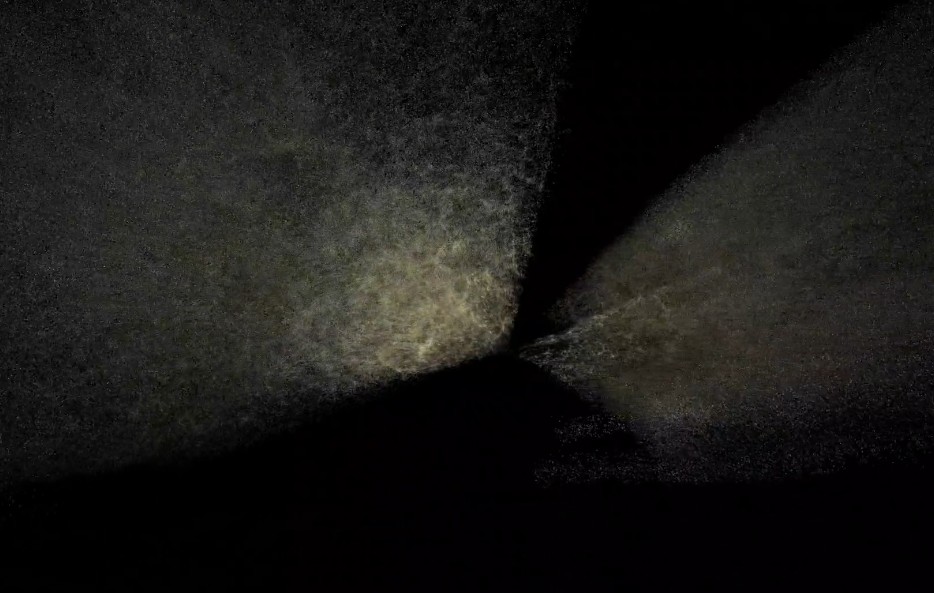
Science has long understood the early Universe through Big Bang theories and cosmic microwave background observations, as well as its expansion via galaxy distance measurements.
Yet key gaps persisted until eBOSS, launched in 2012, targeted them using novel tracers: actively star-forming galaxies and distant quasars for unprecedented 3D cartography.
This map visualizes matter filaments and vast cosmic voids from when the Universe was just 380,000 years old. It captures the oldest, reddest galaxies from 6 billion years ago, younger blue galaxies from earlier epochs, and quasars reaching back 11 billion years.
On expansion, it confirms ongoing acceleration linked to dark energy—an enigmatic force aligning with Einstein's general relativity, though its origins remain elusive.
While cosmic expansion is established, the Hubble constant varies in estimates. eBOSS data suggests acceleration 10% slower than prior measurements, sparking further debate among experts.
