Uranus and Neptune share nearly identical sizes, masses, compositions, structures, and even atmospheric turnover rates. Yet, their colors differ strikingly. How can two such similar ice giants appear so distinct?
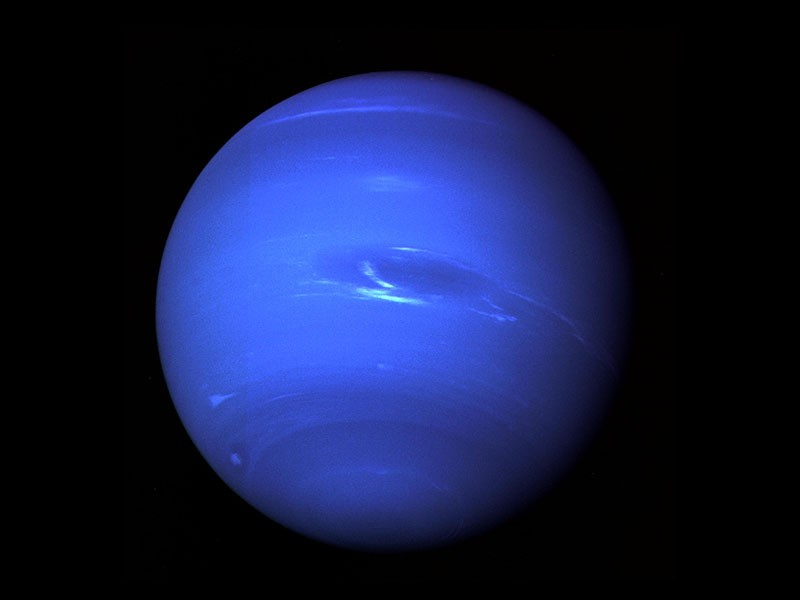
As the Solar System's outermost and often overlooked planets, Uranus and Neptune boast remarkably similar builds: a rocky core enveloped by a mantle of water ice, ammonia, and methane, topped by a hydrogen-helium-methane atmosphere and layered high-altitude hazes. On close inspection, however, their hues set them apart. Neptune's vibrant azure blue hosts dynamic storms, while Uranus presents a bland, pale visage.
A recent study by planetary physicist Patrick Irwin and his team at the University of Oxford delves into this enigma using visible and near-infrared observations to model their atmospheres. (Note: This research awaits peer review.)
Both planets feature a photochemical haze layer (Aerosol-2), formed when solar ultraviolet radiation fragments atmospheric particles. This layer produces methane ice clouds at its base and deeper snow. Crucially, Uranus's Aerosol-2 is twice as opaque as Neptune's, scattering light differently and yielding their contrasting appearances.
"These particles absorb UV light, accounting for Uranus's lower UV reflectivity and paler hue to the human eye," the authors explain. "Neptune's thinner Aerosol-2 layer also makes dark atmospheric spots more visible than on Uranus."
Below lies the deeper Aerosol-1 haze, where methane vaporizes into particles that condense into submicron hydrogen sulfide crystals. Why Neptune's upper haze is less dense remains unclear, though researchers suspect its atmosphere efficiently removes haze via methane snowfall, unlike Uranus.
Full study details are available on the arXiv preprint server.
