NASA's inaugural Artemis lunar mission faces additional delays, with the earliest launch now targeted for April 2022. Engineers require extra time for rigorous safety validations.
NASA's commitment to precision has intensified following past setbacks, leaving no room for error in humanity's return to the Moon. Originally slated for late 2021, the Artemis I launch— the foundational step in this ambitious program—has been postponed twice and is now set for April at the earliest due to technical needs.
"Teams are proceeding methodically to confirm the integrated system's readiness for a safe Artemis I launch. NASA is evaluating opportunities in April and May," the agency stated in a press release. The primary window opens April 8 to 23, with a backup May 7 to 21 if needed.
On February 2, NASA announced the Space Launch System (SLS) rocket, topped with the Orion capsule, won't reach Kennedy Space Center's Launch Pad 39B before mid-March. Following rollout, the team will conduct a wet dress rehearsal, simulating all launch phases except liftoff, including propellant loading.
Artemis I marks an uncrewed lunar flyby. The Orion spacecraft, designed for future crews, will launch atop the SLS rocket for a 26-day Earth-Moon journey mirroring Apollo 8's path.
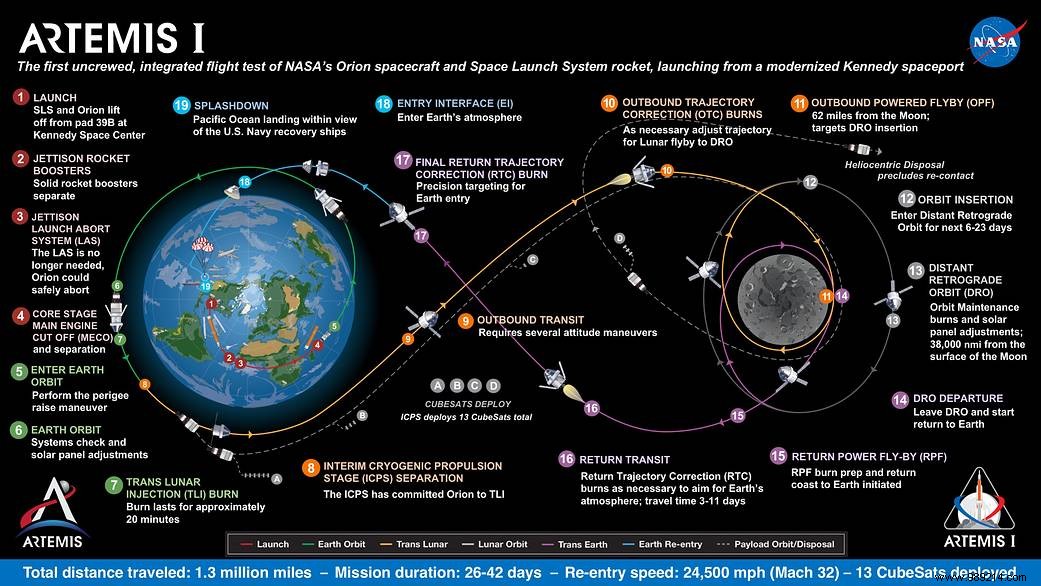
Key goals include validating NASA's new heavy-lift SLS for at least a decade of service and testing Orion across lunar phases. Aboard, the MARE instrument will measure radiation exposure beyond Earth's magnetosphere, informing crew safety.
Success paves the way for Artemis II's crewed lunar orbit and Artemis III's first human lunar landing since 1972.
