Communicating with extraterrestrial civilizations has long captivated science fiction writers, but over the past few decades, scientists have actively pursued this goal. While no evidence of intelligent alien life exists yet, astrophysicists continue transmitting signals into space, hoping for a response. What exactly have we sent?
In the early 19th century, Austrian astronomer Joseph Johann von Littrow proposed digging vast geometric trenches in the Sahara Desert, filling them with kerosene, and igniting them. This dramatic display aimed to signal our presence to potential extraterrestrial observers within the Solar System.
Though von Littrow's plan never materialized, humanity's efforts persist. Radio technology has revolutionized these attempts. In 1962, Soviet scientists directed a radio transmitter toward Venus, broadcasting a greeting in Morse code: Mir (Russian for "peace" or "world"), Lenin, and SSSR (the Latin acronym for the Soviet Union). As noted in a 2018 International Journal of Astrobiology article, this was largely symbolic—a test for new planetary radar technology used to map Solar System objects.
The next effort reached farther: In 1974, astronomers including Frank Drake and Carl Sagan sent a binary-encoded radio message from Puerto Rico's Arecibo Observatory to Messier 13, a star cluster 25,000 light-years away. It illustrated a human figure, DNA double helix, carbon atom, and telescope diagram.
"The Arecibo message sought to convey who we are through the universal languages of math and science," explains Douglas Vakoch, psychologist and president of Messaging Extraterrestrial Intelligence (METI). However, the signal's 25,000-year journey targets a moving cluster, per Cornell University's Department of Astronomy.
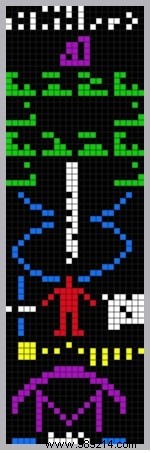
Hypothetical aliens might detect it—its intensity is 10 million times stronger than the Sun's radio emissions—but SETI astronomer Seth Shostak deems success unlikely.
Radio has also carried art and ads: In 2008, Doritos aired a commercial toward a star system 42 light-years away in Ursa Major, per the International Journal of Astrobiology. In 2010, a Klingon-language invite (from Star Trek) beckoned real aliens to a Dutch opera.
Beyond radio, we've dispatched physical artifacts via spacecraft. Launched in 1977, Voyager 1 and 2 probes carry gold-plated discs with Earth's music, sounds, and 116 images of our planet and Solar System, venturing into interstellar space.
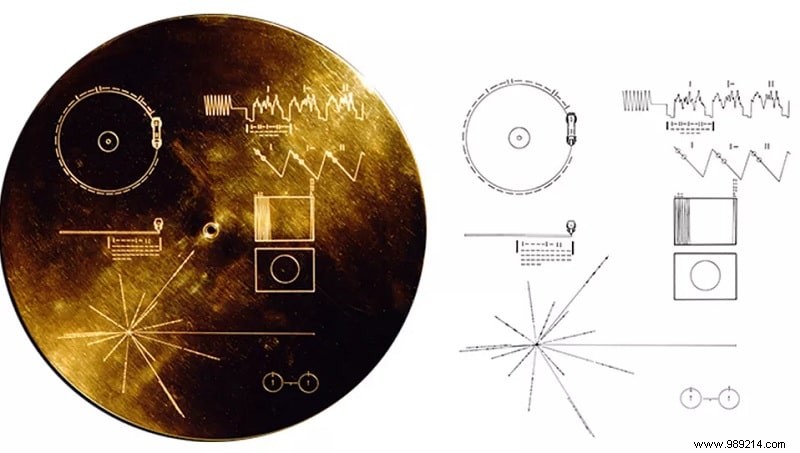
These probes drift onward, awaiting discovery. "The odds are zero. It was a poetic, courageous emblem of our best qualities, though impractical for communication," says Sheri Wells-Jensen, linguist at Bowling Green State University specializing in extraterrestrial intelligence.
Experts concur: Success hinges on alien existence, their radio monitoring, grasp of our math/science, and sensory similarities to humans. Despite slim chances, these endeavors reflect our enduring curiosity.
