Recently, researchers from the SETI Berkeley Research Center submitted a compelling proposal to the National Academy of Sciences: constructing a radio telescope on the Moon's far side to advance the search for extraterrestrial intelligence.
The SETI (Search for Extra-Terrestrial Intelligence) initiative unites scientists dedicated to detecting signals from advanced extraterrestrial civilizations across the Universe. For decades, these efforts have relied on Earth-based instruments, but our planet's increasing radio "noise"—from communications and electronics—threatens to obscure potential alien transmissions. A lunar telescope offers a pristine, interference-free listening post.
Positioned on the Moon, such a radio telescope would evade human-generated interference and access radio spectrum bands blocked by Earth's atmosphere, dramatically boosting detection capabilities.
While the concept of lunar radio astronomy isn't new, recent technological strides make it feasible. "Transportation infrastructure to the Moon is now much cheaper," explains Eric Michaud, lead author from the SETI Berkeley Research Center. "Maybe not today, but it will become increasingly achievable."
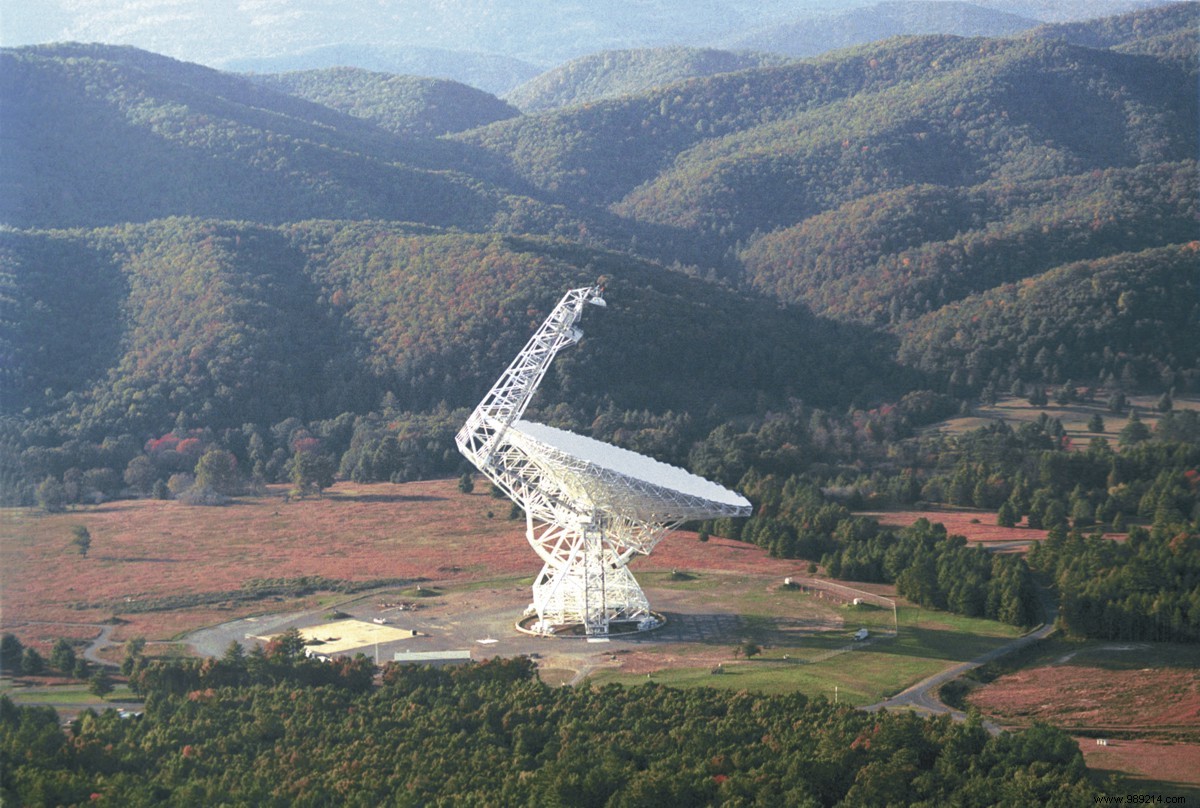
The proposal outlines two strategies. The first deploys a surface telescope paired with an orbiter: the telescope captures data from the far side, while the orbiter relays it to Earth. However, this setup limits sky observations to brief periods, and the orbiter risks exposure to Earth's radio interference.
The second repurposes a lunar crater as a natural radio dish—a concept explored in the late 1970s by Stanford Research Institute scientists, who deemed it too costly and labor-intensive at the time, requiring human crews.
Today, Eric Michaud argues costs have plummeted thanks to commercial providers like SpaceX and Rocket Lab. Advanced robotics now enable fully autonomous construction, eliminating the need for on-site humans.

NASA shares this vision. In April, under its NIAC program, the agency funded a concept for a 1-km-diameter radio telescope in a lunar crater, using rovers to deploy a metal mesh and suspend a receiver overhead.
Challenges remain: lunar nights span 14 Earth days, demanding non-solar power sources for substantial energy needs. NASA's compact nuclear reactors could suffice, though none have been space-tested yet. Overcoming these hurdles is a critical first step.
Will a lunar SETI observatory become reality? Experts are optimistic. "As access to space becomes cheaper and more democratized, astronomy will move there—and much of it from the lunar surface," says Andrew Siemion, director of the Berkeley SETI Research Center. After decades of searching, it could lead to our first contact.
