Approximately 359 million years ago, one or more nearby supernovae may have triggered the extinction of over 90% of terrestrial life, according to recent research.
At the close of the Devonian period, oceans teemed with massive marine creatures, some rivaling the size of school buses. Then, a catastrophic event unfolded: ozone levels plummeted, sparking a 100,000-year cold snap that advanced glaciers into tropical regions. Sea levels dropped dramatically, devastating shallow-water habitats where most life thrived.
This crisis erased around 96% of vertebrate species. Survivors, typically the smallest individuals, adapted by shrinking further. The fossil record confirms this—post-extinction species were predominantly under 40 centimeters long.
Scientists have long puzzled over the cause, ruling out large-scale volcanism or global warming due to lack of geological evidence. Now, the answer may lie in the stars.
Led by astrophysicist Brian Fields at the University of Illinois, a team proposes that an extraterrestrial event depleted the ozone layer. They dismissed short-lived phenomena like meteor impacts, solar flares, or gamma-ray bursts. Instead, a supernova exploding about 65 light-years away fits the timeline perfectly.
Such an event would bombard Earth with harmful UV, X, and gamma rays initially, followed by cosmic rays that erode the ozone layer for at least 100,000 years.
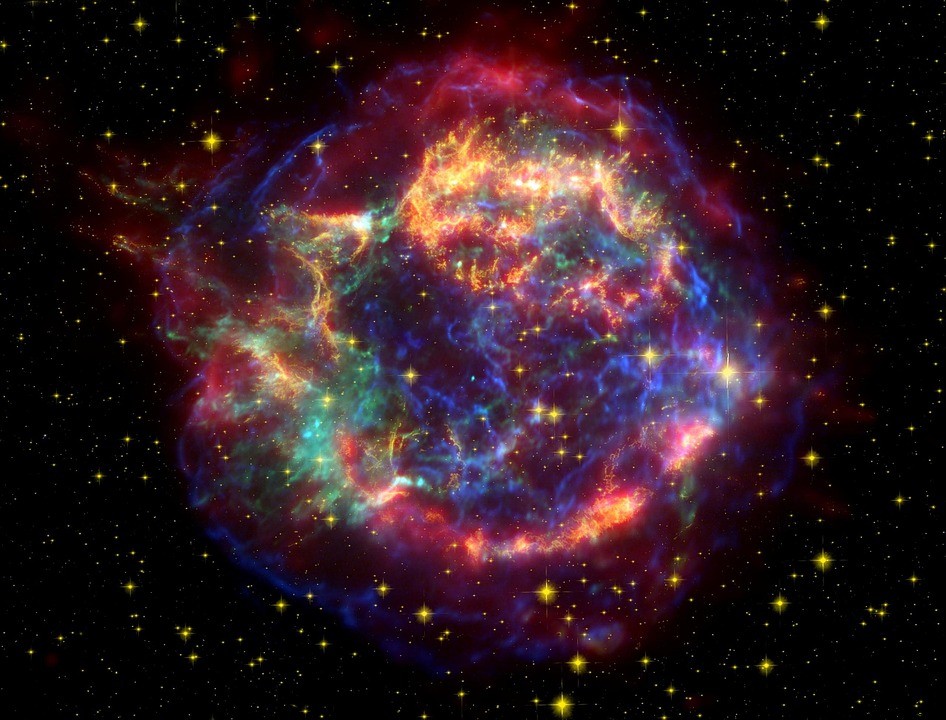
A single supernova may not tell the full story. Fossil records indicate biodiversity declined starting 300,000 years earlier. "It's entirely plausible," notes co-author Jesse Miller. "Massive stars cluster together, so follow-up supernovae could have struck soon after."
This remains a hypothesis, but testable. Detecting radioactive isotopes like plutonium-244 and samarium-146 in Devonian-era rocks and fossils would confirm a cosmic origin—these isotopes don't form naturally on Earth today and decay rapidly.
