Blue Origin, the spaceflight company founded by Jeff Bezos, has delivered a full-scale engineering model of its lunar lander to NASA. This prototype positions the company as a strong contender to ferry astronauts to the Moon by 2024 under the Artemis program.
Last May, NASA awarded contracts to three companies—Blue Origin, Dynetics, and SpaceX—to develop lunar landing systems for the first woman and next man on the Moon as part of the Artemis program.
"With these three contractors, I believe NASA has everything it needs to successfully complete its 2024 lunar landing," declared Jim Bridenstine, then-NASA administrator. "We are delighted. These companies not only bring unique designs, they also offer unique stories and philosophies to each of their developments."
The companies quickly advanced their designs, and Blue Origin has delivered its full-scale model to NASA's Johnson Space Center in Houston, where it will remain until early next year.
"Testing this engineering model is a step towards realizing this historic mission," said Brent Sherwood, Blue Origin's vice president of advanced development programs. "Benefiting from NASA's expertise and feedback at this early stage will allow us to develop a secure commercial system that meets the agency's needs."
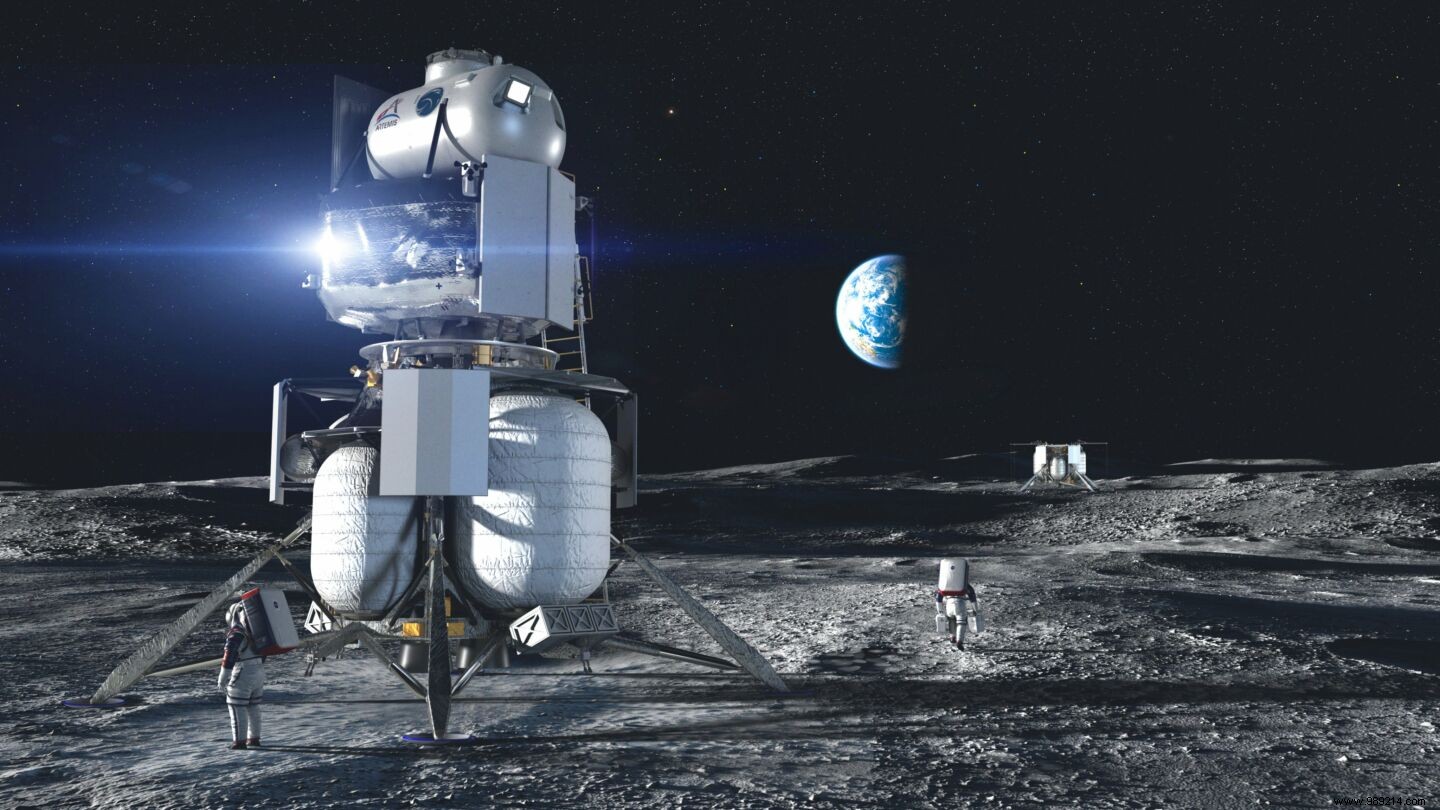
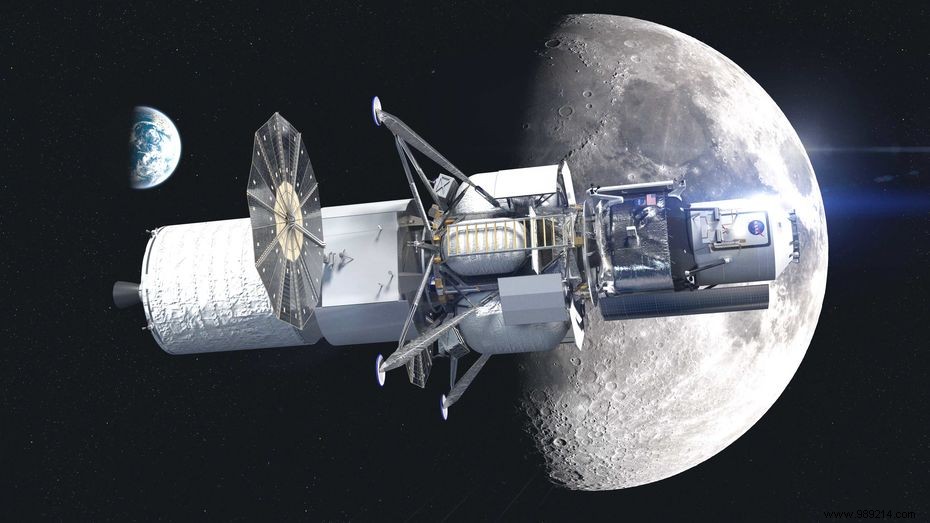
The 12 meters high structure comprises three key elements: a descent stage to carry astronauts to the lunar surface, powered by a transfer module. An ascent vehicle will then lift them back to the Orion capsule, built by Lockheed Martin as the prime contractor.
Astronauts will launch from Earth inside the Orion capsule, mounted atop NASA's powerful Space Launch System (SLS) rocket.
Under the Artemis program, Blue Origin received $579 million, Dynetics was awarded $253 million, and SpaceX secured $135 million. These figures reflect the amounts proposed by each team, not NASA's preferences.
Dynetics is developing a lander reminiscent of Apollo-era modules, with a cabin positioned close to the surface. SpaceX plans to leverage its reusable Starship vehicle—recently tested in a prototype flight—for Earth-Moon transport.
NASA will evaluate all proposals and likely select one for the initial lunar missions.
The 2024 Moon landing goal remains ambitious. Key milestones include Artemis 1, delayed from 2020 to 2021: an uncrewed Orion test flight around the Moon using the SLS. Future missions hinge on its success.
