NASA's Europa Clipper orbiter is set to hunt for signs of life on Jupiter's moon Europa in the early 2030s. Building excitement, the agency has just released an official mission poster.
NASA confirmed plans last year to investigate Europa, Jupiter's intriguing icy moon. Voyager flybys in 1979 and the Galileo mission revealed a vast subsurface global ocean, likely salty. The key question remains: can this water sustain life? Enter the Europa Clipper mission, NASA's dedicated effort to find out.
Slated for launch in 2024, the spacecraft will reach the Jupiter system in the early 2030s. It will orbit Jupiter for four years, conducting 45 low-altitude flybys of Europa (as close as 25 km to 2,700 km above the surface) to scrutinize its icy exterior.
A core goal: capture high-resolution images to identify prime landing sites for future missions. Those landers will sample up to 10 cm beneath the ice for potential biosignatures.
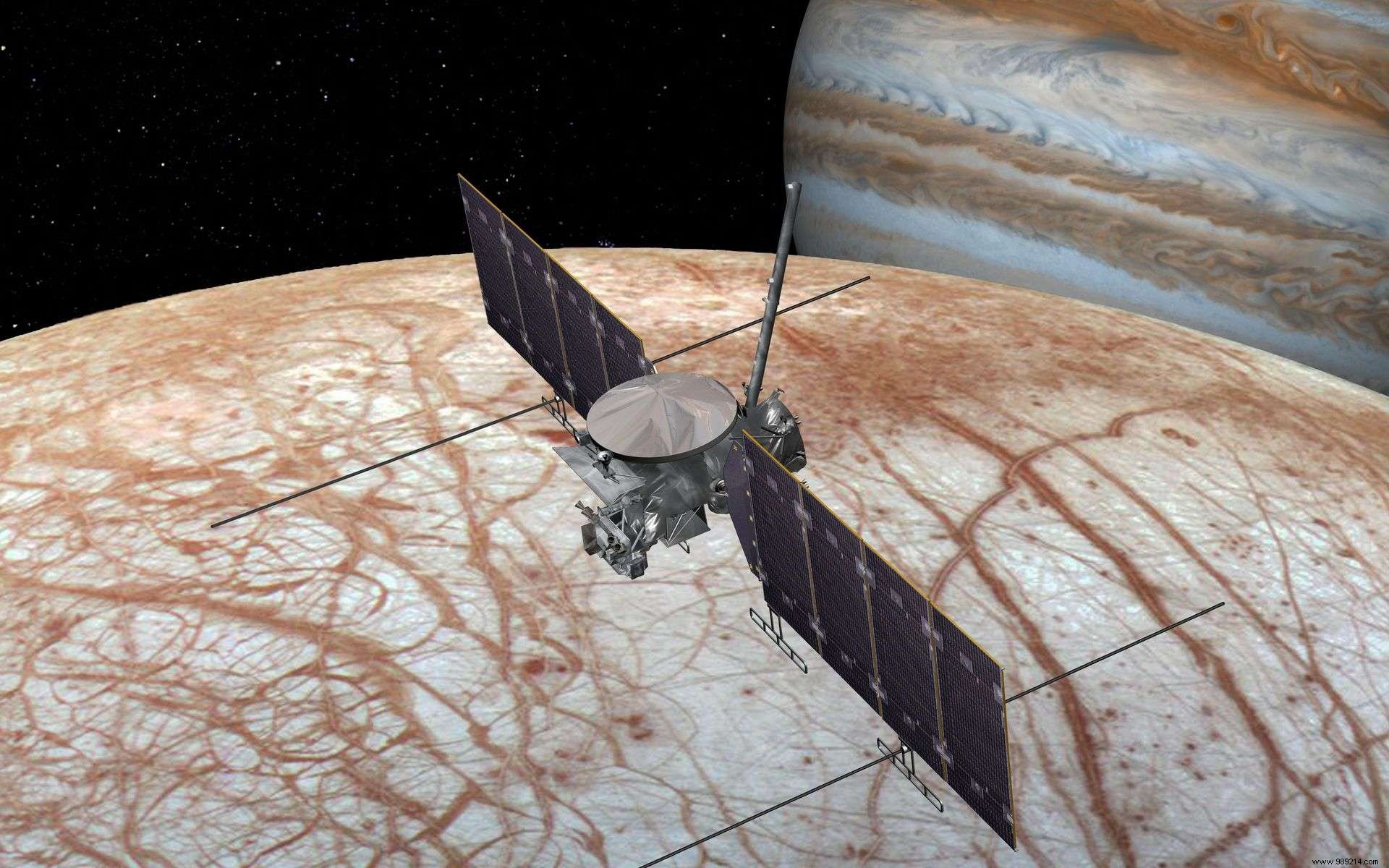
Equipped with cutting-edge tools—including ice-penetrating radar, a shortwave infrared spectrometer, topographic imager, and ion/neutral mass spectrometer—Europa Clipper will map ice thickness, composition, and subsurface secrets.
"This is a giant leap in our search for habitable oases in our cosmic backyard," said Curt Niebur, Europa Clipper project scientist last year. "We're confident these instruments will yield groundbreaking discoveries."
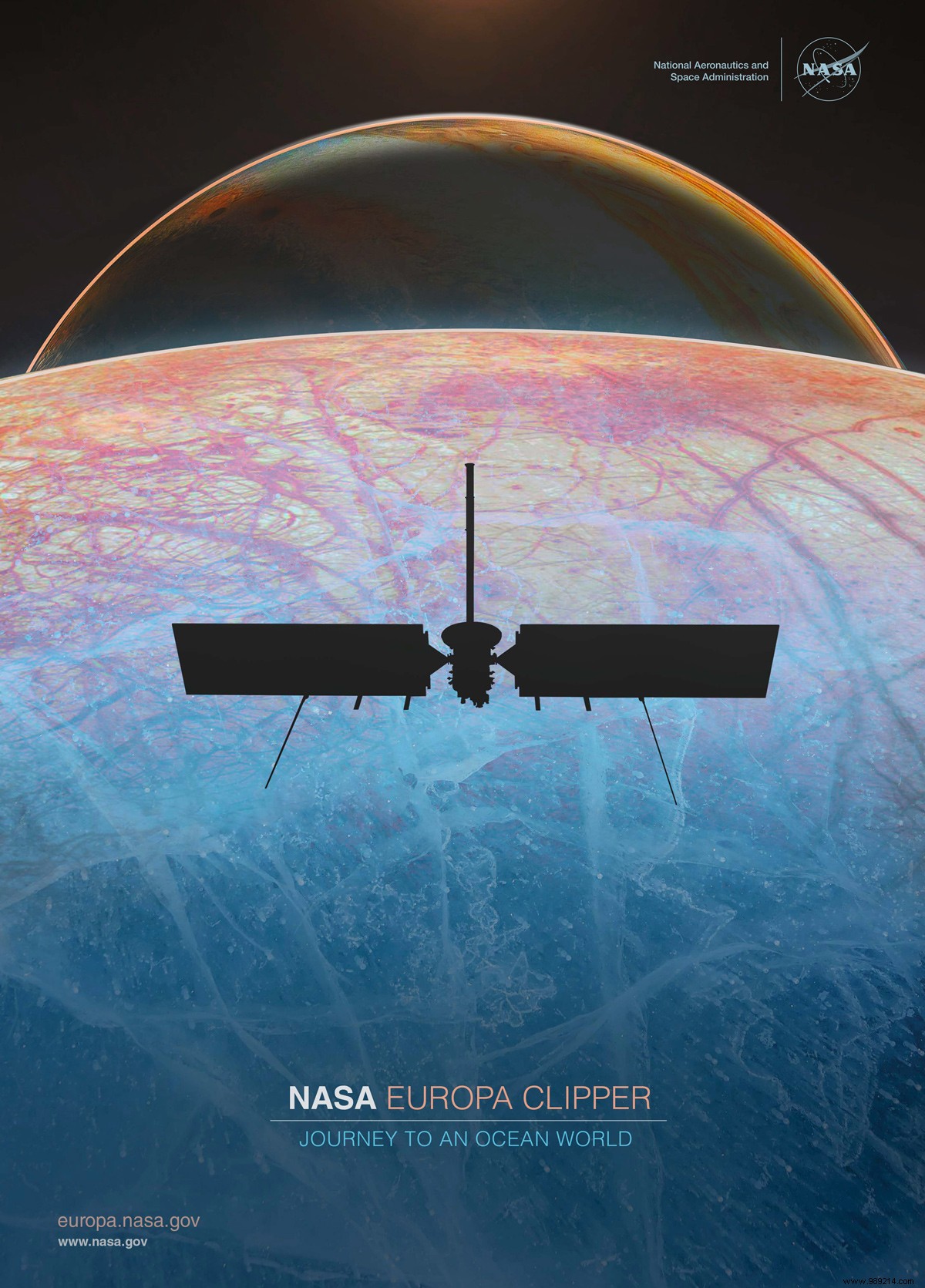
To hype the launch, NASA debuted this striking poster: the orbiter approaches Europa's frozen terrain, with massive Jupiter looming behind.
Meanwhile, the European Space Agency's JUICE mission launches in 2022, arriving at Jupiter in 2030. It will survey Callisto, Europa, and Ganymede before orbiting Ganymede in 2032.
