NASA is preparing to send astronauts back to the Moon for the first time since 1972. Before liftoff, Orion spacecraft engineers must solve a key challenge: its toilet system generates strong odors that permeate the cabin. A new toilet prototype is set for astronaut testing soon.
As NASA gears up for lunar missions—including a 10-day crewed flyby in 2023 and a landing the following year—the Orion capsule is central to these efforts. According to a Business Insider report from September 23, 2020, the spacecraft's toilets produce odors that affect the entire interior, posing a significant hurdle for Orion engineering manager Jason Hutt.
“If you want to recreate the smell of a used spaceship, grab a few dirty diapers, microwave food wrappers, a used vomit bag and some sweaty towels, put them in an old-fashioned metal trash can and let them bake in the summer sun for ten days. Then open the lid up and take a deep breath,” Hutt tweeted on August 18, 2020.
Comparable in size to a small motorboat, the Orion capsule demands an efficient Universal Waste Management System (UWMS) that minimizes odors in tight quarters. A new UWMS model will soon launch to the International Space Station (ISS) for testing against existing ISS toilets (see photo below). Like other space toilets, it relies on motorized fans to suction urine and feces in microgravity.
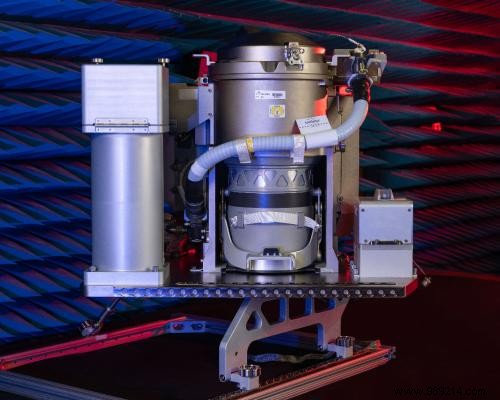
While feces will be stored onboard Orion until splashdown, there's no room for urine storage. Unlike the ISS, Orion lacks space for water-recycling filters. Astronauts will vent urine into space, where it freezes at around -270°C and drifts indefinitely.
Strict weight limits require a lightweight toilet, including compact motors and fans. However, powerful suction demands could amplify noise, especially in Orion's aluminum structure. Interestingly, some noise might offer privacy in the cramped cabin.
To combat odors from stored feces—without windows or air fresheners—powdered carbon filters emerge as an ideal fix: compact, chemical-free, and electricity-free.
