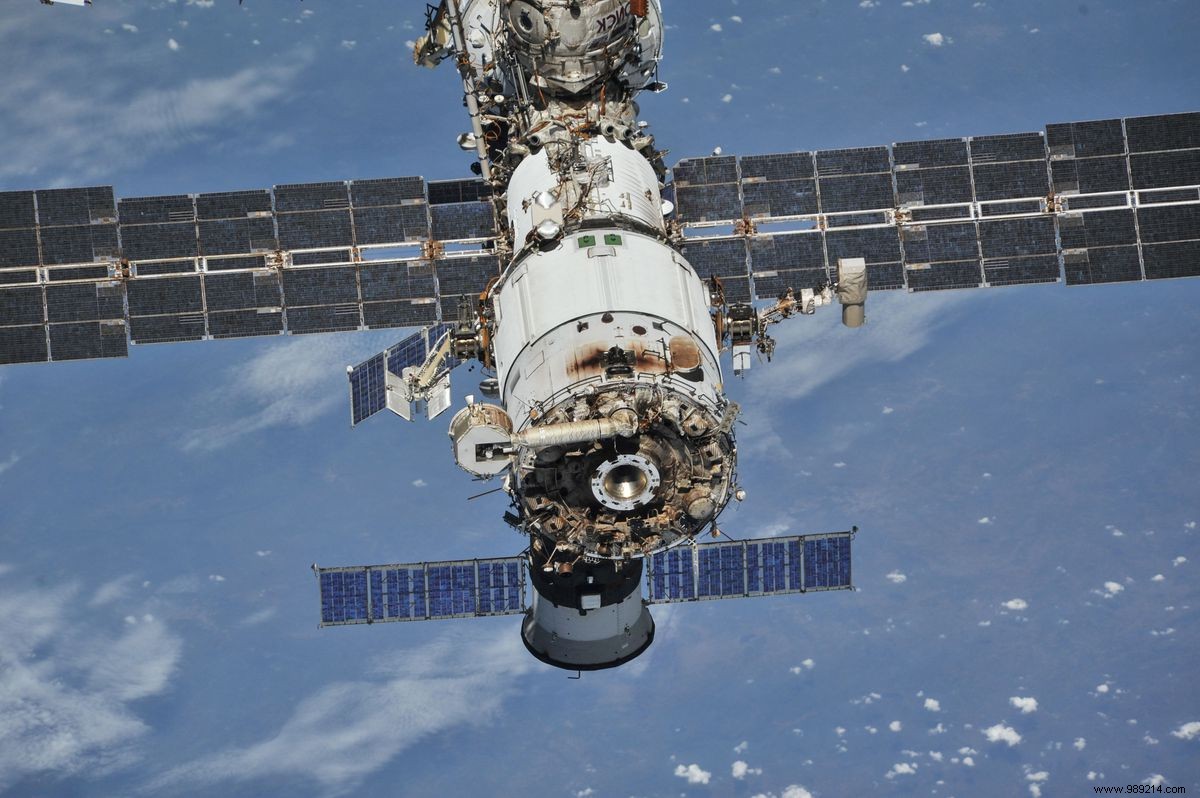
Seven astronauts aboard the International Space Station (ISS) took shelter in their spacecraft on November 15 as the station passed through a cloud of debris from a Russian anti-satellite test. The U.S. condemned the act as "dangerous and irresponsible."
Russia conducted an anti-satellite (ASAT) missile test, destroying one of its own satellites and generating a cloud of approximately 1,500 pieces of trackable debris that continues to orbit Earth. Hours later, some of this debris passed perilously close to the ISS.
Russia's Roscosmos confirmed the debris field, which threatened the station every 90 minutes due to orbital mechanics. The crew sheltered in their spacecraft for several hours, prepared for a potential emergency return to Earth.
The seven astronauts aboard include NASA's Mark Vande Hei, Raja Chari, Thomas Marshburn, and Kayla Barron; Roscosmos' Anton Shkaplerov and Pyotr Dubrov; and ESA's Matthias Maurer.
Space debris expert Jonathan McDowell from Harvard's Center for Astrophysics noted the first close approach at 8:06 a.m. French time, lasting about 10 minutes. By 3:30 p.m. French time, operations returned to normal.
This follows a November 10 pass of debris from China's 2013 ASAT test.
The U.S. State Department swiftly confirmed and condemned the test. Spokesperson Ned Price stated: "Earlier today, the Russian Federation recklessly conducted a destructive direct-ascent anti-satellite missile test against one of its own satellites." He added that it created "over 1,500 pieces of traceable orbital debris and hundreds of thousands of smaller pieces," threatening all nations' interests.
Price called it "dangerous and irresponsible behavior" that undermines outer space's long-term sustainability. "This test demonstrates Russia's claims against space weapons and militarization are fallacious and hypocritical," he said. "The U.S. will work with allies to respond."
