China stands poised to launch its most ambitious lunar mission yet, targeting the return of at least two kilograms of Moon rocks to Earth. Liftoff is slated for next week.
China's space program has advanced rapidly in recent years. The China National Space Administration (CNSA) recently achieved success with the Tianwen-1 mission to Mars and is developing the Tiangong space station to succeed the International Space Station. Lunar exploration remains a key priority.
Since early 2019, China has been pioneering operations on the Moon's far side with the Chang'e-4 mission. This historic landing provides insights into the Moon's formation and early solar system history. Future plans include sending taikonauts to the surface and establishing a permanent lunar outpost.
A major milestone is the Chang'e-5 sample-return mission, designed to bring fresh lunar material back to Earth.
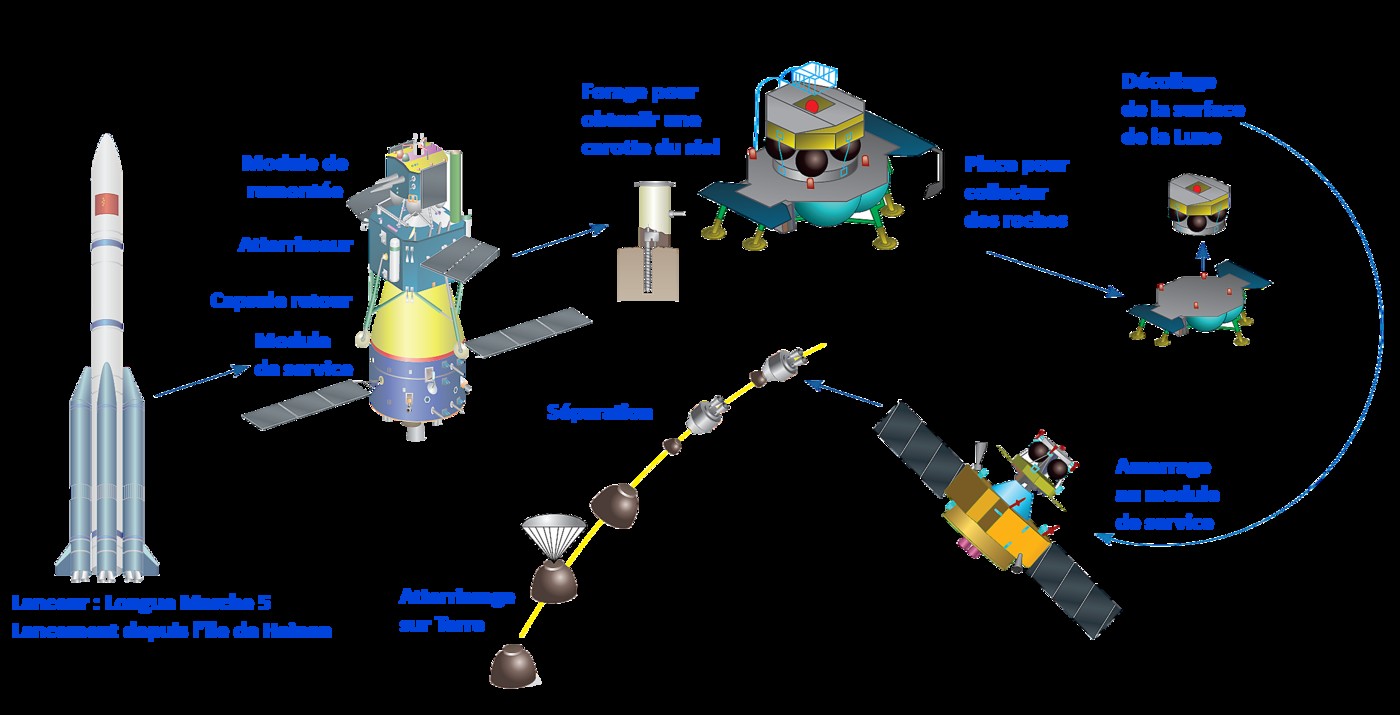
The 8.2-tonne probe will launch on November 24 or 25 aboard a Long March 5 rocket—China's most powerful launcher to date. On November 17, it was transported from its assembly facility to the Wenchang launch site on Hainan's southern coast.

The journey to the Moon will take about five days, followed by orbital insertion. The spacecraft will then deploy a lander and ascender to touch down in the Oceanus Procellarum (Ocean of Storms), the Moon's largest sea. Historic missions like Luna 9, Luna 13, Surveyor 1, Surveyor 3, and Apollo 12 have landed here.
The lander will drill up to two meters deep to collect samples—aiming for two kilograms of regolith and rock. The ascender will launch, rendezvous with the orbiter, and transfer the samples. The orbiter will then return to Earth, releasing the capsule over Inner Mongolia.
These samples from a region rich in young volcanic rocks (under three billion years old) and KREEP materials (high in potassium, rare earth elements, phosphorus, uranium, thorium) will offer unprecedented analysis opportunities for Chinese scientists.
Success would mark the first lunar sample return since NASA's Apollo program and the Soviet Luna 16 mission in 1970—the pioneering robotic retrieval from another celestial body.
