Since landing on Mars in February 2021, NASA's Perseverance rover has been preparing to collect its first rock sample. This specimen, along with future ones, will be returned to Earth for in-depth analysis, with the primary goal of detecting signs of ancient microbial life.
After initial months calibrating instruments and documenting the Ingenuity helicopter's flights, Perseverance is now fully dedicated to its core scientific mission: searching for traces of past microbial life in Jezero Crater. The real work begins soon, as NASA engineers ready the rover for its inaugural surface sample collection.
The target is the Crater Floor Fractured Rough area, featuring ancient, exposed bedrock. This key milestone is slated to commence within the next two weeks, according to NASA.
“When Neil Armstrong took the first sample from the Sea of Tranquility 52 years ago, he initiated a process that rewrote humanity's understanding of the Moon,” said Thomas Zurbuchen, NASA's Associate Administrator for Science. “I expect the first Perseverance sample from Jezero Crater, and those that follow, to do the same for Mars. We stand on the threshold of a new era in planetary science and discovery.”
While Armstrong collected his lunar sample in just 3 minutes and 35 seconds, Perseverance's process will take about 11 days.
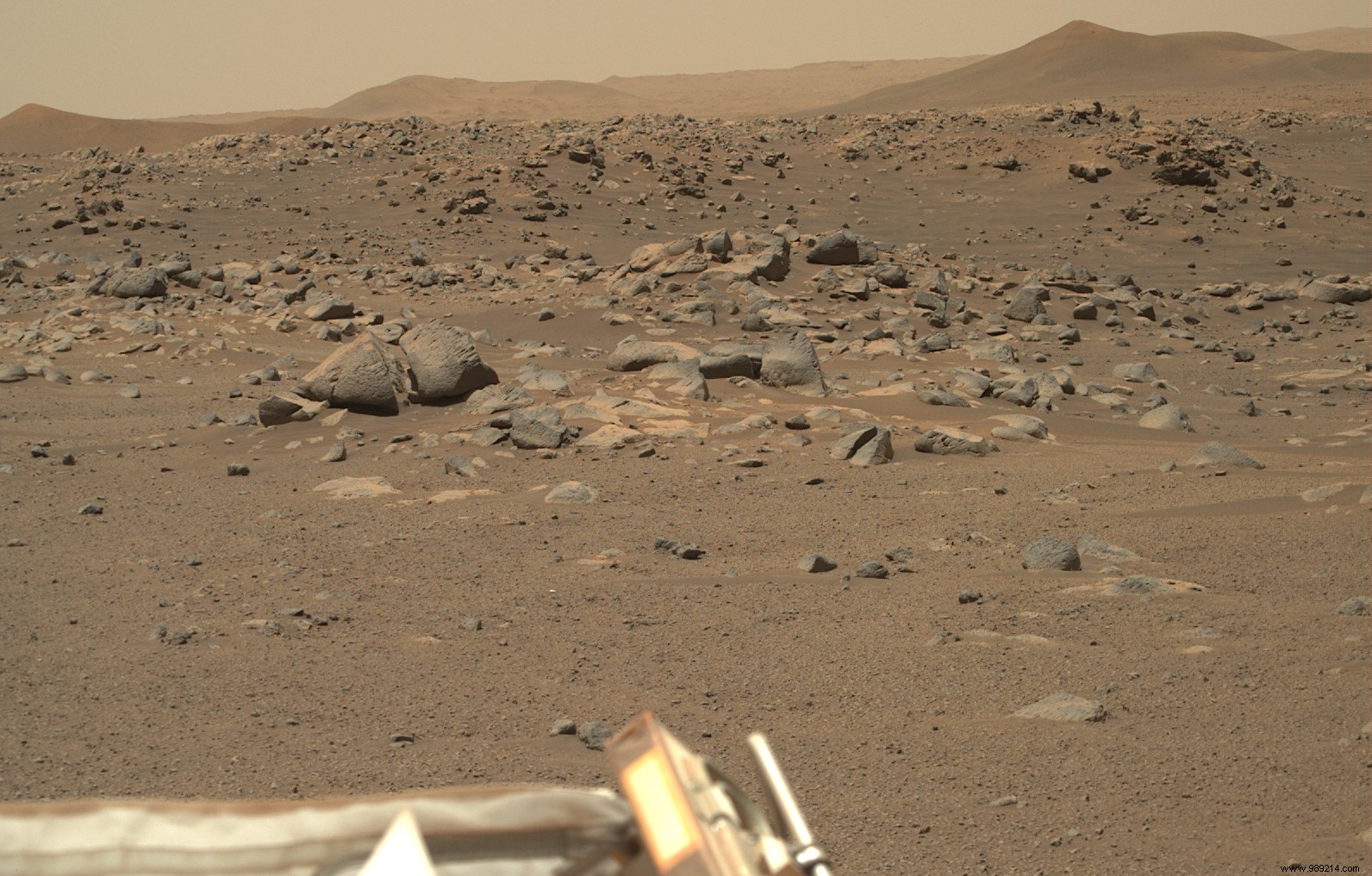
Perseverance's 2.1-meter robotic arm (RA) is equipped with advanced instruments: SHERLOC, a laser and ultraviolet spectrometer for identifying minerals and organics in rocks; and PIXL, combining imaging with X-ray fluorescence to map chemical compositions.
The rover will first conduct detailed imaging. NASA scientists on Earth will then select the precise sampling spot and a nearby "geological twin" for preliminary study.
"The strategy is to gather critical data on the target rock by analyzing its geological counterpart in place," explains Vivian Sun from NASA's Jet Propulsion Laboratory. “On this twin, we'll use an abrasive bit to remove weathered surface layers, exposing fresh rock. After cleaning, we'll deploy our instruments for close-up examination."
Mast-mounted SuperCam and Mastcam-Z will assist: SuperCam's laser will vaporize a tiny spot for spectroscopic analysis of the plume, while Mastcam-Z captures high-resolution images. These five instruments together provide comprehensive material characterization.
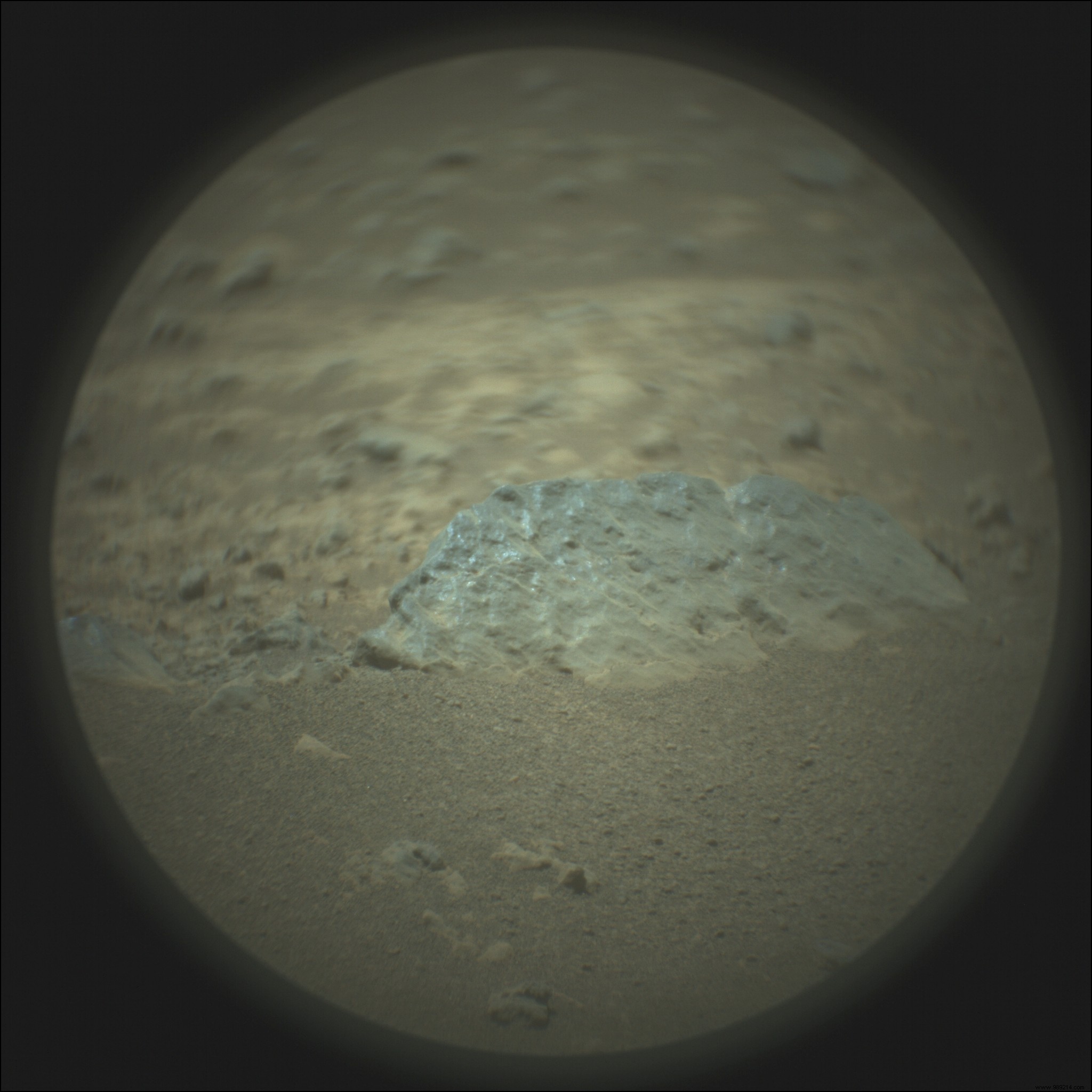
If analysis confirms suitability, the rover will rest briefly to recharge, then proceed to extract the sample from the unaltered "twin" rock, expected to match the studied composition.
The sample handling arm retrieves a tube, preheats it, and attaches it to the rotary-percussive drill on the robotic arm. Drilling penetrates the rock, filling the tube with a chalk-sized core.
The arm transfers the drill to the carousel, where the sample is removed, imaged, volumetrically measured, sealed hermetically, and stored. This tube won't reopen until a NASA cleanroom in the early 2030s.
