With the Starship SN8 test flight still vivid in recent memory, its successor SN9 launched on Tuesday before meeting a similar landing setback. Yet, what SpaceX is achieving represents an unprecedented engineering feat of extraordinary difficulty.
SpaceX's Starship prototype SN9 lifted off successfully on February 2 from South Texas, reaching an altitude of 10 kilometers. It executed a controlled "belly flop" descent to shed velocity, then used reaction control thrusters to flip upright for landing—but one of its two Raptor engines failed to relight, as seen in this striking slow-motion footage. The result: another hard landing. But is this truly a setback? Far from it.
Just seven weeks after SN8's flight, SN9 advanced the iterative testing process, gathering invaluable data despite the outcome.
To grasp SpaceX's Starship ambition, consider the context: it's revolutionary. While Falcon 9 proved booster reusability, Starship is a fully reusable orbital spacecraft. Beyond an eight-minute burn and ocean splashdown, it must relight engines repeatedly, endure weeks or months in space, and survive atmospheric reentry for rapid turnaround.
As Elon Musk told his team during a meeting witnessed by Ars Technica journalist Eric Berger: "It is stupidly difficult to develop a fully reusable orbital system. It would be one of the greatest breakthroughs in human history."
Musk's engineers at Boca Chica, Texas, are rising to this challenge with a high-cadence production facility churning out stainless-steel prototypes. Rapid iteration turns "failures" into stepping stones—each vehicle refines the last—accelerating progress toward orbital success.
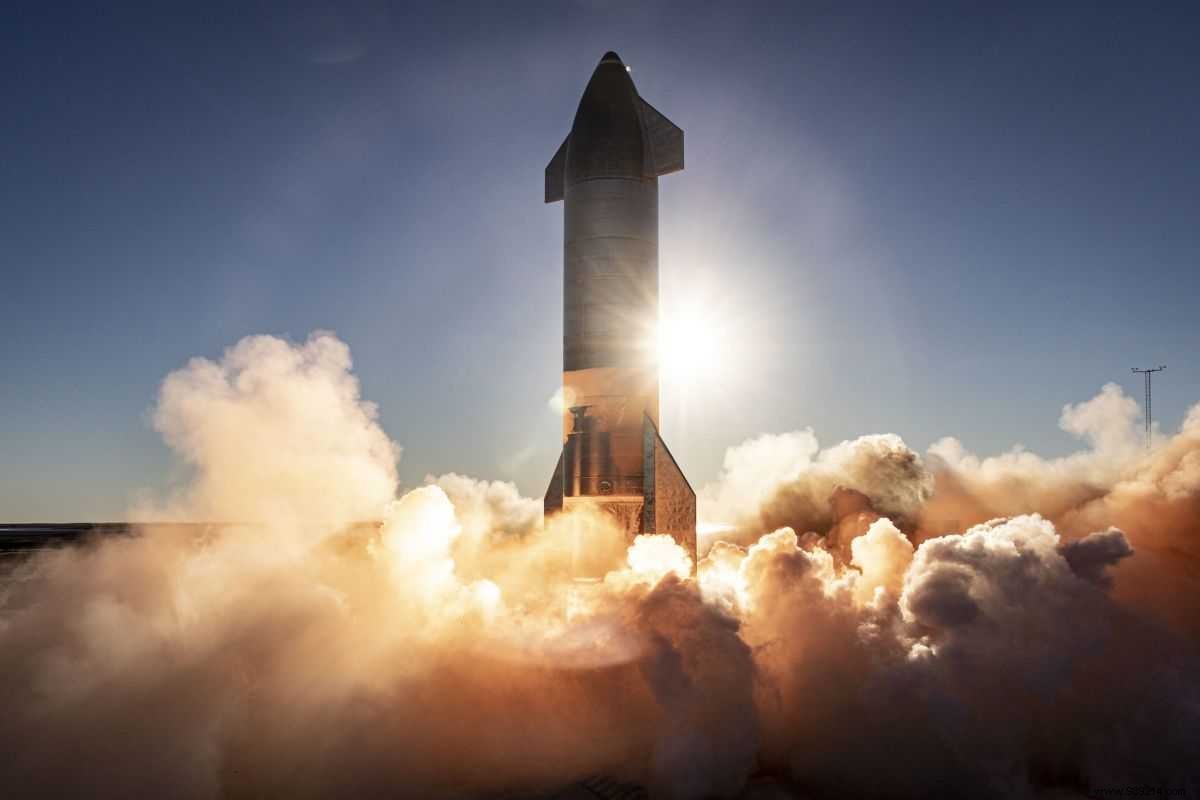
Though teams aren't celebrating these crashes, the SN9's spectacular test yields critical insights for the next phase, with SN10 already on the pad. SpaceX has a long road ahead to operational Starship, but its engineers are etching new chapters in aerospace history.
