SpaceX has successfully launched 60 Starlink satellites into low Earth orbit, achieving the Falcon 9 rocket's 100th successful flight and marking the seventh reuse of the same booster—a remarkable record.
A Falcon 9 rocket lifted off from Space Launch Complex 40 in Florida overnight Tuesday to Wednesday, deploying another batch of Starlink satellites. This was the company's 23rd launch of the year and the 100th total flight for the Falcon 9. Roughly nine minutes after liftoff, the first stage—booster B1049—executed a precise landing on the droneship Of Course I Still Love You stationed in the Atlantic Ocean. This mission also achieved the seventh flight for this single booster, surpassing all previous reusability records.
SpaceX maintains a fleet of 10 veteran boosters and has three new heavy-lift boosters ready for upcoming military missions.
Notably, this Starlink launch followed just hours after the final static fire test of the Starship SN8 prototype in Texas, where its engines roared for several seconds ahead of a potential test flight next week.
The Starship program ties directly to Starlink: SpaceX aims to reach Mars and make humanity multi-planetary, funding these ambitions partly through Starlink's global broadband internet service.
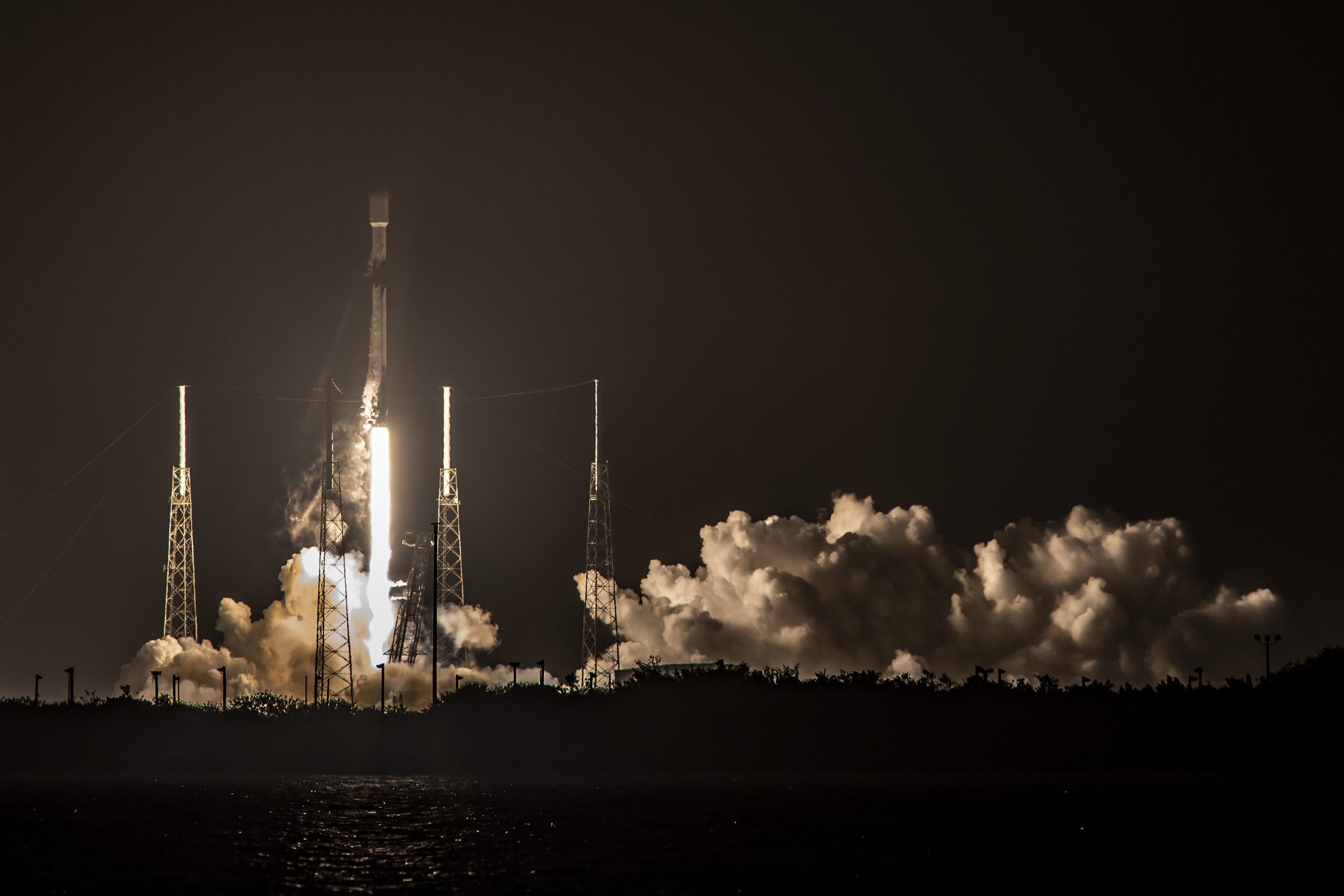
This launch brings the total to over 900 satellites in low Earth orbit, with plans for at least 12,000 eventually. Early tests in North America show strong results, according to SpaceX engineers.
Current download speeds range from 50 MB/s to 150 MB/s, with latency between 20 ms and 40 ms. As more satellites join the constellation, SpaceX expects speeds up to 1 Gb/s (per Elon Musk), and latency reduced to 16-19 ms.
Users access the service via a compact user terminal—Elon Musk's "UFO on a stick." It costs $499 upfront (about €430), plus a $99 monthly fee (about €85). Future pricing may shift to around $80 per month with $100-300 installation fees.
