Rocket Lab has unveiled Neutron, a new medium-lift rocket in development. This powerful launcher can deliver up to 8 metric tons to orbit while featuring a fully reusable first stage.
For the past five years, SpaceX has transformed the space industry by slashing launch costs through reusable boosters. Other innovators, including Rocket Lab—founded in 2006 by Peter Beck—have followed suit.
Rocket Lab excels in small satellite launches with its Electron rocket, achieving first success in January 2018. Since then, it has orbited payloads for clients like NASA and the U.S. Air Force. But Electron is just the start.
Rocket Lab recently went public via a SPAC merger with Vector Acquisition, valuing the company at over $4 billion. It will trade on Nasdaq under the ticker RKLB.
"This milestone accelerates Rocket Lab's ability to unlock the full potential of space through our launch platforms, and catalyzes our ambition to create a new multi-billion dollar business sector in space applications," said Peter Beck in a press release.
Seizing the moment, Rocket Lab revealed Neutron on Monday. This launcher boasts far greater lift capacity than Electron, targeting up to 8 metric tons to orbit.
Neutron addresses surging demand for large satellite constellations, ISS resupply missions, and even paves the way for human spaceflight.
Neutron's inaugural flight is slated for 2024. Meanwhile, Rocket Lab plans a new U.S. production facility for full-scale manufacturing.
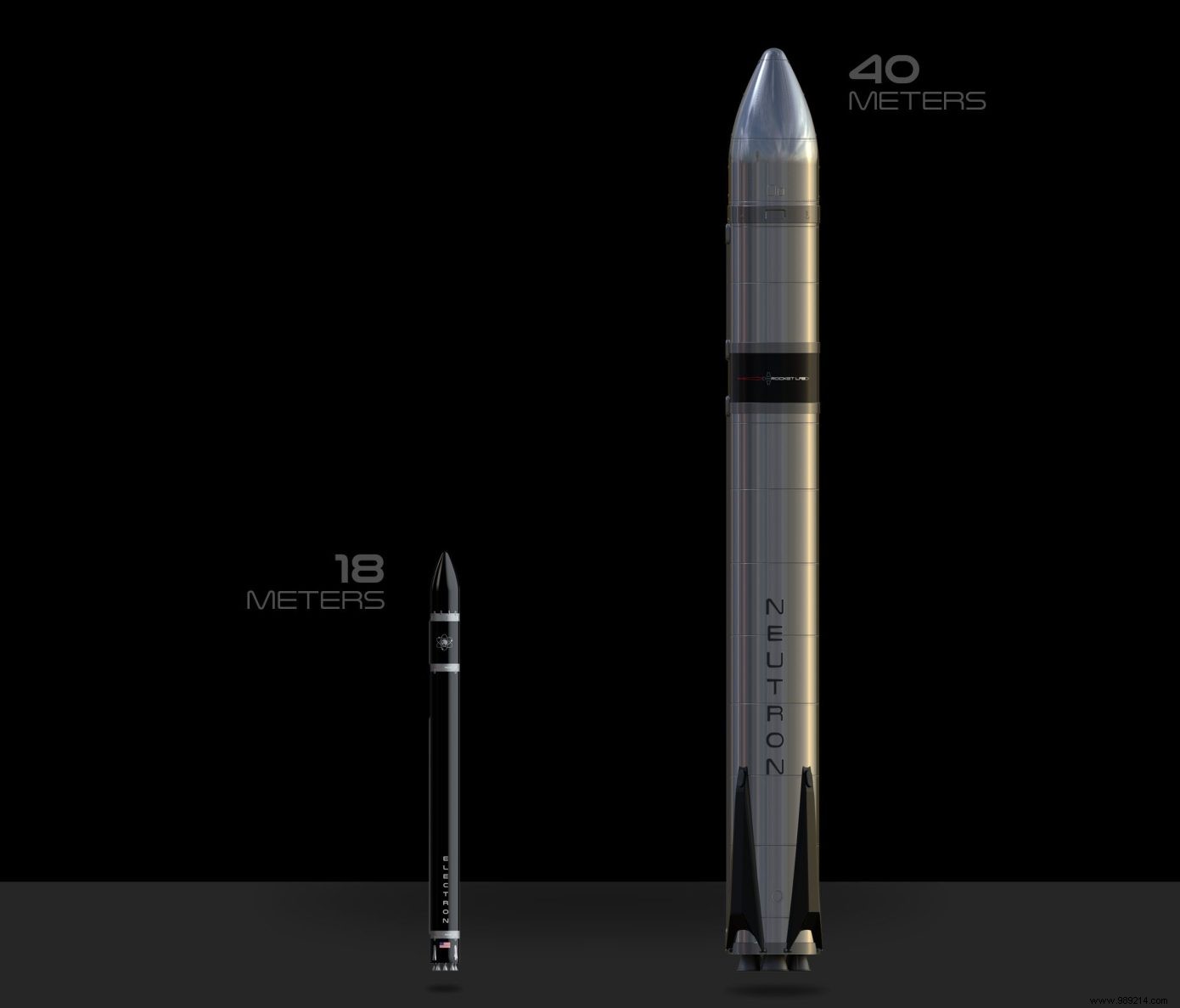
Launching from Rocket Lab's Wallops, Virginia site, Neutron's first stage will land on an offshore platform—mirroring SpaceX's Falcon 9 approach.
Electron, at just 18 meters tall, is too compact for powered landings. Rocket Lab is refining a unique recovery method: helicopter capture mid-air after parachute deployment to avoid ocean saltwater damage.
