Roscosmos, Russia's state space agency, has introduced the Amur, a new medium-lift launch vehicle with a reusable first stage. Its design strikingly mirrors SpaceX's proven Falcon 9.
SpaceX has transformed the space industry over recent years by drastically cutting launch costs through first-stage recovery and reuse on its Falcon 9 rocket. Inspired by this success, agencies worldwide, including China and Roscosmos, are pursuing similar technologies. Roscosmos revealed its Amur project on Wednesday.
The Amur's appearance closely resembles the Falcon 9, featuring a fairing wider than the central core at the top. SpaceX's fairing measures 5.2 meters in diameter, compared to Amur's 4.1 meters. Both incorporate grid fins atop the first stage and landing legs at the base.
Amur will be powered by five new RD-169 engines burning methane. In contrast, Falcon 9 uses nine Merlin engines fueled by liquid oxygen and RP-1 kerosene. Amur is projected to deliver over 10 metric tons to low Earth orbit (versus Falcon 9's 22.8 tons).
Falcon 9 launches average $61.2 million, per FAA data, outpacing competitors' $92 million. Roscosmos targets just $22 million per Amur launch.
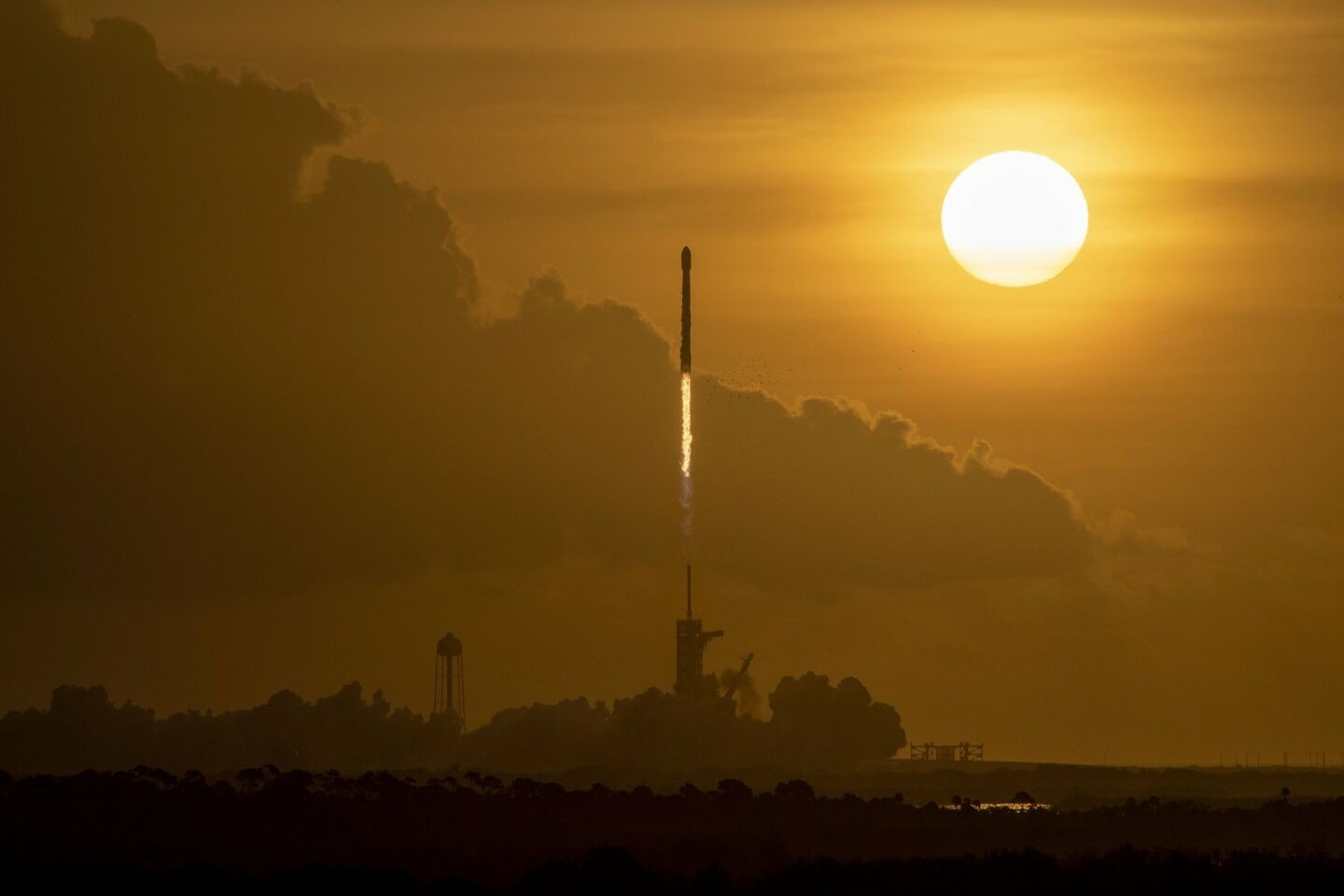
Falcon 9 typically launches from Cape Canaveral, Florida, landing back at the site or on offshore drone ships. Amur will launch from Russia's Vostochny Cosmodrome, with landings nearby or at a new site along the Sea of Okhotsk. Sea landings are ruled out due to rough conditions.
Roscosmos plans for each Amur first stage to fly 10 missions—an ambitious target, as even SpaceX anticipates reaching this only after years of refinement.
Amur won't be flight-ready until 2026, and its target market remains undefined.
Elon Musk reacted on Twitter, calling it "a step in the right direction" and urging full reusability by 2026 to "minimize cost per ton to orbit" and avoid a "niche market."
