Though satellite collisions remain exceedingly rare—with just one recorded in history—the rapid growth of objects in orbit is heightening risks. NASA and SpaceX have now formalized an unprecedented partnership to collaborate on collision avoidance strategies.
In 2019, the European Space Agency (ESA) executed a space maneuver to dodge a SpaceX satellite, assessing the collision risk at 1 in 1,000 overall and 1 in 591 for SpaceX. While no impact occurred, it underscored the stakes. Historically, only one satellite collision has happened: in 2009, the U.S. Iridium-33 and Russian Kosmos-2251 satellites smashed into each other 776 km above Siberia's Taymyr Peninsula.
With ambitious satellite constellation projects like SpaceX's Starlink underway, proactive measures are essential. NASA announced an agreement with SpaceX on March 19, 2021, building on prior exchanges.
"This agreement achieves a higher level of coordination, cooperation and data sharing, and defines the arrangement, responsibilities and procedures for Flight Safety Coordination," the document states.
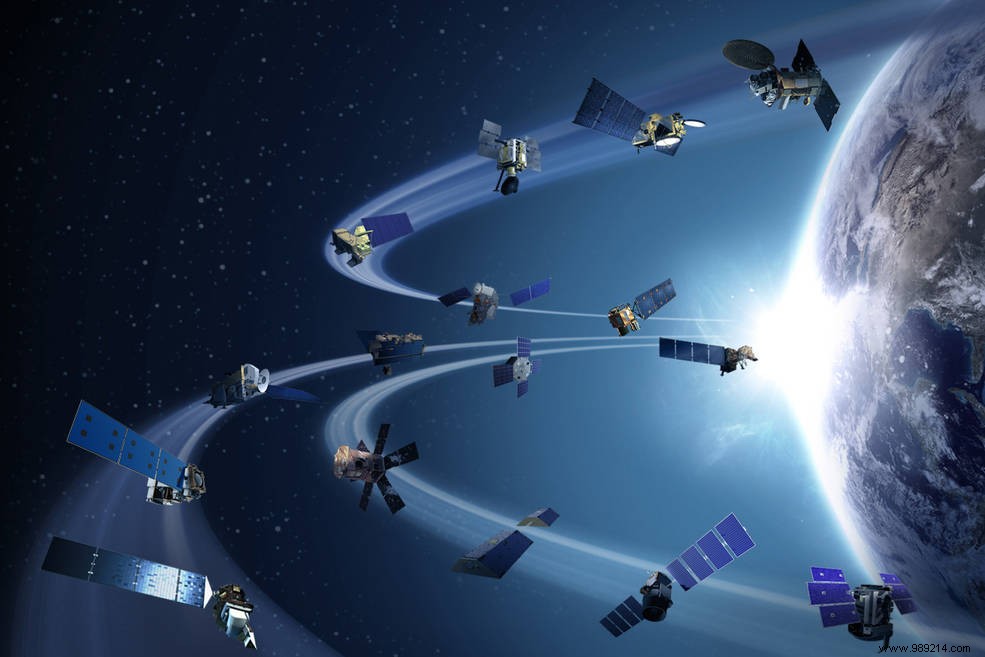
NASA aims for more precise data exchanges with SpaceX to avert close encounters—not just in orbit, but also during launches and "carpool" missions deploying multiple satellites. SpaceX plans to launch thousands, potentially tens of thousands, of satellites, while NASA seeks to protect its own operational fleet.
Earth's orbit currently hosts around 30,000 pieces of debris larger than 20 cm, posing threats to satellites and crewed missions like the International Space Station (ISS). These fragments can cascade into more debris, worsening the problem. This NASA-SpaceX collaboration helps mitigate further escalation in an already precarious environment.
