On October 29, 2020, NASA engineers sent a series of commands to the Voyager 2 spacecraft as it travels through interstellar space. The probe acknowledged receipt and executed the instructions flawlessly.
Launched in 1977, Voyager 2 delivered its first data from beyond our solar system in November 2019, joining its twin Voyager 1 in interstellar space. Earlier this year, in March 2020, NASA temporarily lost direct contact while upgrading the DSS-43 radio antenna at Australia's Canberra Deep Space Communications Complex.
This upgrade was critical, as the 70-meter DSS-43 antenna is the only facility capable of communicating with Voyager 2. Originally, NASA relied on three ground stations—in Australia, California, and Spain—to maintain continuous contact regardless of Earth's rotation.
However, Voyager 2's trajectory has taken it southward relative to Earth's orbital plane, making it accessible only from the southern hemisphere. Additionally, the probe operates exclusively on S-band frequencies, and Canberra is the sole southern-hemisphere site equipped for such long-range transmissions. Today, Voyager 2 is nearly 19 billion kilometers from Earth.
Given the antenna's age (operational since 1972), NASA engineers performed comprehensive upgrades—from foundational reinforcements to modern systems—to support ongoing and future missions. As NASA notes, “For an antenna nearly 50 years old, it's better to be proactive than reactive.”
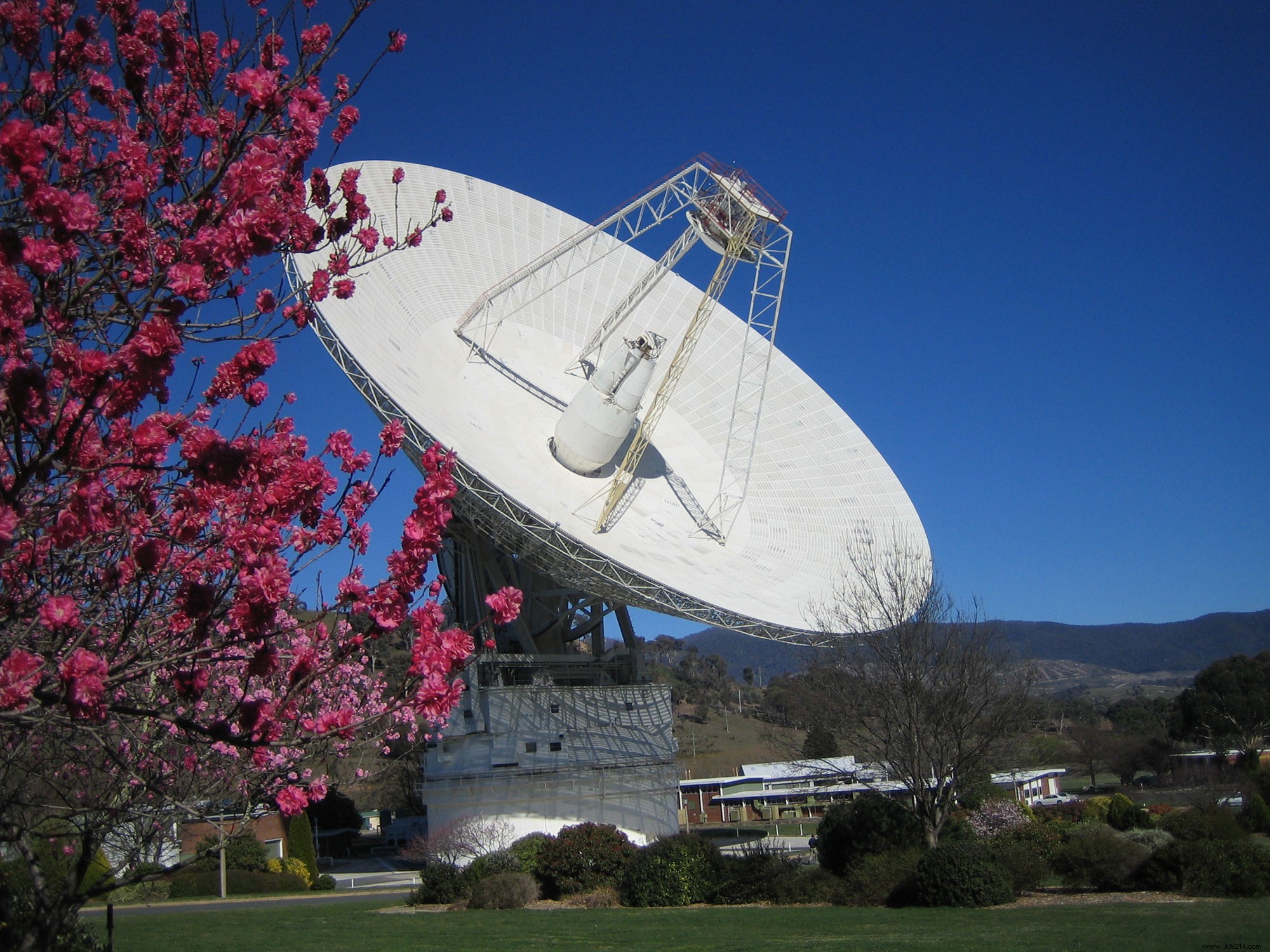
Though scheduled to remain offline until January 2021, engineers tested two newly installed radio transmitters on October 29, 2020—one unchanged for 47 years. Upgrades also included heating, cooling, power systems, and electronics for the transmitters.
The test succeeded: Commands reached Voyager 2 after over 17 hours, with the response taking another 17+ hours to return. During the outage, the probe continued sending data via other network elements.
These enhancements will support missions like the Perseverance rover's Mars landing on February 18, 2021, and NASA's Artemis program aiming for human Moon landings by 2024.
