The Japanese Aerospace Exploration Agency (JAXA) has partnered with Sony, Doshisha University, and toymaker Tomy to create a baseball-sized robot designed to analyze the lunar surface in preparation for upcoming manned missions.
Weighing just 250 grams and measuring about eight centimeters in diameter, this ultra-compact, transformable robot will launch aboard a lunar lander developed by Japanese company ispace in 2022. Its spherical design minimizes space during transport. Upon arrival, it will deploy and activate instruments to collect comprehensive data on the lunar surface.
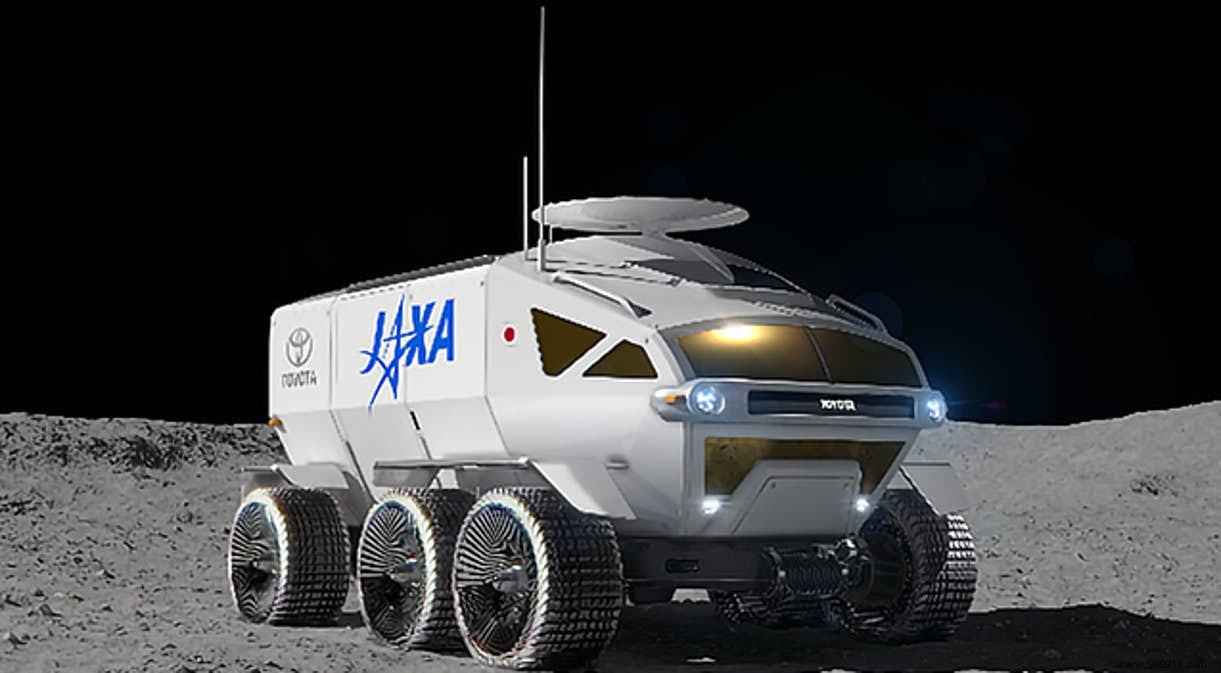
This mission paves the way for JAXA's pressurized lunar "minibus," developed in collaboration with Toyota. With an expected range of up to 10,000 km, it will enable long-distance travel for Japanese astronauts in the 2030s.
To refine the rover's autonomous driving systems, JAXA requires detailed insights into the Moon's gravity—one-sixth of Earth's—and the regolith layer covering its surface.
The robot's images and data will transmit to mission control via the lunar lander, helping evaluate localization algorithms and regolith effects on crewed rover performance.
JAXA has been developing this robot ball since 2016 with Tomy Company Ltd., the renowned Japanese toy manufacturer. Sony joined in 2019 to build the control system, and Doshisha University researchers recently contracted to assist with miniaturization.
"Since our founding, we've crafted safe, reliable toys through meticulous detail and imaginative designs to bring smiles to children," said Kantaro Tomiyama, CEO of Tomy. "I hope this inspires kids to explore space and natural sciences."
Details on the rover remain limited, but it may feature hydrogen-based rechargeable fuel cells and solar panels.
