As NASA prepares for a permanent human presence on the Moon, it has selected Nokia to develop the lunar surface's inaugural 4G network, targeted for deployment by late 2022.
NASA's Artemis program aims to return humans to the Moon by 2024, transitioning to a sustainable human presence on and around the Moon starting in 2028. Achieving this requires robust infrastructure, including reliable communication systems essential for a long-term lunar base.
NASA has awarded Nokia, the telecommunications pioneer founded in 1865, a 14.1 million US dollar contract (approximately 12 million euros) to deploy the first LTE/4G communication system beyond Earth.
Nokia's team will design and build critical components: an LTE base station with integrated Evolved Packet Core (EPC), LTE user equipment, RF antennas, and robust operations and maintenance (O&M) software. All equipment must endure the rigors of space launch, landing, and operations.
Nokia Bell Labs will collaborate with Intuitive Machines, a private space firm, to integrate the system into a lunar lander.
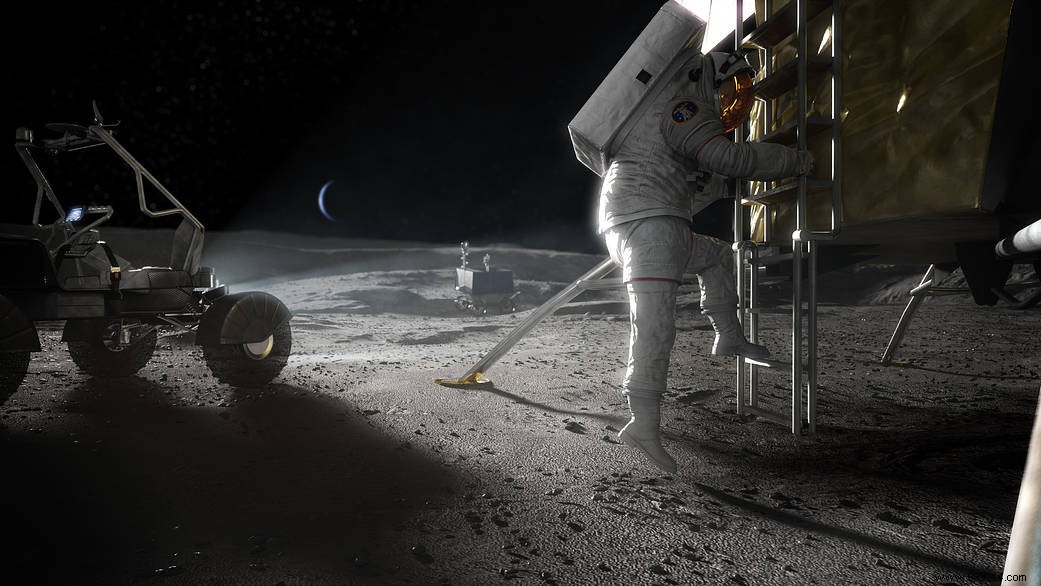
This project falls under NASA's Tipping Point program, fostering rapid advancement of space technologies through public-private partnerships.
“Building on our storied legacy in space technologies—from pioneering satellite communications to detecting cosmic microwave background radiation from the Big Bang—we are now creating the first cellular network on the Moon,” said Marcus Weldon, Nokia's Chief Technology Officer. “Reliable networks are crucial for sustained human presence on the lunar surface. Nokia Bell Labs is once again pushing innovation beyond earthly limits with this high-performance wireless solution.”
The 4G network will enable high-speed data transmission, navigation and control of robotic rovers, HD video streaming, and enhanced voice/video communication for astronauts.
