NASA's OSIRIS-REx spacecraft, having successfully collected samples from asteroid Bennu, could next visit Apophis. The mission team plans to submit the proposal to NASA soon.
On October 21, four years after launch, the U.S. probe OSIRIS-REx touched down on Bennu—over 330 million kilometers from Earth—to gather at least 60 grams of samples for return to our planet.
With this mission accomplished, OSIRIS-REx is slated to return to Earth on September 24, 2023, delivering samples virtually unchanged for 4.6 billion years. Scientists worldwide will analyze them, but the spacecraft's journey may not end there.
The mission team confirms OSIRIS-REx has sufficient fuel to reach another target: the notorious near-Earth asteroid Apophis.
Discovered in 2004, Apophis was once viewed as Earth's biggest asteroid risk. Astronomers calculated a 1-in-37 chance of impact in 2029. At about 340 meters wide, a collision could unleash energy equivalent to 1,151 megatons of TNT, devastating hundreds of kilometers.
Refined observations eased fears of a 2029 strike and later ruled out 2068. Recent data from its March close approach confirms no impact risk for the next century.
Still, Apophis will skim just 32,000 km from Earth in April 2029—closer than some geostationary satellites—and visible to the naked eye across Europe, Asia, and Africa.
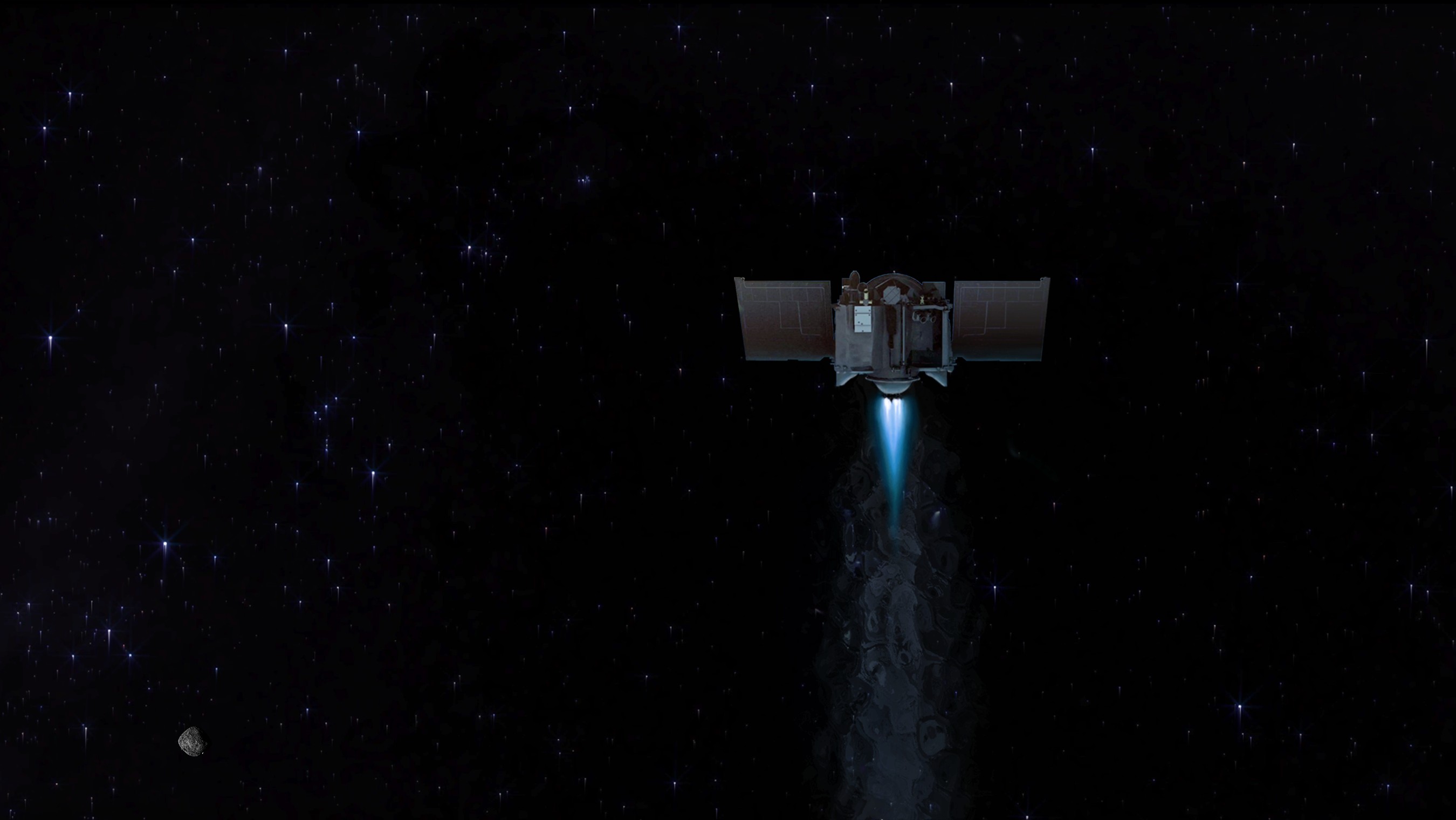
Mission planners discovered that, after sample delivery, three Earth flybys could position OSIRIS-REx to intercept Apophis during its 2029 Earth flyby. Celestial mechanics at work.
Though Apophis poses no near-term danger, studying it offers key insights into mid-sized asteroids.
This concept, backed by trajectory calculations, heads to NASA next month, with a decision by April. If approved, OSIRIS-REx could devote 18 months to detailed study, informing future deflection strategies for Apophis or similar threats.
"We need to understand what we're up against," says Jim Bell of Arizona State University. "Is it a solid rock? Can we nudge its orbit? Or fragment it if needed?"
NASA's recent DART mission tested deflection by impact on a smaller asteroid, but Apophis presents a larger-scale challenge.
