Astronauts from China's Shenzhou 13 mission conducted their first spacewalk on Sunday, November 7, aboard the Tiangong space station—marking the debut extravehicular activity (EVA) for a Chinese female astronaut.
Launched successfully on October 15 from the Jiuquan Satellite Launch Center in China's Gobi Desert atop a Long March 2F rocket, the Shenzhou 13 capsule docked with the Tianhe core module about eight hours later. The three-person crew—Wang Yaping (41), mission commander Zhai Zhigang (55), and Ye Guangfu (41)—is set to remain on station for approximately six months.
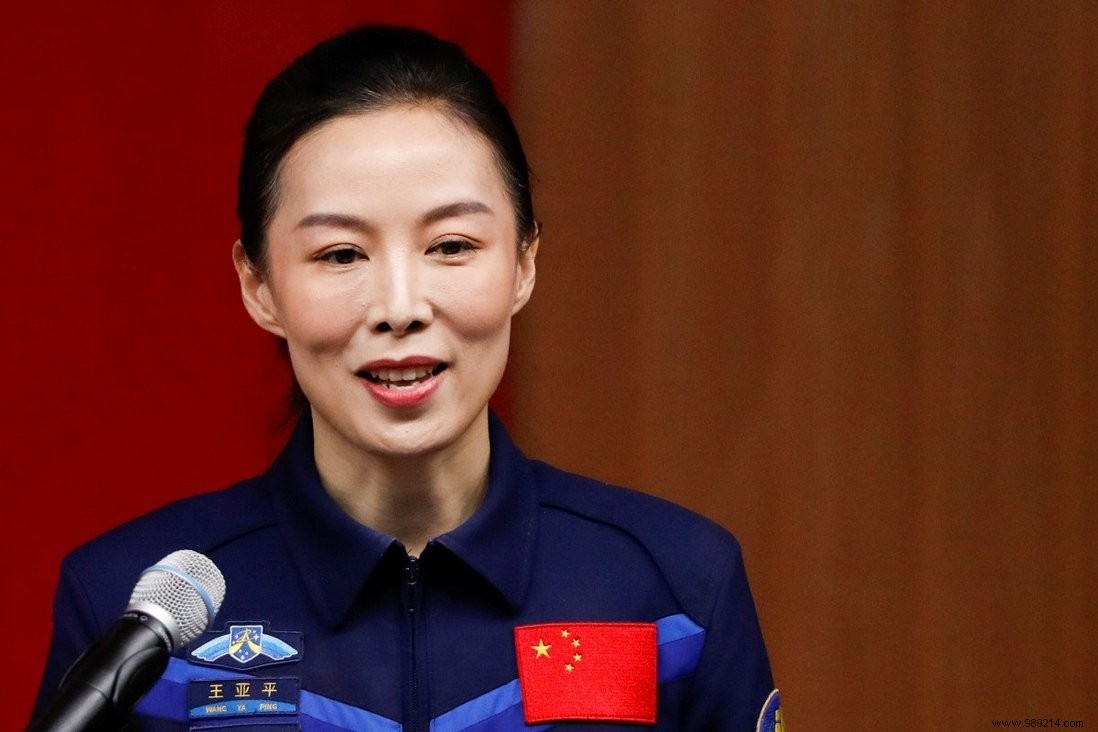
As announced by the China Manned Space Agency (CMSA), the inaugural spacewalk on November 7 featured commander Zhai Zhigang and Wang Yaping, China's second woman in space. Wang made history as the nation's first female spacewalker, with the EVA lasting about six hours.
Notably, commander Zhai Zhigang was also the first Chinese astronaut to perform a spacewalk, during the Shenzhou 7 mission in 2008.
In addition to station upkeep and experiments in aerospace medicine and microgravity physics, the Shenzhou 13 mission plans two to three EVAs, per a pre-launch briefing at Jiuquan. These will primarily install an adapter linking the station's large robotic arm to a smaller arm on a future module.
Following Shenzhou 13, six more missions in 2022 will finalize Tiangong construction: the 18-meter-long Tianhe core (already in orbit), plus 14.4-meter experiment modules Wentian and Mengtian. The station will house 14 refrigerator-sized science racks, general-purpose racks, and 50 external mooring points. Fully assembled, Tiangong will weigh about 100 tons—less than a quarter of the ISS mass.
China also plans to launch the Xuntian space telescope—akin to Hubble, with provisions to dock at Tiangong for servicing—expected in 2024.
