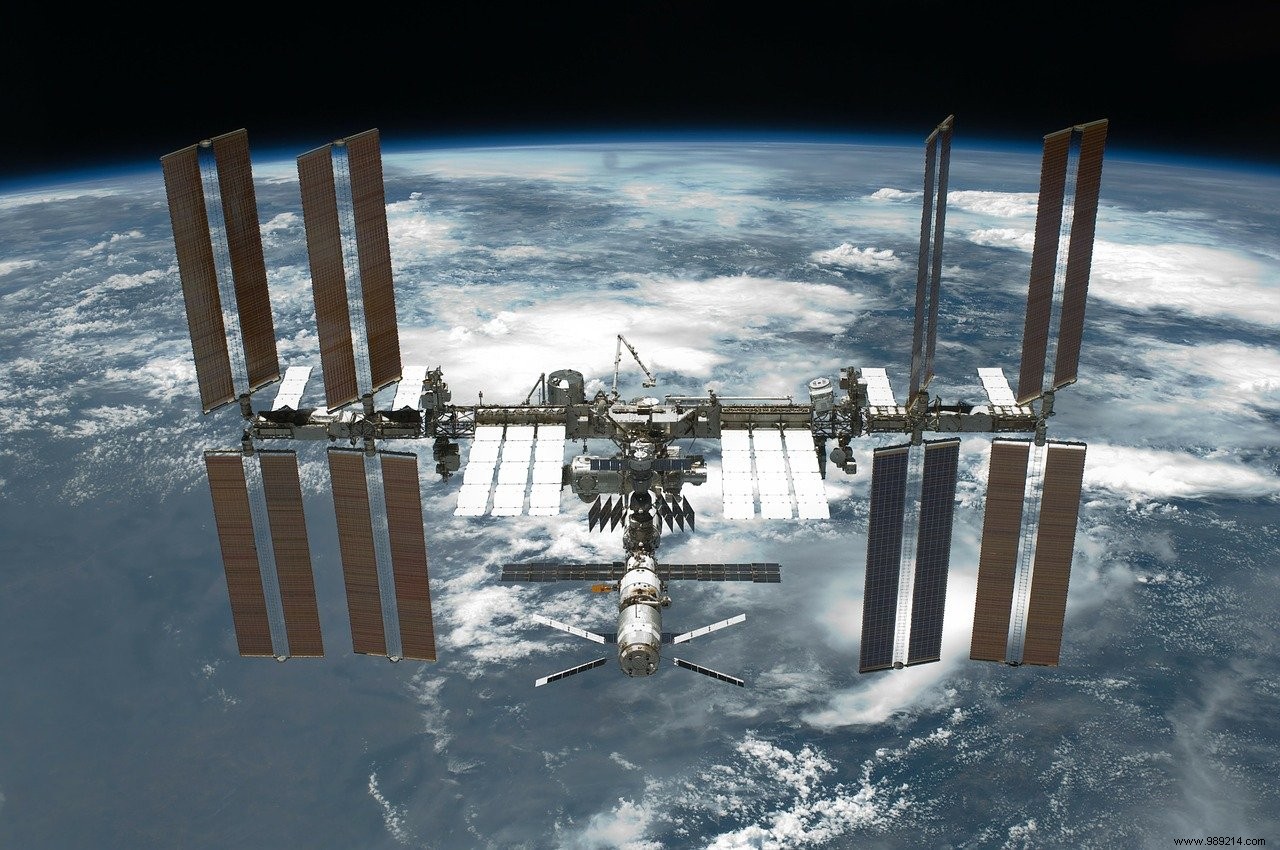
Russian state media reports suggest the country could soon end its long-standing partnership on the International Space Station (ISS) with the United States and other partners. Two key factors are driving this potential abrupt exit.
On November 2, 2000, NASA astronaut Bill Shepherd and Russian cosmonauts Yuri Gidzenko and Sergei Krikalev docked with the ISS as its first crew. Born from post-Cold War cooperation, the station has been continuously occupied for over two decades. Nearly 250 people from 19 countries have lived aboard, with more than 3,000 scientific investigations involving 108 nations conducted there.
Yet, the ISS is aging, and maintenance is increasingly expensive. Originally planned for retirement in 2024, the U.S. Senate recently extended operations to 2030. Russia, however, seems poised to chart its own course.
State media recently quoted a senior official indicating Russia plans to exit the ISS by 2025. This may stem from concerns over the Russian modules, where air leaks have been detected and repaired in recent years.
“We need a technical inspection of the station to avoid any risk in the event of an emergency,” Borisov's office told state-run TASS. “We will make a decision based on the results and honestly inform our partners,” he added.
Meanwhile, Russia has begun developing a new national space station to succeed its Salyut and Mir predecessors, launched in the 1960s, 1970s, and 1980s.
This move aligns with Russia's recent agreement with China to build a research station on or around the Moon.
It signals a potential end to the NASA-Roscosmos partnership forged decades ago, dividing space powers into U.S.-led allies versus a China-Russia axis in a renewed space race.
The ISS may be the last thread connecting these nations. Russia's program, hampered by underfunding and corruption scandals, could shift toward collaboration with emerging leader China.
