China is poised to launch the first module of its Tiangong space station in the coming weeks, with a manned mission—the first since 2016—scheduled later this year.
The International Space Station remains the sole operational outpost in orbit, but that will soon change. China's Tiangong (Heavenly Palace) station is set to join it and eventually replace the aging ISS. Weighing nearly 100 tons and comprising three modules, Tiangong will host taikonauts for scientific experiments and preparations for extended deep-space missions.
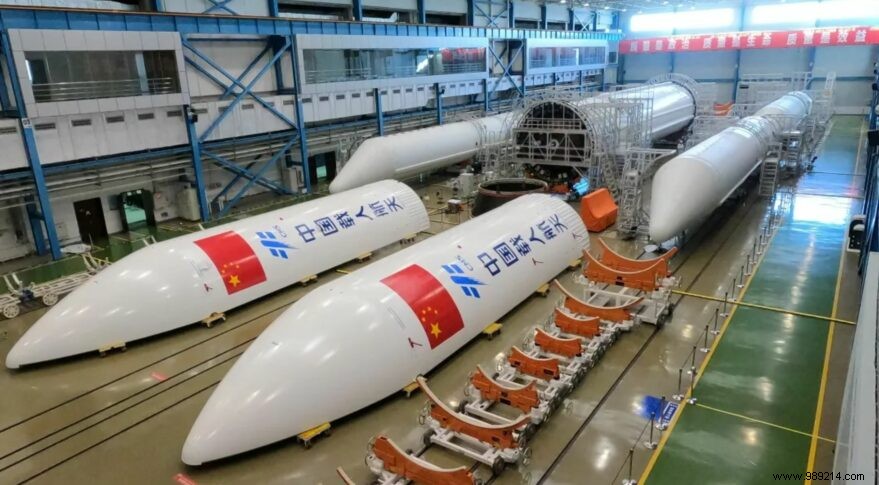
The station's central module—16.6 meters long and 22 tons—is scheduled for launch next spring. According to SpaceNews, the China Academy of Launch Vehicle Technology (CALT) is completing final preparations on the Long March 5B rocket at a facility north of Tianjin. The liftoff will occur from the Wenchang Satellite Launch Center.
This core module will serve as the primary living quarters for taikonauts during roughly six-month stays. It includes a docking port and systems to manage the station's orbit and attitude.
The China National Space Administration (CNSA) plans 11 launches to assemble the station by 2022. Positioned at about 370 kilometers altitude with a 41-degree inclination, it builds on prior delays from a Long March 5 failure, compressing the timeline into an ambitious two-year effort—originally slated for 2018, 2020, and 2022.
Upon completion, Tiangong will be complemented by the Xuntian space telescope, comparable to Hubble, featuring a 2-meter mirror and launching in 2024.
CALT, targeting around 40 orbital launches this year, is advancing the Tianzhou-2 cargo spacecraft to deliver supplies to Tiangong—the first to dock there. It will be followed by Shenzhou-12, carrying a crew in a mission akin to SpaceX's Crew Dragon. The taikonauts have been selected, marking China's first crewed flight since 2016.
Though Chinese-led, Tiangong will be open to scientific experiments from any UN member nation.
