A groundbreaking study suggests that enigmatic twisted glass shards scattered across Chile's Atacama Desert were formed by a comet exploding in Earth's atmosphere around 12,000 years ago.
For over a decade, geologists have puzzled over a 75-kilometer corridor in the Atacama Desert lined with black and green glass fragments, some up to 50 centimeters long and oddly twisted. What could explain this?
While earlier theories pointed to intense Pleistocene wildfires in the then-lush region, a new paper in Geology proposes that extreme heat and winds from an ancient comet airburst melted sand into this silicate glass.
Through detailed chemical analysis of dozens of samples, researchers identified zirconia minerals broken down into baddeleyite, a rare zirconium oxide that forms at temperatures exceeding 1670°C—far hotter than any wildfire, per the study's press release.
They also found minerals previously detected only in meteorites, including cubanite and troilite, matching those from Comet Wild 2 samples collected by NASA's Stardust mission.
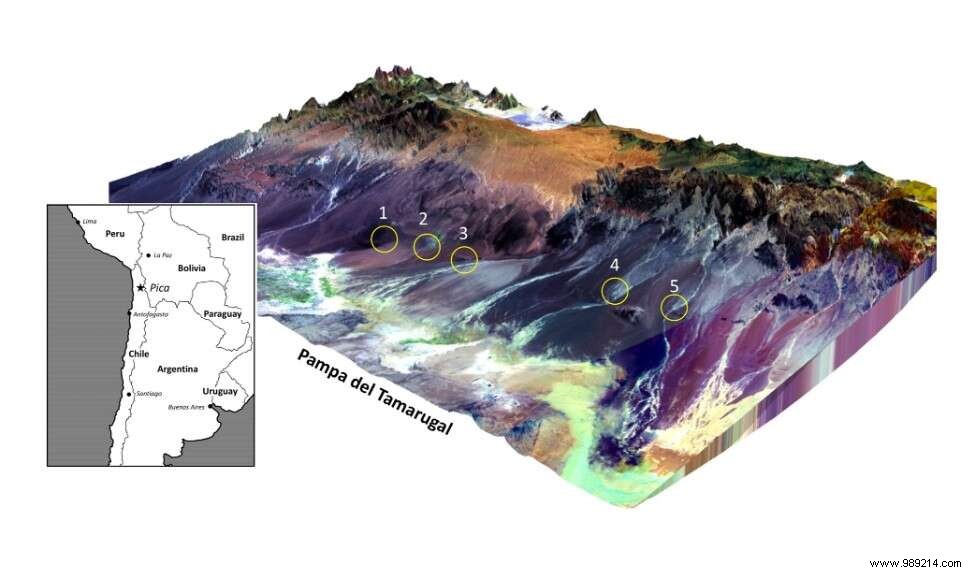
The researchers attribute the shards' bizarre twisted shapes to shockwinds from the atmospheric explosion just above the surface. “To achieve such widespread dramatic effects, it must have been a truly massive event,” says Pete Schultz of Brown University. “Fireballs we've seen pale in comparison.”
The event is dated to about 12,000 years ago. "Curiously, this aligns with the megafauna extinction—and early human arrivals might have witnessed it, putting on quite the spectacle,” Schultz adds.
Ongoing research aims to pinpoint the comet's size and refine the timeline.
