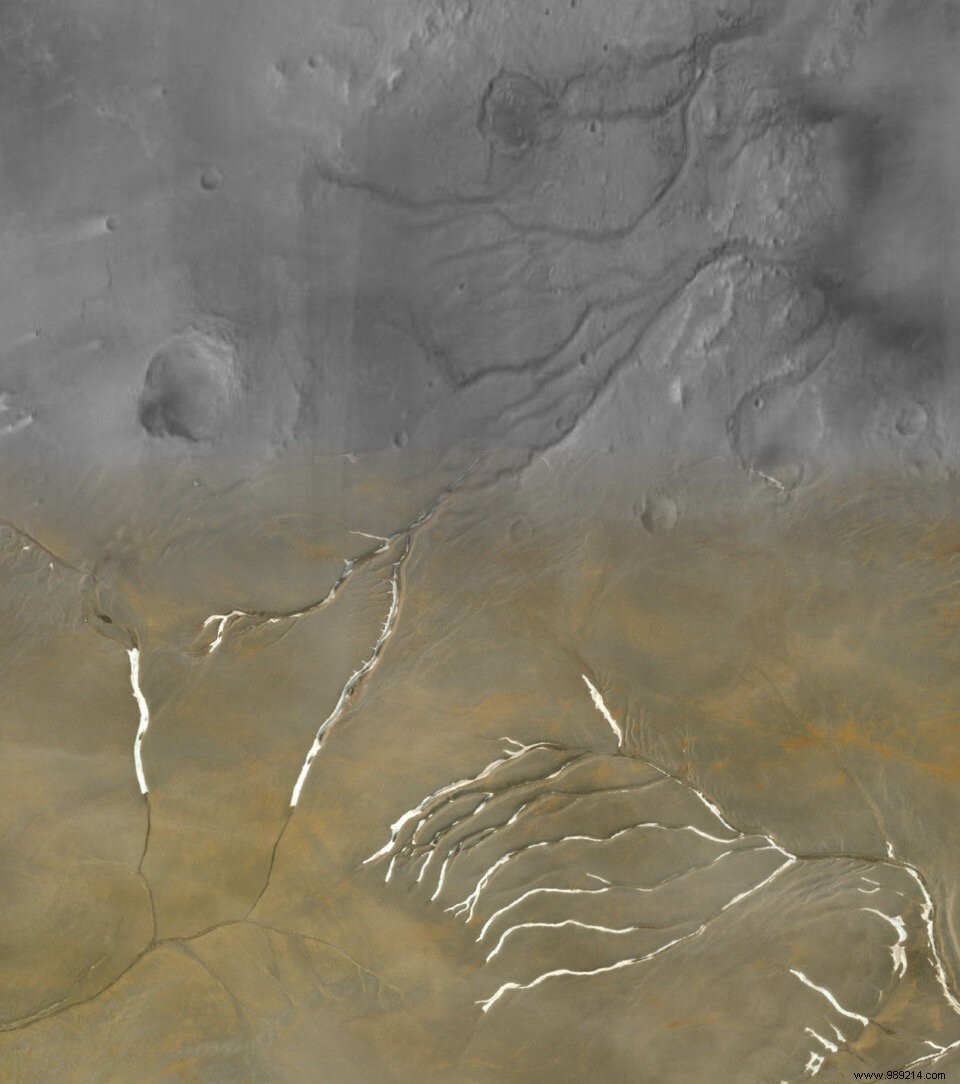
A groundbreaking study published in Nature Geoscience reveals that many Martian valleys were sculpted by meltwater flowing beneath ancient ice sheets, not free-flowing rivers as long assumed.
For decades, the thousands of valleys discovered on Mars fueled the idea of a wet world with lakes and rivers. But recent analysis challenges that view, showing these landforms formed through diverse processes—much like Earth's varied valley types.
“Viewing Earth from satellites reveals valleys shaped by rivers, glaciers, or other forces, each with distinct features,” explains lead author Grau Galofre. “Mars' valleys vary similarly, pointing to multiple formation mechanisms.”
Galofre's team applied advanced algorithms to over 10,000 Martian valleys, identifying striking similarities to subglacial channels on Devon Island in Canada's Nunavut territory.
“This is the first evidence of widespread subglacial erosion from channeled meltwater under an ancient ice cap on Mars,” notes co-author Mark Jellinek. “Only a fraction of valley networks match classic surface river patterns.”
These findings suggest Mars' climate around 3.8 billion years ago was far colder than previously modeled. Subglacial settings may have even supported early life, providing stable liquid water shielded from solar radiation by overlying ice—in the absence of a protective magnetic field.
