A groundbreaking study reveals that Proxima Centauri, the star nearest to our Sun, likely hosts three planets. Researchers have detected compelling evidence of a new world orbiting extremely close to this star. Findings are detailed in the journal Astronomy & Astrophysics.
Located just 4.2 light-years away, Proxima Centauri is our Sun's closest stellar companion—and it's not alone. Over five years ago, astronomers from the European Southern Observatory (ESO) announced the discovery of Proxima Centauri b, a planet in the system's habitable zone that completes an orbit every 11 Earth days. Ongoing research explores whether it could support an atmosphere and liquid oceans.
In 2020, scientists from Italy's National Institute of Astrophysics proposed a second planet, Proxima Centauri c, which takes roughly five years to orbit its star. At least six times Earth's mass, it's likely too distant and cold to harbor life as we know it.
Now, astronomers have identified signs of a third planet around Proxima Centauri. This world, with just a quarter of Earth's mass, could rank among the lightest known exoplanets if confirmed. "This new discovery shows that our nearest stellar neighbor appears to be full of interesting new worlds, within the scope of further study and future exploration," says João Faria from Portugal's Institute of Astrophysics and Space Sciences.
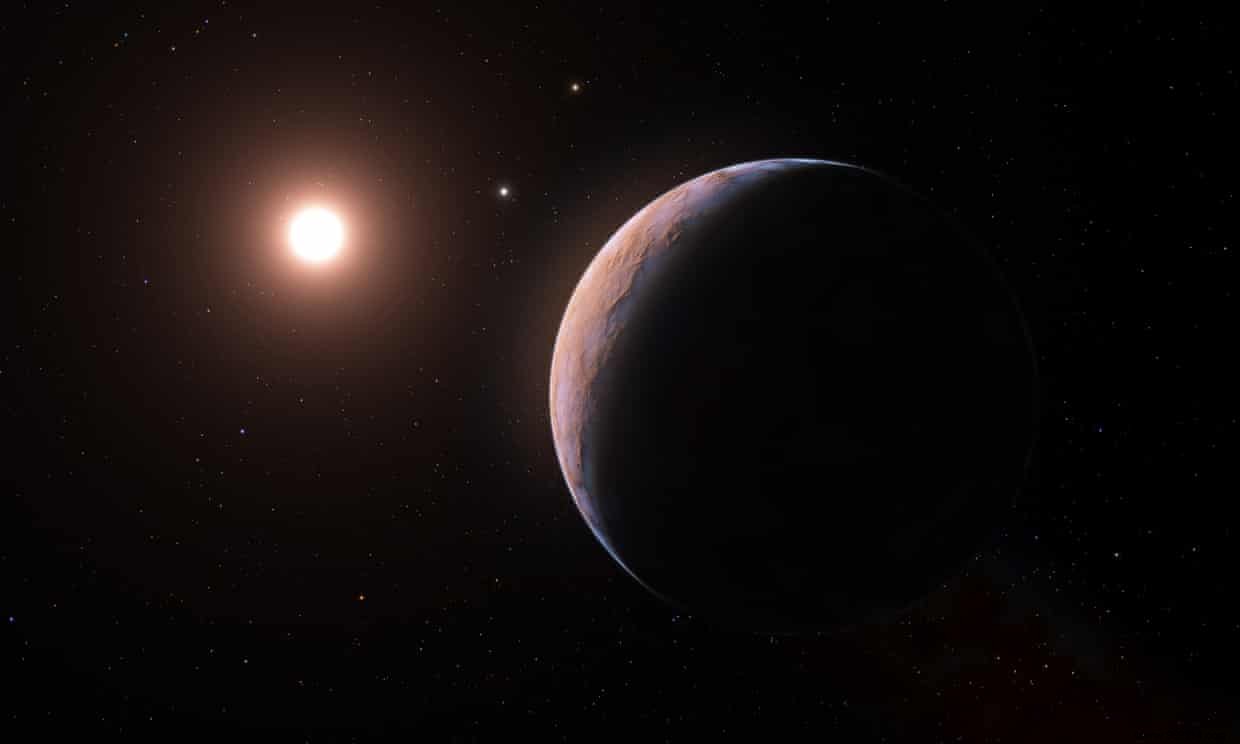
Dubbed Proxima Centauri d, this planet was detected via the radial velocity method, which measures subtle wobbles in a star's motion caused by an orbiting body's gravity. Here, the signal was faint, indicating a minimum mass of one-quarter Earth's. The team used ESO's ESPRESSO instrument on the Very Large Telescope (VLT) in Chile for these precise observations.
Proxima d orbits at just one-tenth the Earth-Sun distance—about 4 million kilometers from its star—completing a lap every five Earth days. This proximity places it outside Proxima Centauri's habitable zone, where temperatures are too extreme for liquid water: scorching hot, unlike the frigid Proxima c.
