NASA's Nancy Grace Roman Space Telescope promises to deepen our understanding of the Universe's evolution while revolutionizing exoplanet discovery, potentially uncovering tens of thousands of new worlds.
Alongside the James Webb Space Telescope, the Roman Telescope (formerly WFIRST) stands as one of the most eagerly awaited observatories. Its expansive field of view will illuminate mysteries like dark matter and dark energy, but it will also detect thousands of exoplanets using two proven techniques: transit photometry and gravitational microlensing.
The transit method measures light curves from stars, identifying periodic dips in brightness caused by planets passing in front of their host stars. These subtle, regular diminutions have proven highly effective, as seen in missions like Kepler (now retired) and TESS (ongoing). Over half of the more than 4,000 confirmed exoplanets were found this way.
Roman's vast field of view, high resolution, and exceptional stability make it ideal for microlensing surveys, revealing distant worlds.
Gravitational microlensing occurs when a foreground star (the lens) aligns with a background star, bending, splitting, and amplifying the distant light via gravity. Anomalies in this effect can signal orbiting planets. "Microlensing events are rare and fleeting, requiring precise, repeated monitoring of countless stars," notes astrophysicist Benjamin Montet from the University of New South Wales in Sydney.
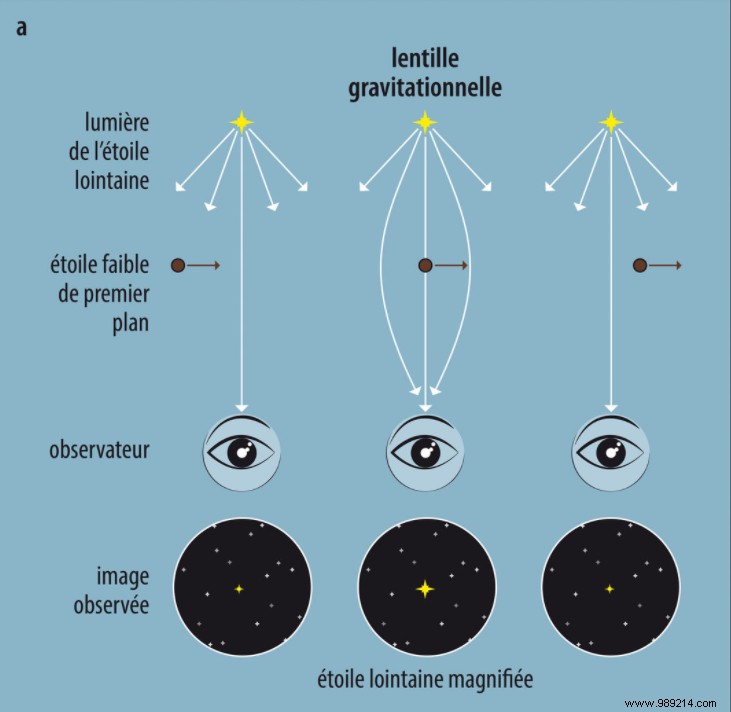
Transit excels at close-in planets, while microlensing reveals those in wide orbits—even rogue planets unbound to any star, potentially numbering in the thousands across the Galaxy.
Montet and his team project Roman will detect more than 100,000 new planets. Roughly three-quarters will be gas or ice giants akin to Jupiter, Saturn, Uranus, or Neptune; the rest, mini-Neptunes (4-8 Earth masses) with no Solar System analogs.
Roman will survey far beyond predecessors: Kepler averaged 2,000 light-years, TESS focuses within 200, but Roman reaches over 25,000 light-years.
It also features an advanced coronagraph for direct imaging of nearby exoplanets, blocking starlight by a factor of a billion—far surpassing Hubble—according to project researcher Jason Rhodes.
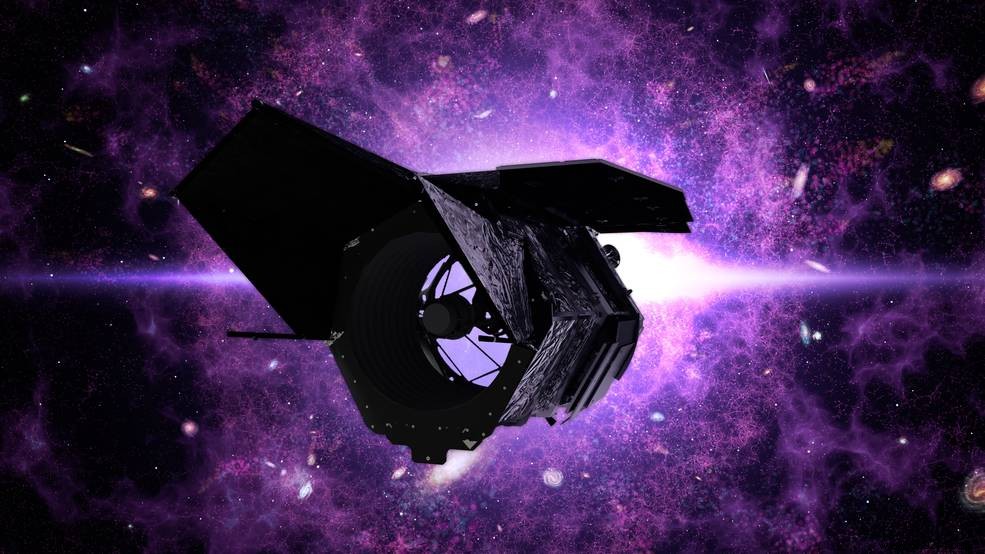
Construction advances steadily; NASA recently completed the 2.4-meter primary mirror, coated with a 400-nanometer silver layer (200 times thinner than a human hair) optimized for near-infrared light.
Scheduled for 2025 launch to the Sun-Earth L2 point, 1.5 million km from Earth, its five-year primary mission will transform exoplanet science.
