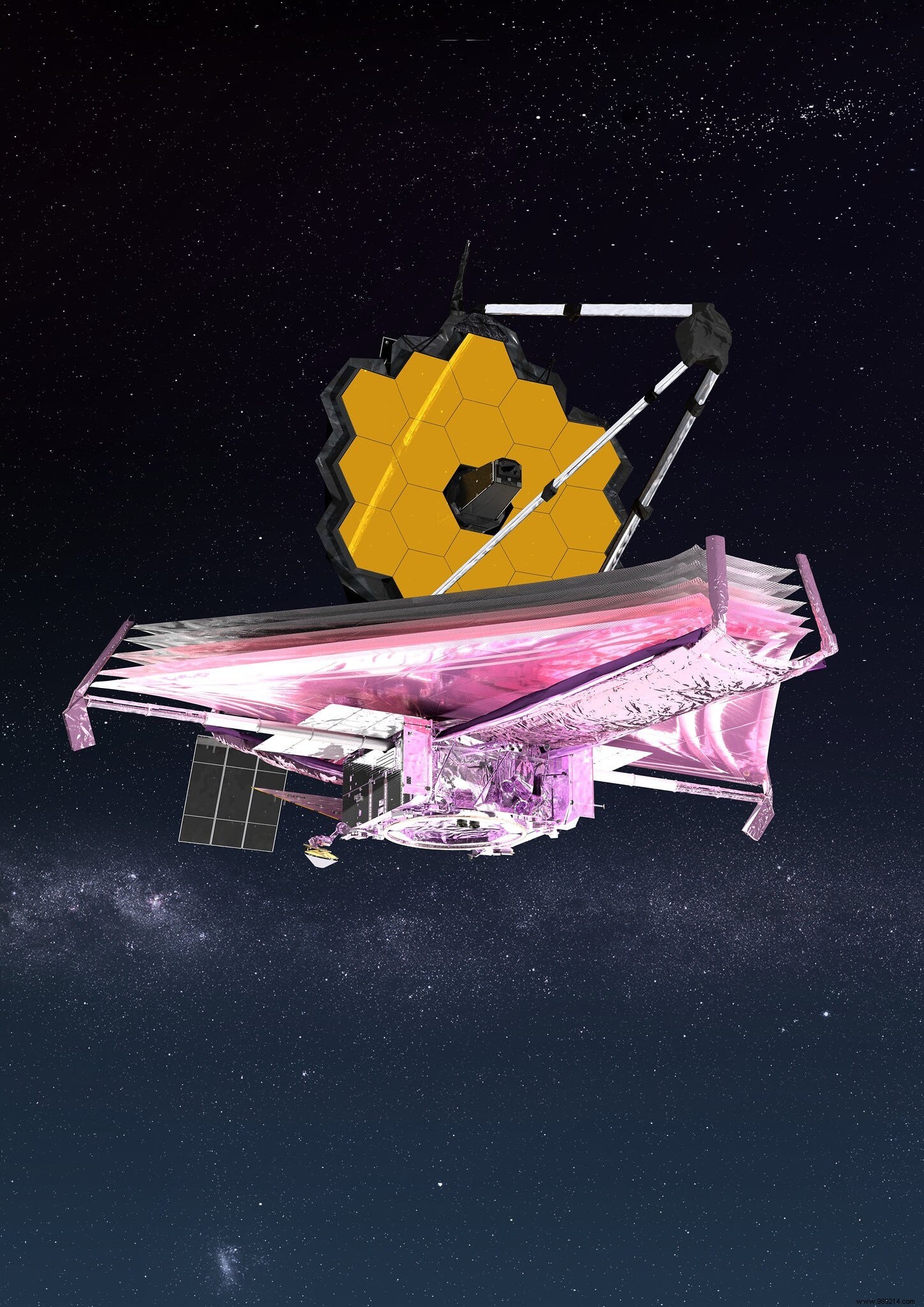
The primary mirror's wings are fully extended, forming a stunning 6.5-meter golden petal. With critical deployments complete, the James Webb Space Telescope (JWST) still faces threats from space debris and micrometeoroids under one gram.
Mission progress has exceeded expectations. The sunshield and main mirror deployed successfully, and the Ariane 5 launch provided ample fuel for 15 to 20 years of operation, surpassing the original 5-to-10-year goal.
Yet challenges remain in its halo orbit around the Sun. NASA anticipates several unavoidable impacts from orbital debris.
"Small micrometeorite strikes are inevitable," explains Michelle Thaller, astrophysicist at NASA's Goddard Space Flight Center. "Over the mission's lifespan, the mirrors will sustain some damage."
The JWST team is confident, thanks to robust engineering. Its 18 beryllium hexagons form a resilient primary mirror, while the five-layer Kapton sunshield safeguards against solar heat—even if one layer fails, the others provide redundancy. These risks were meticulously addressed during development.
At 1.5 million km from Earth, no servicing missions are feasible, unlike Hubble, which orbits 500 km up and received five repair and upgrade visits from 1993 to 2009.
Hubble's low Earth orbit exposes it to denser debris, resulting in pockmarked mirrors from countless micrometeoroid strikes—as noted by Inverse. Remarkably, none have impaired its performance.
