Analysis of vast sodium chloride deposits on Mars reveals that pools of liquid water persisted on the Red Planet for almost a billion years longer than previously estimated.
NASA's Mars Odyssey orbiter first identified hundreds of these sodium chloride deposits, spanning tens to hundreds of square kilometers, as early as 2008. The findings confirmed Mars was once far wetter, with rivers feeding lakes that could have harbored microbial life. As the atmosphere thinned, the water evaporated, leaving the desert landscape we see today.
Scientists long believed the planet had dried up around three billion years ago. But a new study in AGU Advances challenges that timeline.
In her doctoral research at Caltech, Ellen Leask, alongside professor Bethany Ehlmann, examined sodium chloride deposits formed by evaporating meltwater from ice. They analyzed the landforms these deposits occupied to understand their formation.
Drawing on 15 years of data from the Mars Reconnaissance Orbiter (MRO), the researchers found the deposits were remarkably thin—less than three meters—and situated in topographic depressions.
"The closest Earth analog is the chain of lakes in Antarctica formed by seasonal snowmelt atop permafrost," explains Bethany Ehlmann. "Water can't infiltrate the frozen ground, so when it evaporates, it leaves thin salt layers."
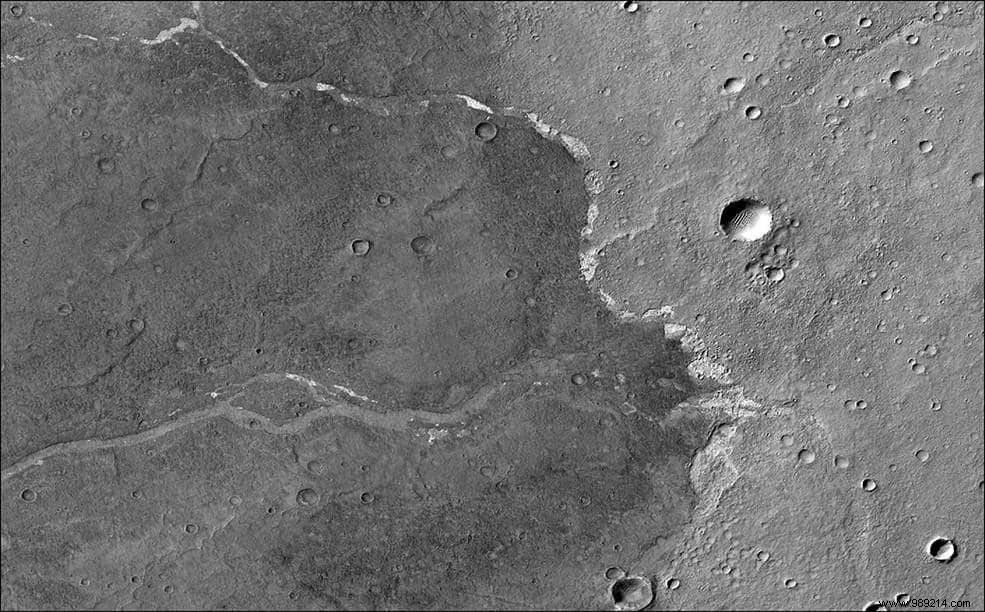
These Martian salt deposits commonly occupy shallow depressions, sometimes perched above larger, deposit-free craters. The study suggests the water arose from surface runoff during ice freeze-thaw cycles, with chloride leaching from clay-rich surface soils.
Notably, the team identified chloride deposits atop volcanic terrain formed 2.3 billion years ago. This pushes back the timeline for potential microbial habitability on Mars.
