Founded by aerospace veterans Tim Ellis and Jordan Noone, Relativity Space has secured $650 million in fresh funding to accelerate development of its Terran R—a fully reusable, 3D-printed rocket designed to transform orbital launches.
Relativity Space, led by Tim Ellis (formerly of Blue Origin) and Jordan Noone (ex-SpaceX), is pioneering large-scale 3D printing to revolutionize rocketry. Their innovative approach has the potential to disrupt the industry, much like SpaceX did with reusable boosters. Investors have taken notice from the start.
Just months after founding in 2015, Mark Cuban invested $500,000, spotting their vision for 3D-printed rockets. Subsequent rounds brought in $10 million, followed by $500 million last year.
The team bolstered its expertise by recruiting David Giger, a SpaceX alum, to lead development of Terran 1—a 7-meter demonstrator rocket slated for its debut flight late this year from Launch Complex 16 at Cape Canaveral, Florida.
Momentum continues: As reported by SpaceNews, Relativity Space closed a $650 million funding round, boosting its valuation to $4.2 billion. For context, SpaceX's valuation stood at around $44 billion last year. Though Relativity trails the leader, its progress is remarkable—especially pre-first-launch.
Employee headcount has surged to about 400, nearly quadruple from 18 months ago, with hundreds more hires planned by year-end to fuel expansion.
This capital, from backers including BlackRock, Centricus, Coatue, Soroban Capital, and others, targets the Terran R—a significantly larger successor to Terran 1, leveraging advanced 3D printing.
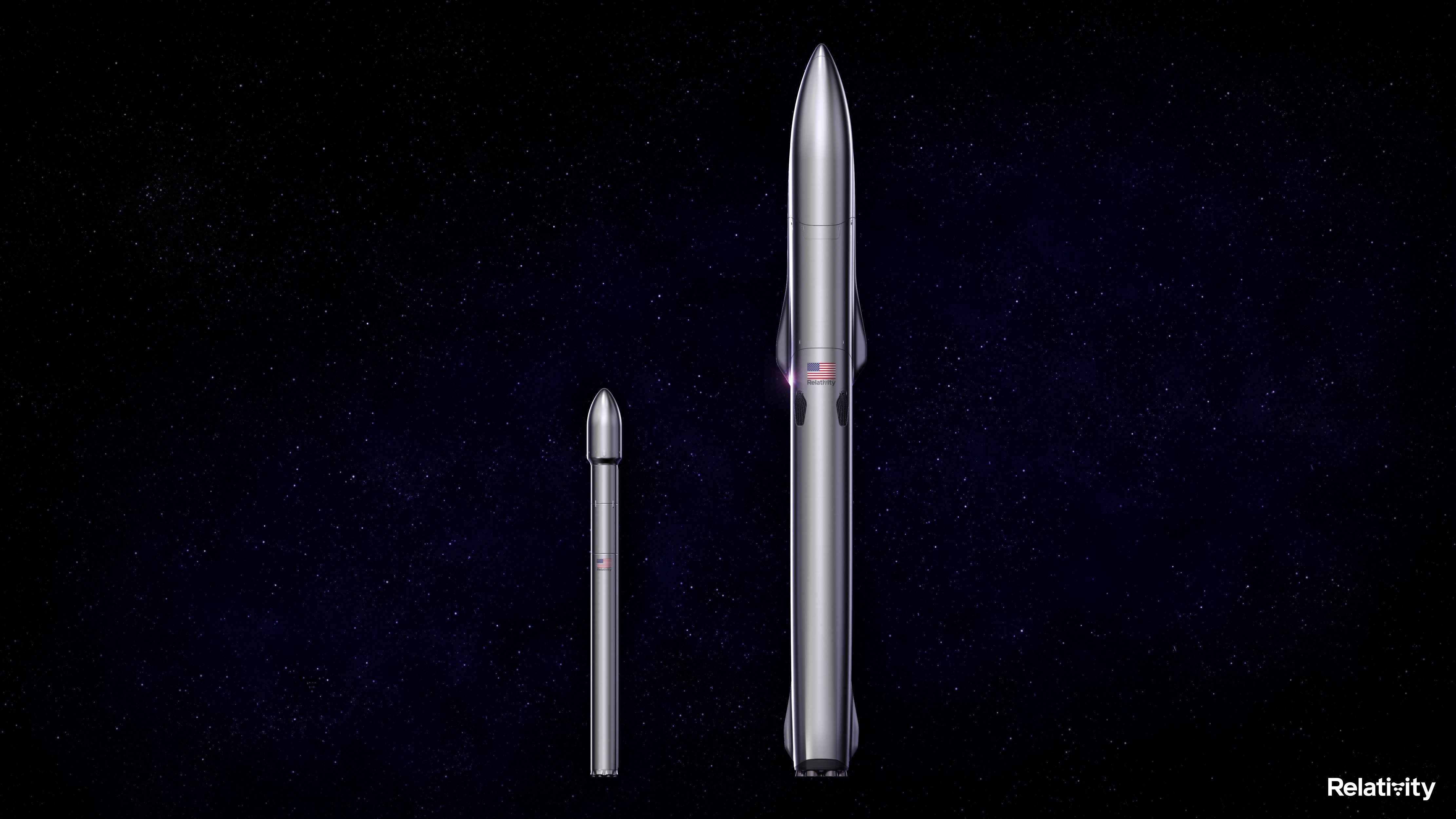
Scheduled for launch in 2024, Terran R will deliver over 20 tons to low Earth orbit. A standout feature: full reusability, encompassing the upper stage and payload fairing—pushing boundaries in cost-effective space access.
