Leaders of Russia's Roscosmos and China's National Space Administration have signed a memorandum to develop a collaborative research station on or around the Moon, inviting international partners to join.
Dmitry Rogozin, director general of Roscosmos, and Zhang Kejian, head of the China National Space Administration, formalized the agreement. This facility will support multidisciplinary research for lunar exploration and utilization, featuring long-term robotic operations with provisions for human presence.
The partners aim to invite other nations, emphasizing "strengthening international cooperation in research and promoting the exploration and use of outer space for peaceful purposes in the interest of all mankind," as stated in the official release.
China has outlined plans for a south pole station supporting human presence in the 2030s. Roscosmos previously announced a Moon base with Earth-controlled "avatar robots."
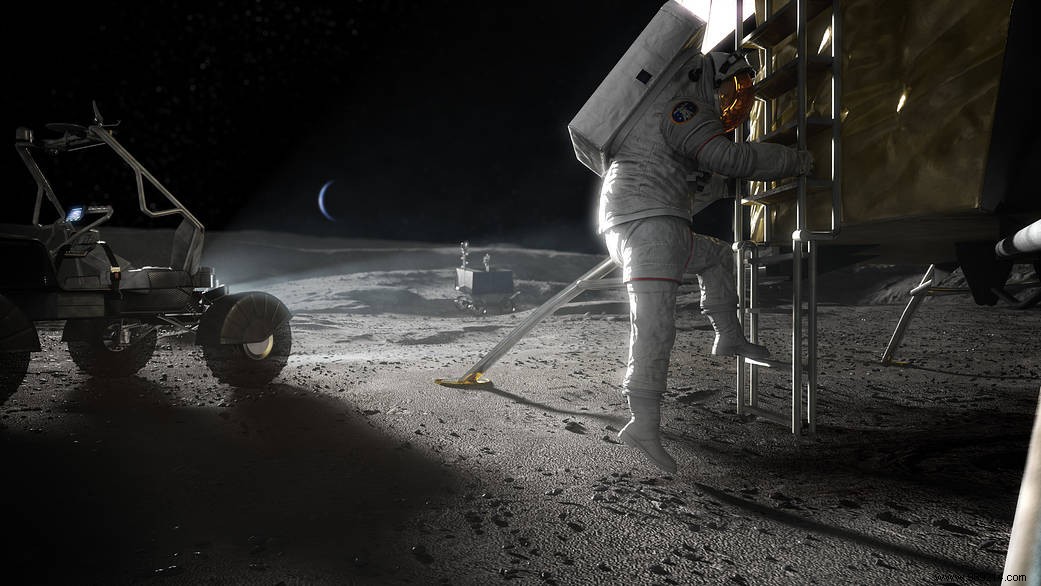
This development coincides with the Biden administration's commitment to NASA's Artemis program, targeting human Moon landings and a south pole base rich in water ice.
The Artemis Accords promote a "safe, prosperous, and peaceful" space future, requiring peaceful activities, transparency, public disclosure of plans, and open access to scientific data.
Several nations have signed the Accords; China and Russia have not. Despite decades of U.S.-Russia collaboration on the ISS, Rogozin has critiqued the Accords as overly "U.S.-centric."
This Russia-China pact signals a possible end to longstanding NASA-Roscosmos ties, intensifying a new space race between NASA's coalition and the Russia-China alliance in deep space exploration.
