Researchers have analyzed a remarkably pristine meteorite that fell in Michigan two years ago, isolating thousands of pure organic compounds potentially key to life's emergence on Earth.
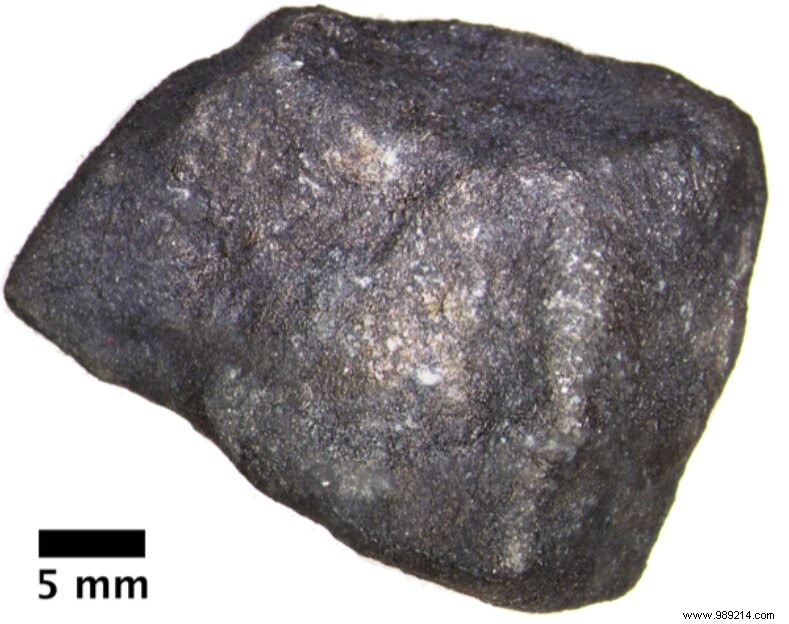
Celestial mechanics brings countless meteoroids into Earth's path. Most incinerate in the atmosphere due to extreme heat, but a few survive as meteorites. On January 16, 2018, one streaked across the Midwest skies before landing on frozen Strawberry Lake in Michigan.
NASA weather radar helped meteorite hunters track its speed and trajectory. Robert Ward recovered it in less than two days—fast enough to prevent alteration by liquid water, a rare feat.
“As soon as water contacts it, metals rust and minerals like olivine weather,” explains Philipp Heck, curator at Chicago's Field Museum and lead author of the study. “Water also introduces contaminants through fissures from prior asteroid impacts.”

This rapid recovery gave scientists a pristine sample, unaltered since its space origins. Philipp Heck and team employed advanced techniques—microscopy, spectroscopy, mass spectrometry, magnetometry, and computed tomography—to classify it as an H4 chondrite, a type comprising just 4% of Earth-falling meteorites.
Most excitingly, it harbored “a rich inventory of uncontaminated extraterrestrial organic compounds”—the same ones ancient meteorites likely delivered to early Earth, fueling life over 3 billion years ago. The team isolated more than 2,600.
The exact source of Earth's life-giving carbon compounds remains debated, but meteorites are prime suspects.
“These formed in the parent asteroid post-formation, amid heat from accretion and radioactive decay,” says Heck. “Though carbonaceous chondrites hold far more organics, this H4 chondrite's abundance bolsters the idea that meteorites seeded early Earth.”
Despite quick recovery, minimal contamination occurred. Truly pristine samples await from missions like NASA's OSIRIS-REx (Bennu) and JAXA's Hayabusa2 (Ryugu).
