A groundbreaking study in Science analyzed organic molecules from a Martian meteorite that reached Earth around 13,000 years ago. Far from evidence of life, these compounds formed through chemical reactions between water and rock about four billion years ago, soon after Mars took shape.
Organic compounds feature carbon as a primary element (with rare exceptions) and often include oxygen, nitrogen, sulfur, and others. Though commonly tied to biology, they frequently emerge from abiotic processes unrelated to life.
Prior research has identified organic molecules in Martian rocks, including the renowned Allan Hills 84001 meteorite, found in Antarctica's Allan Hills in 1984. Ejected from Mars by an impact roughly 17 million years ago, it arrived on Earth about 13,000 years ago.
The origins of these molecules have long been debated, with explanations ranging from abiotic sources like volcanic activity or cosmic impacts to biotic possibilities such as ancient Martian life or Earth contamination. This new research settles the question.
Published in Science, the study examined the meteorite's mineralogy at the nanoscale, revealing that the organic compounds are linked to serpentine-like minerals—dark green minerals typically formed in past watery environments.
The researchers pinpoint two geochemical processes at play. The first, serpentinization, happens when water interacts with iron- or magnesium-rich igneous rocks, altering their chemistry and releasing hydrogen.
The second, carbonation, occurs when rocks react with mildly acidic, carbon dioxide-laden water to produce carbonate minerals. Here, the team concludes these organics arose from volcanic rock meeting brackish fluids in Mars' early history.
Whether these processes happened together remains unclear, but this marks the first detection of their combined effects in a single rock.
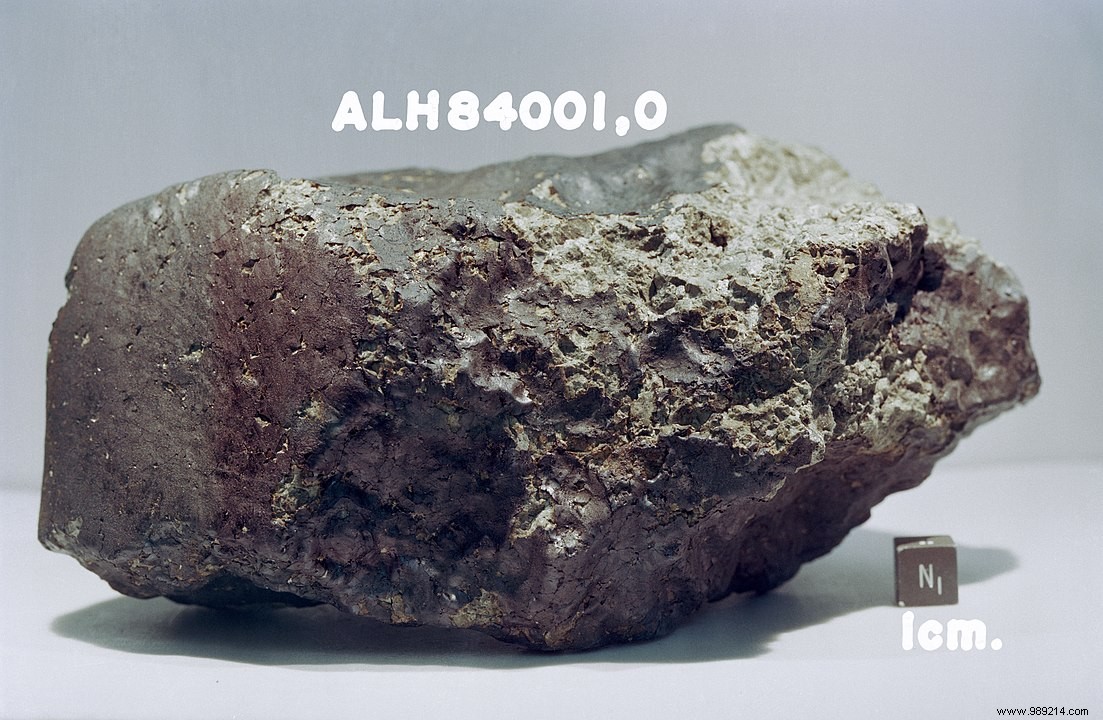
Analyzing this meteorite's minerals offers a glimpse into early geochemical activity on both Earth and Mars, shedding light on the red planet's habitability potential.
"These non-biological geological reactions produced a reservoir of organic carbon from which life might have emerged—a baseline signal to account for in the search for past life on Mars," explains Andrew Steele of the Carnegie Institution for Science.
