An independent panel of experts has thoroughly reviewed the joint NASA-ESA Mars Sample Return mission, highlighting potential cost overruns and schedule delays. Yet, they unanimously agree: the rewards far outweigh the risks.
Bringing Martian rocks directly to Earth for analysis represents a pinnacle achievement for planetary science. This ambitious joint NASA-ESA endeavor aims to return samples from the Red Planet by the early 2030s.
After months of rigorous evaluation, the independent review committee affirms the mission's viability while identifying key improvements. Their report outlines 44 conclusions and recommendations to address vulnerabilities.
“We unanimously believe that this Mars Sample Return program should proceed, as its scientific value will be extraordinarily high,” the experts stated. Indeed, this groundbreaking effort could provide definitive evidence of extraterrestrial life in our Solar System.
"However, as the first round-trip mission to another planet, Mars Sample Return is an extremely ambitious, technically demanding, and operationally complex program,” noted David Thompson, Chair of the Independent Review Committee.
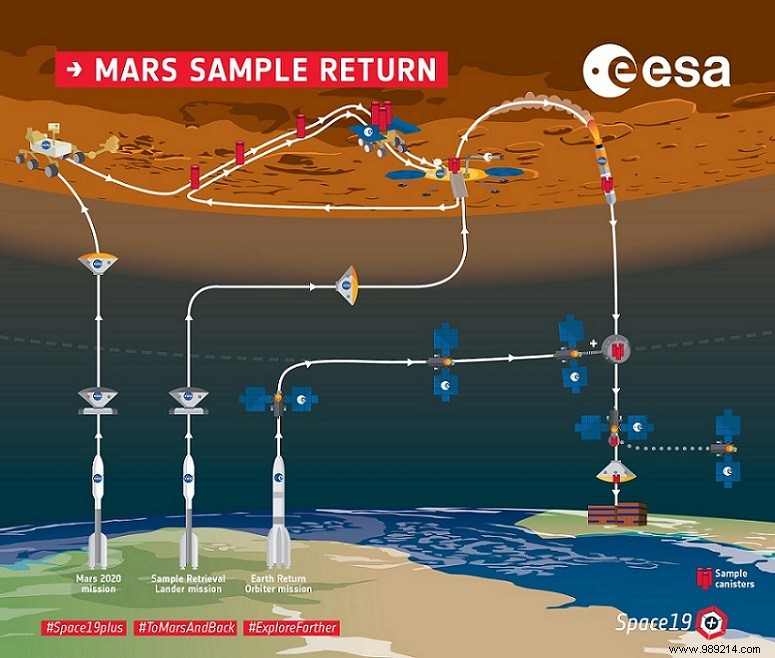
The Mars Sample Return mission begins with NASA's Perseverance rover, which landed in Jezero Crater in February 2021 to search for signs of ancient life. It has cached the most promising samples on the surface for later retrieval.
Next, in 2026, NASA plans to launch a lander that will arrive in summer 2028. This will deploy a retrieval rover to collect Perseverance's samples and load them into a small rocket for launch in spring 2029, placing them in Mars orbit.
Meanwhile, in summer 2028, ESA will launch an orbiter to capture the ascending rocket's payload and return it to Earth by spring 2032.
This vast collaboration between two leading space agencies spans multiple spacecraft over more than a decade. It marks the first rocket launch from another planet's surface, compounded by stringent requirements to prevent sample contamination.
The next major milestone targets a 2026 launch, but the review committee recommends the 2028 window as more realistic. NASA and ESA remain committed to 2026.
Budget estimates suggest delays could increase costs by at least 30%, totaling $3.8 to $4.4 billion for both agencies.
Many recommendations focus on organization. NASA's key facilities are stretched across projects like the James Webb Space Telescope, Nancy Grace Roman Space Telescope, and Europa Clipper. ESA faces similar demands.
The committee urges optimized task-sharing between centers and new accommodations to facilitate seamless NASA-ESA collaboration.
