Recent data from NASA's Curiosity rover confirms a massive flood swept through Gale Crater around 4 billion years ago. Findings are detailed in Scientific Reports.
Approximately 4 billion years ago, a vast body of water—at least 20 meters deep—rushed through Gale Crater at speeds exceeding 9 meters per second. It left behind enormous surface ripples nearly 2.5 meters high, spaced about 140 meters apart. These features are strikingly similar to those formed by glacial meltwater on Earth around 2 million years ago. This assessment comes from sedimentary analysis by the Curiosity rover team, which has been exploring the site since 2012.
Scientists attribute this mega-flood to a meteor impact, whose intense heat likely vaporized frozen carbon dioxide and methane reserves. The resulting steam and gas release created warm, humid conditions ripe for heavy rainfall. This deluge poured into Gale Crater, merging with water from Mount Sharp to trigger catastrophic flash floods.
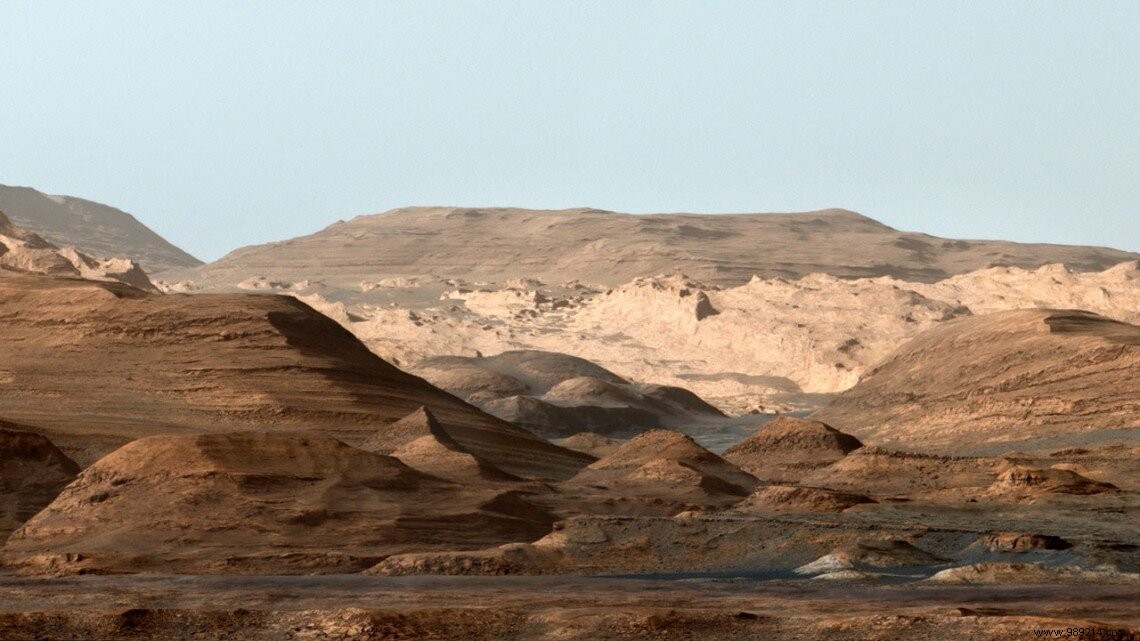
Curiosity's science team previously confirmed Gale Crater once hosted long-lasting lakes and rivers, hinting at potential habitability for microbial life on ancient Mars. Can Perseverance provide definitive answers? Launched from Cape Canaveral on July 30, the rover touched down on the Red Planet on February 18.
Perseverance landed not in Gale Crater, but in Jezero Crater—a 45 km-wide, 500-meter-deep site thought to have held water 3.5 to 3.9 billion years ago. Research indicates rich deposits of hydrated silica here, an ideal preservative for biosignatures and microfossils.
On location, Perseverance will conduct chemical analyses of these deposits, hunt for organic molecules, and cache samples for potential return to Earth. Back in our advanced labs, these could yield groundbreaking insights into Mars' past.
