Like the Moon, future human outposts on Mars must be near a vital resource: water. But pinpointing its exact locations is key.
While SpaceX's Mars ambitions grab headlines, NASA is targeting a crewed mission to the Red Planet in the 2030s to establish an initial research outpost. Relying on local resources will be essential for success.
Water ice stands out as the most critical resource. It will sustain life, enable agriculture, and produce rocket fuel by splitting into hydrogen and oxygen—vital for both on-site living and the return journey to Earth.
Scientists also value water ice for studying potential microbial life traces.
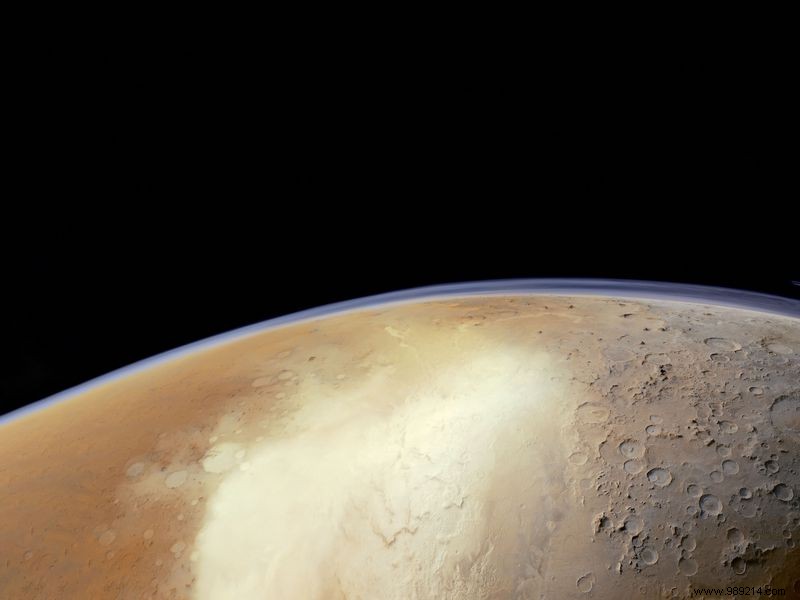
NASA favors Martian mid-latitudes for bases: they offer accessible ice, ample heat, and sunlight. The poles hold vast ice reserves but suffer extreme cold and darkness.
Mid-latitude areas are often lower-lying, aiding landings. Mars' thin atmosphere challenges braking for heavy spacecraft, so denser air lower down simplifies descent.
We know mid-latitude ice exists—but where precisely? The Subsurface Water Ice Mapping (SWIM) project, led by the Planetary Science Institute in Tucson, Arizona, provides clarity.
Researchers combined data from two decades of NASA orbiters (Mars Reconnaissance Orbiter, Mars Odyssey, and Mars Global Surveyor), using five remote sensing methods like neutron spectroscopy and radar.
"Ultimately, NASA tasked SWIM with determining how close to the equator subsurface ice can be found," explains Sydney Do, head of the Mars Water Mapping Project at JPL. "Think of drawing a wavy boundary line across Mars for this ice—our data refines it from a thick marker to a precise pen, highlighting equator-proximal zones."
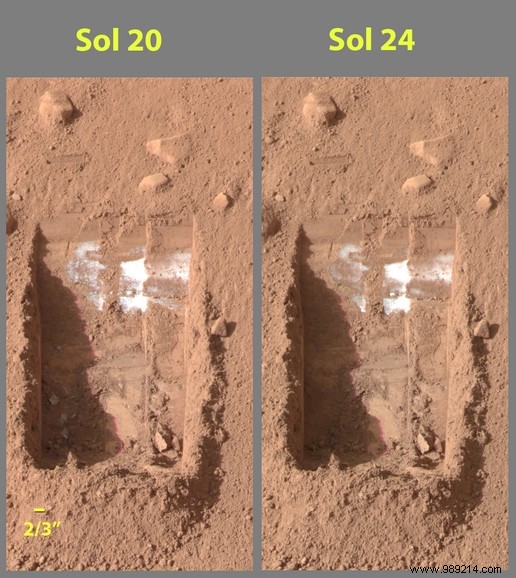
The SWIM team's first findings, published Monday in Nature Astronomy, are promising: vast mid-latitude swaths host ice buried from mere centimeters to a kilometer deep.
Landing humans safely on Mars involves far more than water access, and no site is finalized. Yet, SWIM data will inform future decisions.
Refinements continue: NASA collaborates with Italy, Canada, and Japan on the Mars Exploration Ice Mapper mission to chart crew-usable ice deposits, potentially launching as early as 2026.
