Astronomers have announced the discovery of an intriguing Earth-sized exoplanet that orbits its host star every 3.14 days, earning it the nickname "Planet Pi" after the famous mathematical constant. The study is published in The Astronomical Journal.
Nearly two years after its decommissioning, NASA's Kepler Space Telescope continues to yield discoveries. By analyzing data from its 2017 K2 mission, researchers identified a new Earth-like planet located 185 light-years from Earth. This marks the 315th planetary system found in K2 data.
Kepler detected exoplanets using the transit method, monitoring stars for periodic dips in brightness caused by a planet passing in front. After ruling out other astrophysical explanations, the team confirmed the signal originated from a transiting world.
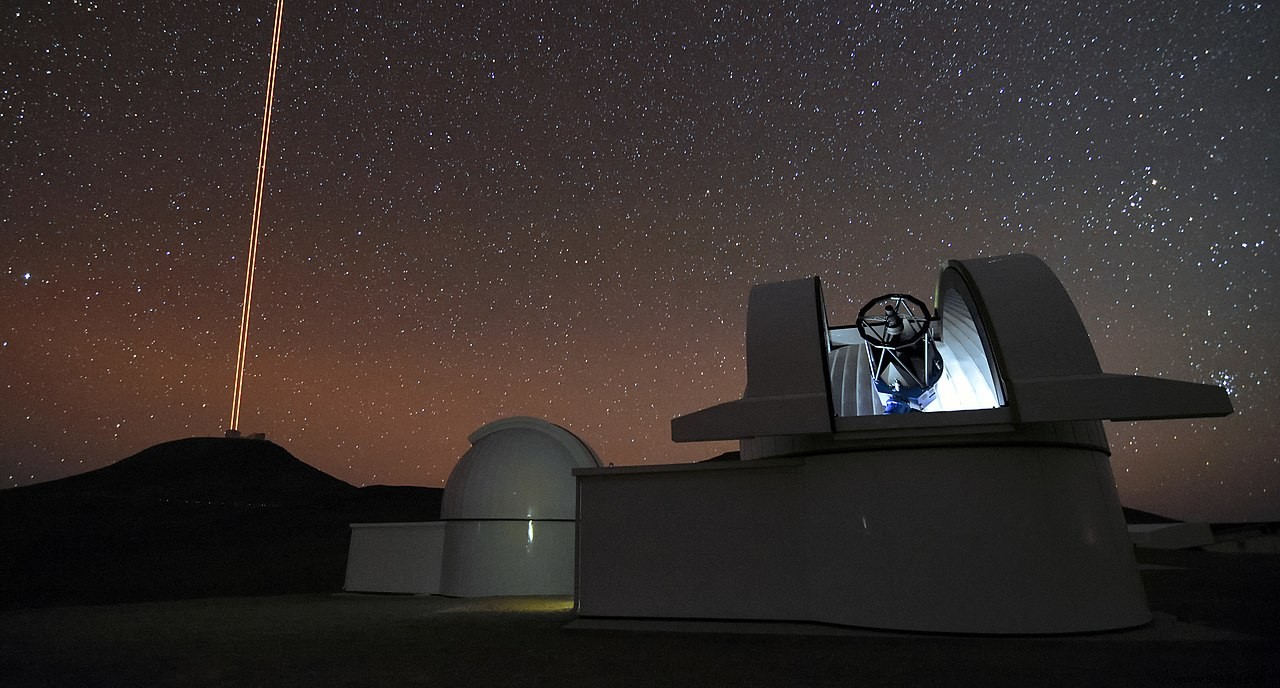
Follow-up observations with the SPECULOOS observatory at Cerro Paranal, Chile, measured the planet's radius at 0.95 times Earth's. It orbits a cool, low-mass star—about one-fifth the Sun's size—every 3.14 days, reaching speeds of 81 kilometers per second, or roughly 290,000 km/h.
Officially named K2-315b, lead author Prajwal Niraula from MIT affectionately calls it "Pi," referencing the constant ratio of a circle's circumference to its diameter.
Though rocky and Earth-sized, K2-315b is not habitable. Its close orbit heats the surface to over 170 degrees Celsius.
Niraula suggests it's a prime target for the James Webb Space Telescope (JWST) to study any potential atmosphere. By analyzing starlight filtered through the atmosphere, JWST could reveal its molecular makeup via unique gas signatures.
